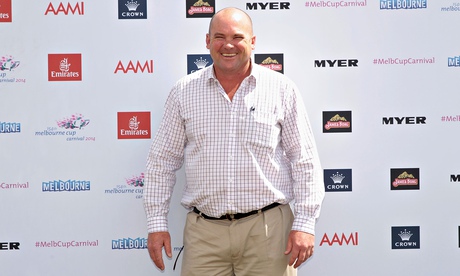
British racing’s ruling body has conducted a study to establish whether cobalt is being used as a performance enhancer in this country, following concern raised by regulatory bodies around the world. The news emerged after it was announced that the Australian trainer Peter Moody, famous through his association with Black Caviar, is at risk of a lengthy ban because one of his horses failed a test for the substance.
Treating a horse with cobalt can have EPO-like effects, stimulating production of red blood cells and improving endurance. The racing regulator in the Australian state of Victoria introduced a threshold for cobalt in April last year and gave notice that breaches would result in prosecution, while the California authority announced last summer that it would begin testing for cobalt and would investigate any tests that proved unusually high.
Moody’s Lidari, it was revealed on Tuesday, tested positive for cobalt at a level higher than Victoria’s threshold when he was beaten half a length in a Melbourne Group One in October. It was the closest the horse has come to winning a top-class race in eight attempts. Moody said he was “devastated” by the test result and had “no knowledge or understanding as to how this could occur”. According to one report, he faces a three-year ban from the sport if unable to demonstrate extenuating circumstances.
The integrity threat posed by cobalt is news to most followers of British racing but it has crept on to the radar of the British Horseracing Authority, prompting what its spokesman, Robin Mounsey, described as “a survey of a significant number of horses” at the end of last year specifically aimed at discovering whether there was a culture of cobalt use in this country. The survey “found no evidence of the improper use of cobalt in British racing”, Mounsey said.
But reports suggest cobalt can only be detected for a matter of hours after being introduced into a horse’s system and Mounsey conceded that there is “no room for complacency”, though he said the BHA was satisfied it could detect the substance successfully. “Traces of cobalt can be detected in the body, as it is an essential, naturally occurring dietary mineral. All horses therefore have a base level of cobalt in their system,” he said. “Cobalt is also present in small quantities in various legitimate veterinary treatments.
“However, the use of cobalt as an agent with the intention of boosting red blood cell production has no place in British racing. BHA has a zero-tolerance approach to doping in British racing and a robust testing structure.
“BHA are currently working with international jurisdictions to develop an internationally agreed threshold for cobalt. In the meantime, if there was evidence of the improper use of cobalt in Britain, BHA would be able to take action under more general powers, as disciplinary action for doping no longer requires a positive test.”
Moody’s Black Caviar was the sensation of Royal Ascot in 2012, when she maintained her unbeaten record by just a head after her jockey eased down prematurely. She was subjected to a routine drug test by the BHA on arrival and again, as a Group One winner, after her success but that did not stifle questions on the topic when steroids became a worldwide issue for racing the following year.
In May 2013, Moody angrily denied Black Caviar had ever had steroids and took a swipe at British racing, saying: “They bang on about steroids but they are the first to use Lasix when they campaign horses in the US. Maybe the poms might start looking at themselves rather than looking at us.”
Sprinter Sacre is friendless in the market for this weekend’s feature race, the Clarence House Chase at Ascot, and has now drifted to 7-4, having been even money when betting opened on Monday. Nicky Henderson’s chaser will not be risked if the going is too testing, which is a real concern after 12mm of rain on Monday night turned the Ascot track soft. A further 12mm is expected by the weekend.