ISESAKI, Gunma -- Chijimi horenso is a type of spinach that is intentionally exposed to cold temperatures to thicken its leaves and boost its sugar content.
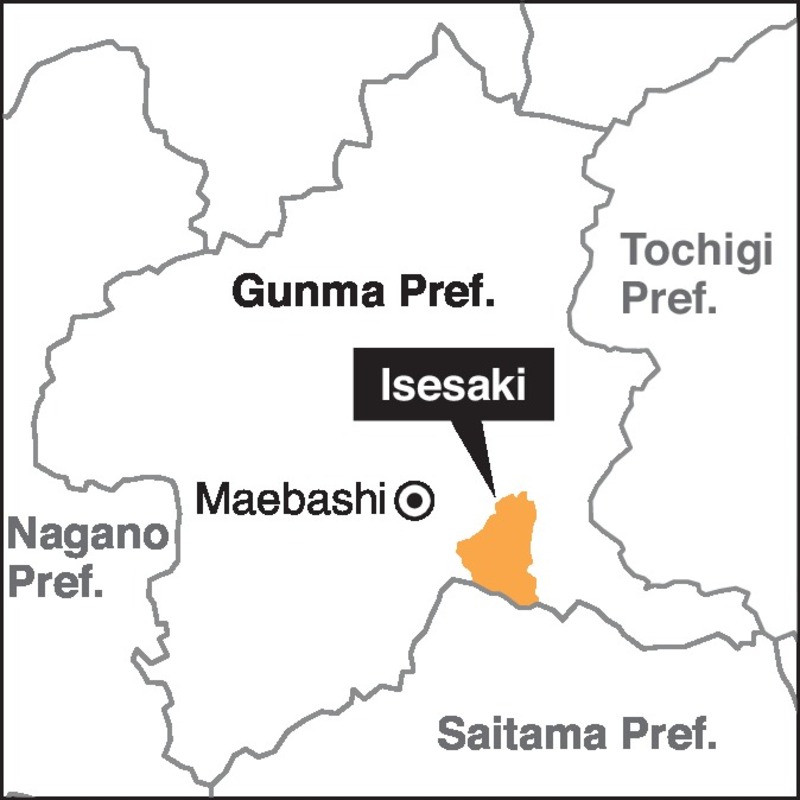
I visited Isesaki, Gunma Prefecture, in early January when the leafy green, known as savoy spinach in English, is in season.
The field I visited sits on the Kanto Plain with a view of Mt. Akagi. A cold wind was blowing as Kiyoshi Morimura, 64, harvested chijimi horenso with a hand scythe.
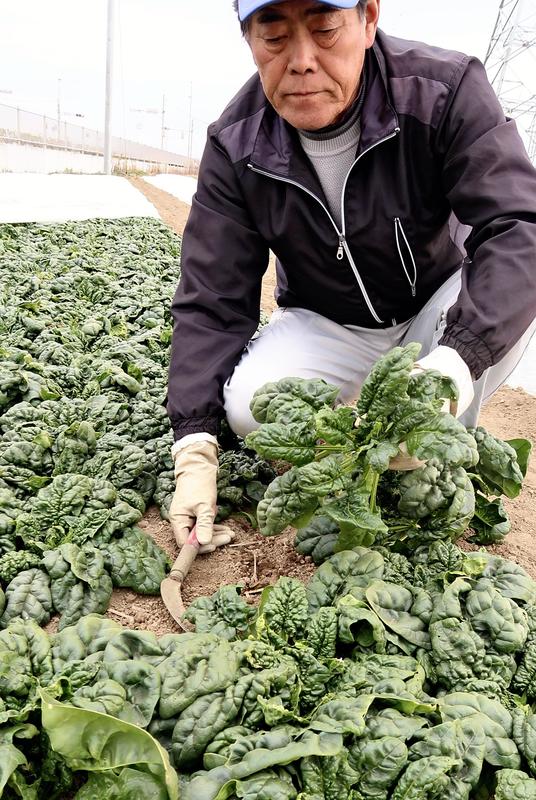
Morimura handed me a plant he had just cut. Its leaves were thicker than regular spinach and were full of wrinkles. The plant was dark green and as big as my face, with a thick stem and roots.
Morimura planted the field in late September and was harvesting it after intentionally exposing the plants to the low winter temperatures. To withstand the cold, the plants thicken and their leaves contract. The leaves unfurl to facilitate the growth process when the sun shines.
"This area gets a dry wind that blows down from Mt. Akagi in winter," Morimura said. "The frequent frosts make [the spinach] sweeter. It's a good place to grow chijimi horenso."
According to the Agriculture, Forestry and Fisheries Ministry, chijimi horenso is mainly grown in the Tohoku and Kanto regions during winter. Plants harvested in spring or summer contain lower amounts of vitamin C.
JA Sawa-Isesaki, an agricultural cooperative made up of farmers and others from Isesaki and neighboring areas, created their own shipping standards for chijimi horenso to emphasize its sweetness. Plants shipped in December must have a sugar content of 8 degrees Brix or higher, while those shipped in January and February must have a sugar content of at least 10 degrees Brix.
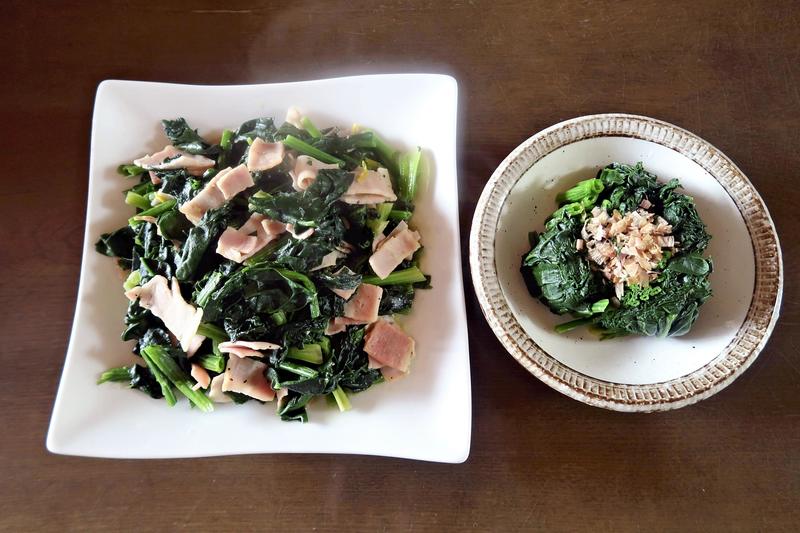
Morimura's wife Yuko, 63, prepared some chijimi horenso dishes for me to sample. One was an ohitashi dish, or boiled savoy spinach with a soy sauce dressing, and the other a stir-fry with bacon and butter.
I tried the ohitashi first. I could not help but exclaim, "It's so sweet." There was none of the bitterness or the pungency you typically get with spinach.
In the stir-fry, the thick leaves were nicely chewy and the sweetness was not overpowered by the taste of bacon.
"Chijimi horenso is delicious all by itself, so you don't need to season it much," she said.
Another way of serving it is shabu-shabu style, or dipping the leaves in a pot of boiling water.
When you cook chijimi horenso, put it in a large bowl and press down on it gently under running water. This will remove any soil around the leaves and stems.
With chijimi horenso grown outdoors, the harvest is greatly affected by the weather. Temperature control is difficult and the harvest season is short. The leaves are broad so they need to be hand-packed in bags.
"The harvest has been good this season. I hope people all over the country will enjoy eating" chijimi horenso, Morimura said.
To find out more about Japan's attractions, visit http://the-japan-news.com/news/d&d
Read more from The Japan News at https://japannews.yomiuri.co.jp/


.jpg?w=600)