I see lots of familiar things on my early-morning run through the neighborhood.
Neighbors walking with their dogs and morning coffee and kids weighed down by backpacks waiting for the school bus are a given. I can also count on a slobbery greeting from my pal Rosie the basset hound, who loves to be patted on the head.
It's become so routine that I almost stopped paying attention to them. Every so often, though, I catch something out of the corner of my eye that demands a second look.
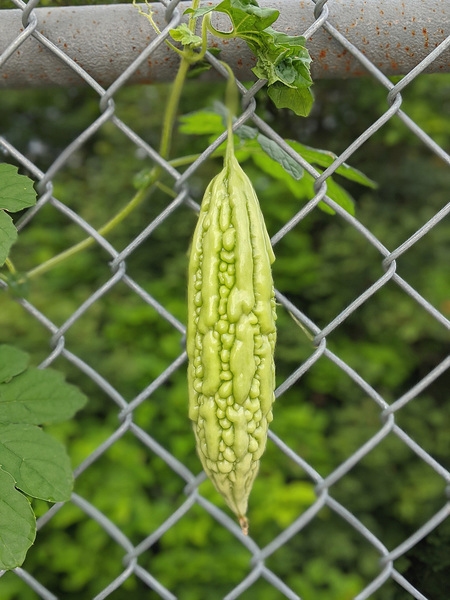
A few weeks ago, it was a weird-looking, oblong-shaped plant climbing up a chain-link fence on the side of a bridge. What in the heck was it? I stepped closer to find out.
Long and green, it was dangling on a rail from a wispy vine dotted with tiny yellow flowers like some kind of vegetal Christmas tree ornament. Picture a cucumber or zucchini with a super-bad case of warts, or maybe a melted candle. Was it a weed or did somebody plant it there on purpose?
A friend in a food-centric Facebook group had an immediate answer to my query. It was a bitter melon, a tropical vine that belongs to the gourd family. Its edible fruit is a popular ingredient in many Asian cuisines, both because of its texture (it's crunchy) and its purported medicinal properties (it can lower blood sugar levels). People also adore the fruit's unique, acerbic taste.
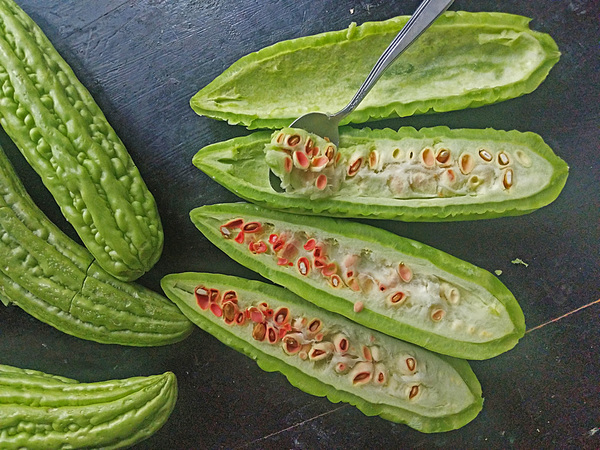
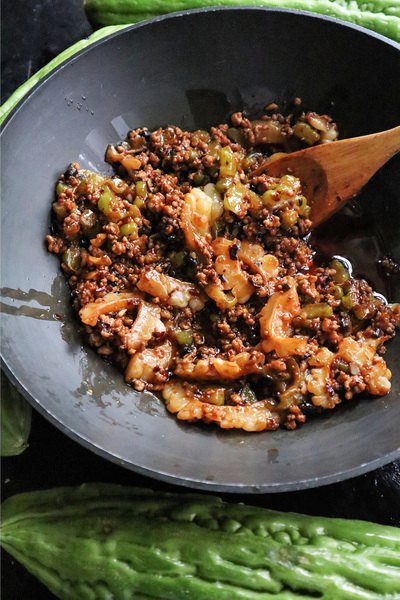
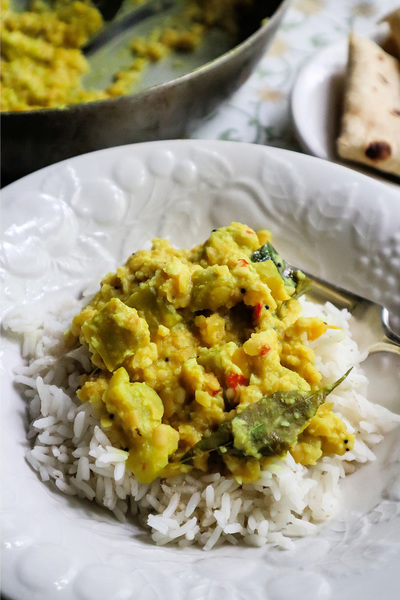
Cooked more like a vegetable than a fruit, bitter melon is a common ingredient in Indian stews and curries, Japanese and Chinese stir-fries, sauteed Filipino dishes and fried snacks. It also can be hollowed out and stuffed with ground meat and spices like squash, be steamed or pan-fried. Some even like to eat it raw or squeeze the fruit into juice.
However it's prepared, bitter melon is more backup artist than lead vocalist. It is used to counterbalance the richness of the main ingredient rather than outshine it. Its astringent taste pairs especially well with chili peppers and fatty meats like pork.
To say bitter melon has a unique flavor profile is quite the understatement. Never has a fruit or vegetable been so aptly named. The first time you try it, in fact, it might prove so unpleasant on the palate that you may be tempted to spit it out.
"It's definitely an acquired taste," admits Jayashree Iyengar of Point Breeze, with a laugh. She teaches classes on Indian cooking at Phipps Conservatory and other venues and is a Maker in Residence at Chatham University's Center for Regional Agriculture, Food and Transformation. Even though the former Westinghouse mechanical engineer grew up eating it, she never much liked it as a kid. It was only as an adult that she grew to love it.
"As you get older, you like it more," she says.
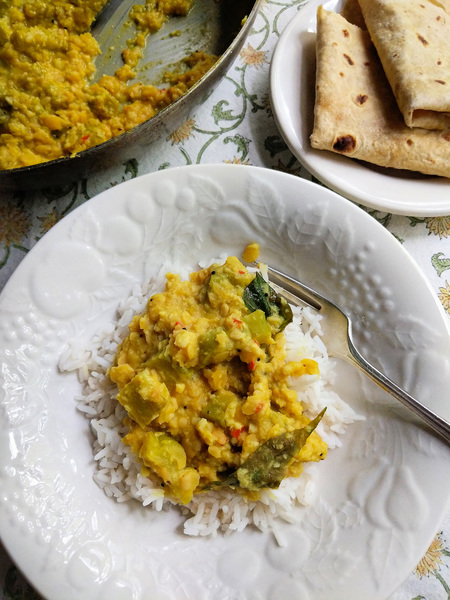
She particularly loves it in a stew, where the bitterness can be toned down with tamarind, coconut, chili and salt. Her mother also cooked it in rings dipped in chickpea flour and dusted it with chili powder and salt after deep-frying it.
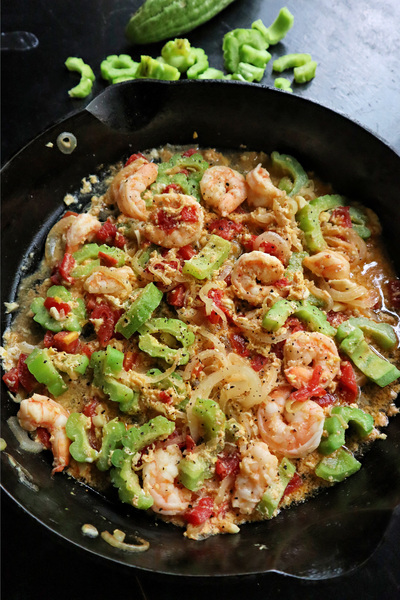
412 Food Rescue co-founder Leah Lizarondo, who was born and raised in the Philippines, can relate to its taste. She, too, hated the way it burned on her tongue as a child and only came to appreciate it as a grown-up.
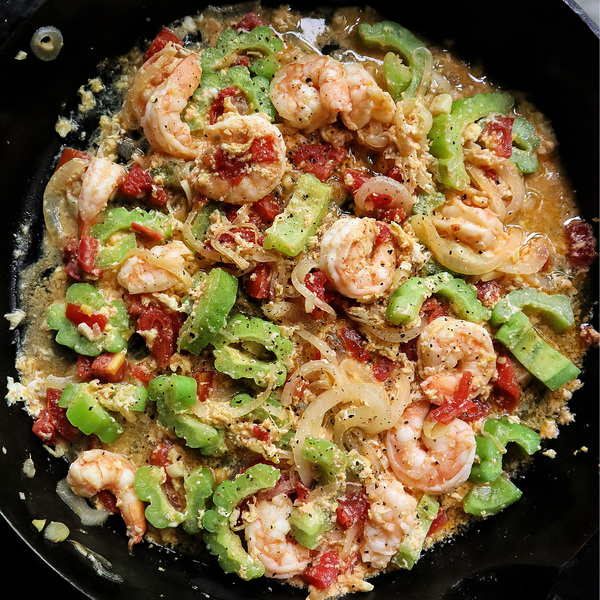
It's now a favorite. In fact, she noted in an email, her mother, Aida, who's been staying with her during the pandemic, has made her favorite stew with it many times during the past few months. Known as ginisang ampalaya at hipon, it features the addition of shrimp, tomatoes, onion and scrambled egg.
When she serves the fruit to someone who's unfamiliar with it, Lizarondo will sometimes first soak the melon in lemon water to make it less acrid. But only rarely, because when you're eating bitter melon, she says, the bitterness is the point.
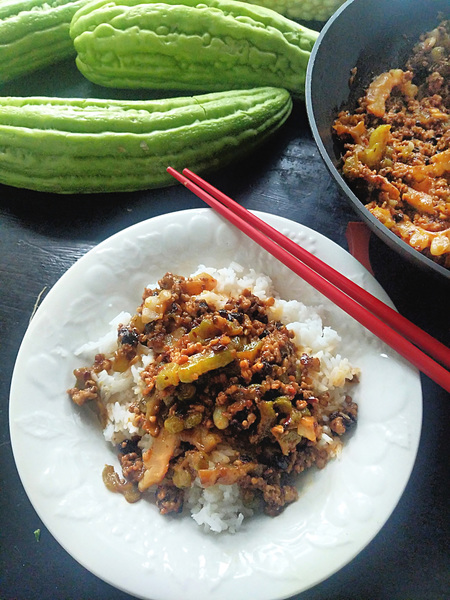
Thought to have originated in India before making its way to China in the 14th century, there are two varieties of bitter melon: Chinese bitter melon (known as ku gua or lai gua) is less pebbly than the spiky Indian counterpart (known as paavakai in Tamil or karela in Hindi). Some say it also tastes less bitter.
Now common to all tropical parts of the world, the fruit also is known as bitter gourd, bitter cucumber and balsam pear. You can find it in most Asian markets, usually for less than $2 a pound.
So why do we want to eat it if it tastes so unusual?
Two compounds found in bitter melon _ polypeptide-p and charantin _ have been shown to play a role in lowering blood sugar. It has been used traditionally in Asian countries to treat diabetes, says registered dietitian and nutrition consultant Heather Mangieri. It is also thought to have cancer-fighting properties, although studies have only been done in animal models.
Bitter melon is loaded with key nutrients like folate and vitamin A, a fat-soluble vitamin that promotes skin health and proper vision. It's especially rich in vitamin C, with a 3-ounce serving dishing up almost 100% of the recommended daily value. It also is low in calories (just 20 calories per cup).
Depending on how it's prepared, it can add a soft or crunchy texture to your dish, Mangieri says, "and it will help you get your vitamin C needs met for the day."
Along with Lizarando's lemon-water trick, some cooks soak the melon in salted water before cooking to cut the bitterness. They also scrape off some of the bumpy surface or soak it in diluted yogurt.
As a rule, the smaller and brighter green the melon, the less bitter.
When cooking the fruit, Iyengar says that pairing bitter melon with the right combination of ingredients will make it more palatable. She suggests adding a bit of sourness (as in tamarind) along with some heat (as in chili) and salt. This is not so much to hide the taste but to temper it. She likens it to adding garlic to broccoli to make it more tasty.
Look for half-ripened melons that are firm to the touch and without bruises or dents and store them wrapped in a paper towel in a ziplock plastic bag in the vegetable drawer of the refrigerator for four to five days.
Bitter melon might take some getting used to, says Iyengar, but in this multicultural world, where ethnic foods are commanding a bigger share of the limelight, that unfamiliarity doesn't have to be a negative. It's a big, wide food world out there.
"Try it to diversity your palate," she says, "and try something good that's new."