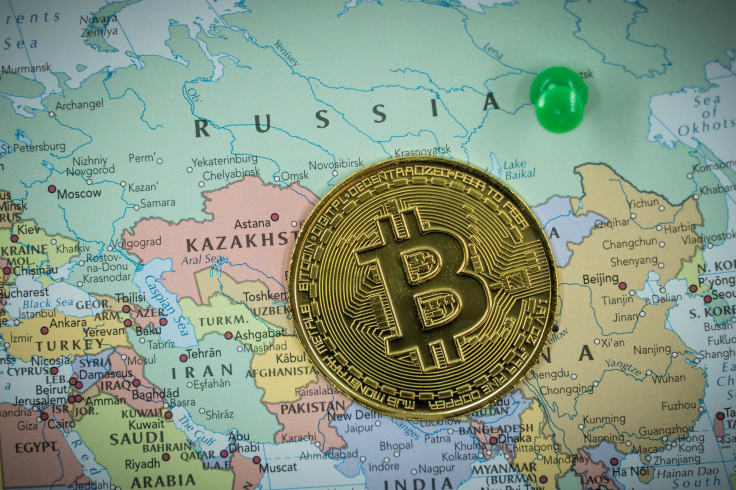
Bitcoin dropped 5.5% to $61,322 in early Singapore trading on June 4, its weakest level since February 6, before clawing back to around $64,200 by the afternoon.
That low erased the entire geopolitical premium that had carried BTC toward $74,000 after February's US-Israel strike on Iran. A three-month round trip, ending exactly where it began.
It wasn't just Bitcoin bleeding. Total crypto market cap sank to $2.18 trillion, near its February lows and roughly 48% below last year's $4.2 trillion peak, with the sector down about 4% on the day. Over $500 million in leveraged longs got liquidated as price knifed through support.
Why Is Bitcoin Down? Every Geopolitical Pump in Crypto Eventually Dies
Here's the trade nobody wants to admit they ran. When the strike news hit on February 28, Bitcoin sold off nearly 6% in 45 minutes, dropping from $70,000 to $63,038 and triggering about $515 million in forced liquidations.
Then the story flipped.Traders rebranded the conflict as a dollar-destabilizing shock, the kind of world where a non-sovereign store of value supposedly shines, and BTC ripped back above $73,000 by mid-March.
That rally was never institutions buying a war hedge. It was narrative, and narratives expire. The catalyst that finally drained the premium arrived this week:
Israel and Lebanon reached a ceasefire, and Trump signaled progress on US-Iran negotiations, rapidly digesting the risk premium baked into energy markets. — TradingKey, June 4, 2026
Oil followed the same script, with WTI down 4% to $92.18 and Brent off 3.23% to $94.65. — TradingKey, June 4, 2026
When the fear leaves, so does the bid. Digital gold trades like a high-beta risk asset every single time the pressure is real.
What Actually Moves Bitcoin Once the Headlines Go Quiet
The premium formed inside a bear market, not at a turning point. Bitcoin had already fallen roughly 50% from its October 2025 record near $126,000 before Iran ever entered the picture. The safe-haven buyers were swimming upstream against institutional de-risking and a Fed whose rate cuts keep slipping further out, partly because oil-driven inflation refuses to cooperate. Higher-for-longer is structurally poison for risk assets.
The forward view is split down the middle:
"Bitcoin could revisit $10,000 in a bad scenario if it fails to reclaim and hold $75,000," said Mike McGlone, strategist, Bloomberg Intelligence
The $64,000 area is now the line in the sand. Hold it and the market stays rangebound. Lose it and February's lows come back into play. So the question worth arguing: was the war rally ever real demand, or just leverage cosplaying as conviction?