Forget the holiday traffic jams, put away the summer clothes and turn on the central heating – it may still be August, but in the bird world, autumn is officially here.
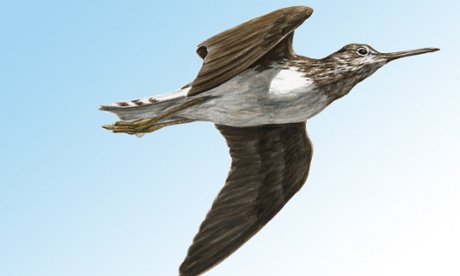
The first sign of the season arrived in the last week of July. On an evening’s walk around my local patch, on the edge of the Somerset Levels, I heard a piercing call, almost as high-pitched as a dog whistle. Then a small wader swooped up into the sky, before disappearing into the distance: a green sandpiper.
My first impression was of an oversized house martin; for against the setting sun the bird appeared to be black above, with a bright white rump shining like a beacon. Only when I saw it on the deck, poking about in the peaty water in search of food, was I able to see the tinge of green that gives this smaller cousin of the redshank its name.
Green sandpipers are a very rare breeding bird in Britain, with only a handful of pairs nesting each year in a hidden corner of the Scottish Highlands. So I know that this bird is on its autumn migration, and has already travelled more than a thousand miles from the wet woodlands of Finland or Sweden to be here.
This is just the start of its journey: most green sandpipers spend the winter in the tropics of Africa, so this bird (and the others that will join it over the next few weeks) may only be taking a temporary refuelling stop to boost its energy, before heading south once again.
Or is it? Some green sandpipers do spend the winter in Britain, mostly hiding away on little patches of water such as these: ditches, streams and pools that no other self-respecting wader would bother with. It’s always a surprise when you flush one, and it darts away on those long, dark wings, flashing its white rump.
At this time of year, almost every bird has now stopped singing, though from time to time I still hear the occasional desultory chunter from a reed warbler, the trill of a wren, or the explosive flurry of notes of a Cetti’s warbler. Otherwise the odd swallow, martin or swift snatches insects from the summer sky, while our resident female marsh harrier quarters methodically back and forth across the reeds in search of her prey.
At this time of year my attention inevitably turns to other wildlife: the black-tailed skimmer dragonflies which, true to their name, hover across the surface of the water; the gatekeeper and ringlet butterflies fluttering along the droves on sunny days; and the largest animal here – the roe deer. Every now and then the deer give me a real fright, startling me as they leap up from the reed-filled path, before dashing away on spring-loaded legs.
But even though it is fairly quiet, I’m confident this will soon change. The green sandpiper hints at the promise of autumn, that wonderfully unpredictable season when almost anything can turn up, as tens of millions of birds pass through Britain on their epic journeys south.
As naturalists and birders, we are constantly anticipating the coming season: always a new and unpredictable experience, full of hope and promise. That’s why I love visiting my local patch; for no matter how quiet it gets, something usually turns up – just like that green sandpiper.