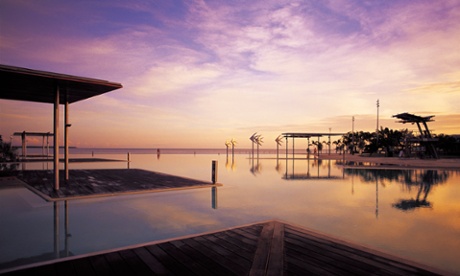
Out on the Cairns Esplanade, when I look through my telescope, tiny dots in the distance resolve themselves into waders – no fewer than fifteen different species – frantically feeding on the mud as the sea rolls out.
The world’s largest wader – the Eastern Curlew, with its impossibly long bill – is joined by godwits and sandplovers, Terek and Curlew Sandpipers, and Whimbrel, each using its specially shaped beak to feed in a particular way. Thus while the curlew probes deep into the mud, the Terek Sandpiper – with a much shorter, upcurved bill – runs frantically around on custard-yellow legs as if the food will run out at any minute.
Many of these birds have come a very long way: the Great Knots, Sharp-tailed Sandpipers and tiny Red-necked Stints have travelled all the way from Siberia –as far as 10,000 kilometres. When you consider that a stint weighs just 30 grams – about the weight of a small snack bar – that is a pretty incredible feat. No wonder they are feeding so frantically. All these species are incredibly rare in my home of Britain, so it’s a treat (and an identification challenge) for me to see them – especially so close.
As I watch, I can only marvel at the journey they have made to get here, and wonder at their fate. For here on this muddy seafront, ignored by the families and tourists enjoying the late afternoon sunshine, one of the great miracles of nature is happening: the twice-annual journey undertaken by hundreds of millions of birds across the face of the globe.
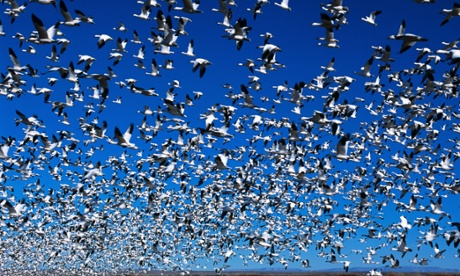
There are three great global migration routes: between Europe and Africa; North America and South America; and the one I am witnessing a small part of here, the Asian-Pacific flyway. As the northern hemisphere summer comes to a close, these Arctic nesting birds head south, arriving here in Australia just in time for the start of spring. That way they never suffer the depredations of winter – for them there’s sunshine and plenty of food all year round.
Sounds good, doesn’t it? But as well as the natural hazards these little birds face on their journeys – bad weather, predators and simply getting lost as their inbuilt satnav goes off course – they now have to contend with the changes we are making to their world.
Places like the mudflats at Cairns may not look it, but they are absolutely crucial habitats for these global voyagers. Even the landscaping of the beach here by adding sand may already be changing the consistency of the mud beyond, while any development to the port here could render the mudflats useless for these hungry birds.
Time may be running out: the Asian economic miracle of the past few decades has already led to massive habitat destruction along the flyway; now that so many parts of this jigsaw have been lost, places like the Cairns mudflats assume even more importance. So it’s good to see that – so far at least – the birds can still find a refuge in this urban resort.