Outbreaks of bird flu could get “even more severe” as the winter months go on, Scotland’s arm of the Royal Society for the Protection of Birds (RSPB) has said, amid animals being culled and spikes of infections in parts of the UK.
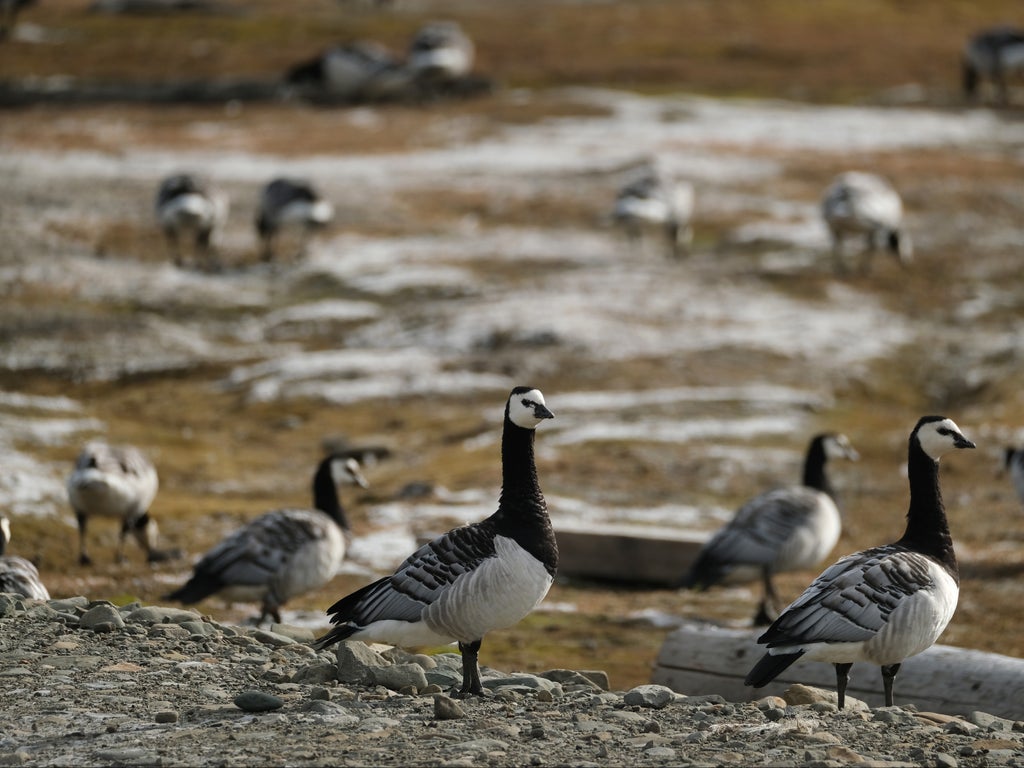
Duncan Orr-Ewing, head of species and land management at RSPB Scotland, said 4,000 barnacle geese on the Solway Coast, in northern Cumbria, had already died.
He added there had been “quite a large number” of dead birds on reserves at Mersehead and the Crook of Baldoon – also on the Solway. And while he stressed there were some “grounds for optimism”, he also said further bursts of infections were likely during the cold months ahead.
“The number of birds that are dying is so large they can't analyse all of them, but they are taking sample numbers of birds in and analysing them for avian influenza,” Mr Orr-Ewing told BBC Radio’s Good Morning Scotland programme on Tuesday.
He also said the scale and impact of the disease was “unprecedented”.
“We’ve never seen anything quite like what we’re seeing,” he explained. “We don’t tend to see many incidents in the UK.”
Protection zones remain in place around three premises affected by the outbreaks in Dumfries and Galloway, in Scotland, at Newton Wamphray, Kirtlebridge and Kirkpatrick Fleming – the last of which saw a flock of 22,000 hens recently culled.
At the end of last week, Scotland’s chief veterinary officer said the UK was facing its “worst year on record” for bird flu cases.
“The numbers this year are unprecedented and we are looking at the worst year on record,” Sheila Voas told BBC Radio Scotland’s Drivetime programme. “However, the position is not as bad as it could be at present.”
Mr Orr-Ewing, of RSPB, said that although avian influenza was “mostly prevalent” in the Far East, it could easily be spread by wild birds.
“Clearly, Scotland is home to many wild birds that spend the winter here, particularly wild fowl and geese,” he told the BBC. “Perhaps the most serious impact on wild birds has been down on the Solway where it has been estimated 4,000 barnacle geese of the rare Svalbard population have died.”
He added: “That’s about 10 per cent of the world population of that subspecies.”
Turning to how likely the disease is to spread to humans, Mr Orr-Ewing stressed “the NHS guidance is [that] the risk of transmission to humans is low”.
But, he cautioned, “the advice is [still] don’t touch the birds”.