New legislation that would have opened the US government to greater public accountability by strengthening the Freedom of Information Act has died in Congress after the Republican speaker of the House John Boehner refused to schedule a vote.
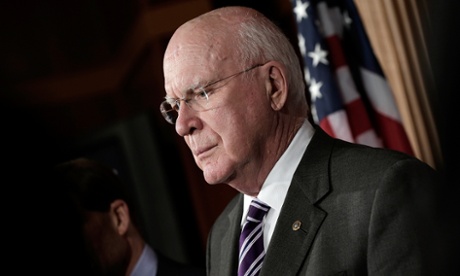
Democratic senator Patrick Leahy, who spearheaded the push in Congress to pass the Foia Improvement Act of 2014, led the chorus of indignation following the collapse of the bill.
In a statement, Leahy said that the Republican leadership had “chosen secrecy over sunlight … In a political climate as divided as this, I had hoped that we could come together in favor of something as fundamental to our democracy as the public’s right to know.”
Amy Bennett of OpenTheGovernment.org, the coalition of groups that led the charge for the reforms, said that Boehner carried responsibility for the failure to pass a bill that had until this week enjoyed bipartisan support. “He should be called to account for having killed a bill that would have held the US government accountable.”
Ryan Shapiro, an expert on freedom of information at the Massachusetts Institute of Technology (MIT), described his reaction to the collapse of the bill as “disappointed and angry. We had the votes.”
He added: “This is a flat-out oligarchic perversion of democracy, and Speaker Boehner should hang his head in shame.”
Boehner’s decision not to hold a vote on the reform legislation was all the more surprising given the universal agreement from both main parties and in both chambers of Congress that improved access to government records was a good thing. The bill would have made permanent the principle that public information should be presumed open unless it specifically needs to be kept secret under clearly defined exemptions.
As Thursday night proceeded with no vote being called by the Republican leadership, several people involved in the procedural wrangling reported that lobbyists believed to be representing the banking industry were actively pushing for the bill to be sidelined. The lobbyists argued that provisions in the improvement bill would have exposed banks and financial houses to the public disclosure by federal regulators of sensitive commercial information – a contention fiercely disputed by freedom of information advocates.
Advocates for the legislation will now recharge their batteries before attempting to reintroduce the bill in the New Year. The prospect of the reforms being enacted may suffer, however, as a result of the incoming Republican majority in both chambers of Congress and the fact that Leahy, the prime champion of open government on Capitol Hill, is losing his chairmanship of the Senate judiciary committee amid the Republican takeover.
Bennett lamented the missed opportunity to strike a blow for accountability. “The bill would have forced the federal government to finally deliver on the promise of openness that President Obama made on his first day,” she said.