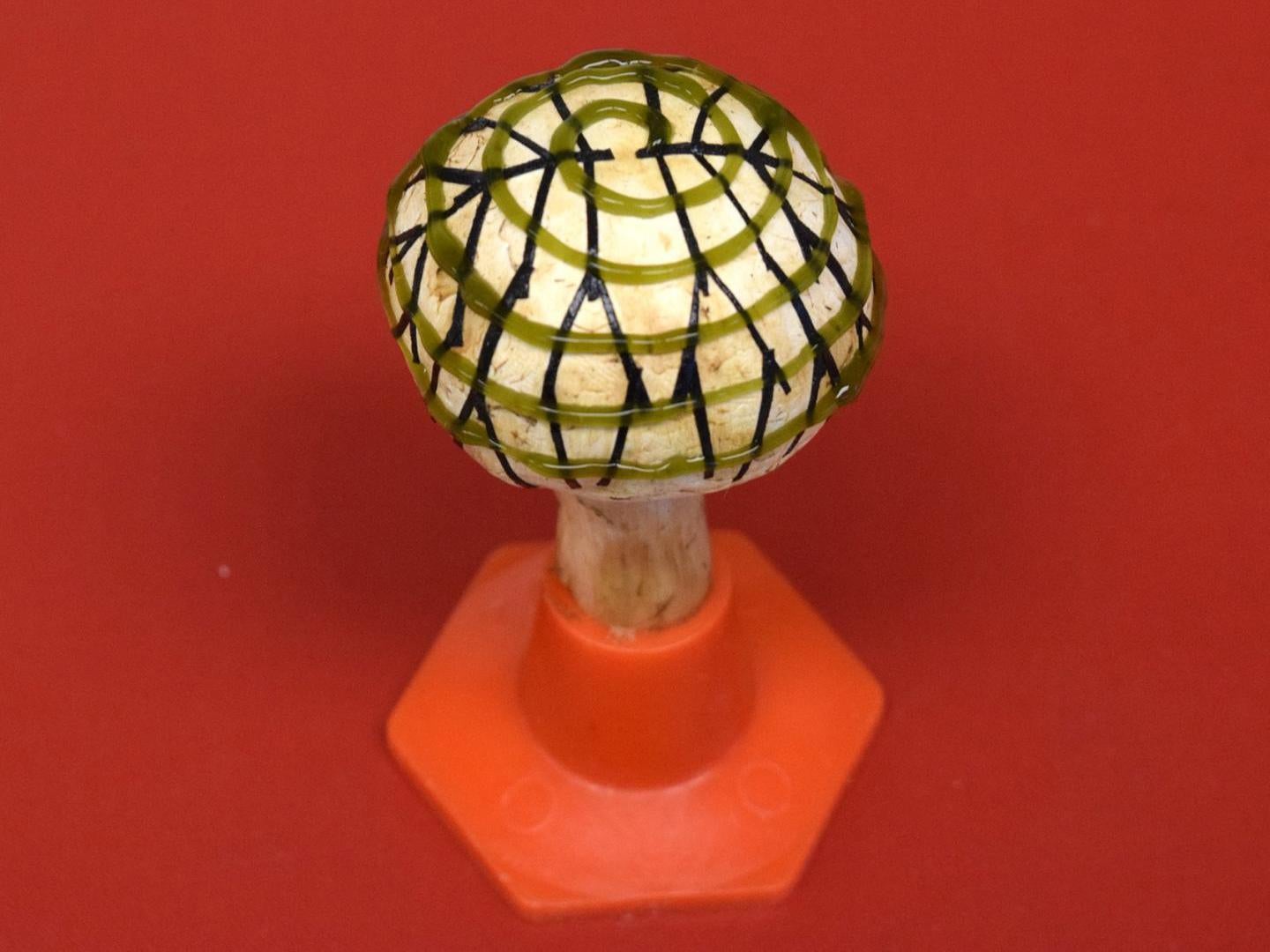
A regular shop-bought mushroom has been turned into an electricity generator in a process scientists hope will one day be used to power devices.
The “bionic mushroom” was covered with bacteria capable of producing electricity and strands of graphene that collected the current.
Shining a light on the structure activated the bacteria’s ability to photosynthesise, and as the cells harvested this glow they generated a small amount of electricity known as a “photocurrent”.
The fungi supported this process by providing the bacteria with viable surface on which to grow as well as nutrients to stay alive.
The research, published in the journal Nano Letters, is part of a wider effort by scientists to understand how biological machinery can be hijacked and put to good use.
"In this case, our system – this bionic mushroom – produces electricity," said Professor Manu Mannoor, an engineer at Stevens Institute of Technology who led the research.
"By integrating cyanobacteria that can produce electricity, with nanoscale materials capable of collecting the current, we were able to better access the unique properties of both, augment them, and create an entirely new functional bionic system."
Professor Mannoor and his team found that bacterial cells lasted several days longer when placed on living mushrooms compared to other bases.
Cyanobacteria are known among bio-engineers for their ability to generate small jolts of electricity, but until now it has been difficult to keep them alive in artificial conditions.
By creating a “hybrid system” that encourages the mushrooms and bacteria to collaborate, the scientists think they have solved this problem.
The systems were created by 3D printing an electronic ink containing strands of graphene, and then following this with a bio-ink containing the bacteria onto the cap of the mushroom.
When light shone was on the mushroom, the bacteria began to photosynthesise and a tiny current of about 65 nanoamps passed into the network of graphene.
While the scientists think an array of these mushrooms would be enough to power something like an LED light, they are still way off powering larger electronic devices.
"With this work, we can imagine enormous opportunities for next-generation bio-hybrid applications," said Professor Mannoor.
"For example, some bacteria can glow, while others sense toxins or produce fuel.
“By seamlessly integrating these microbes with nanomaterials, we could potentially realise many other amazing designer bio-hybrids for the environment, defence, healthcare and many other fields."