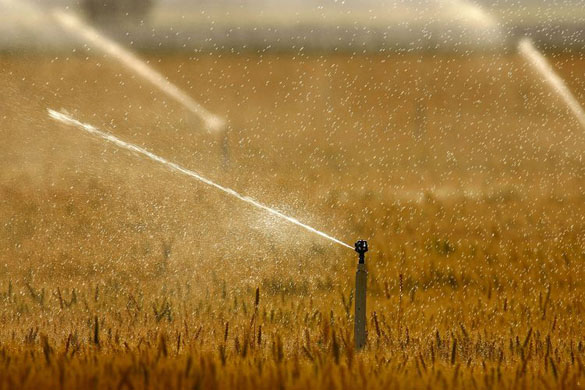
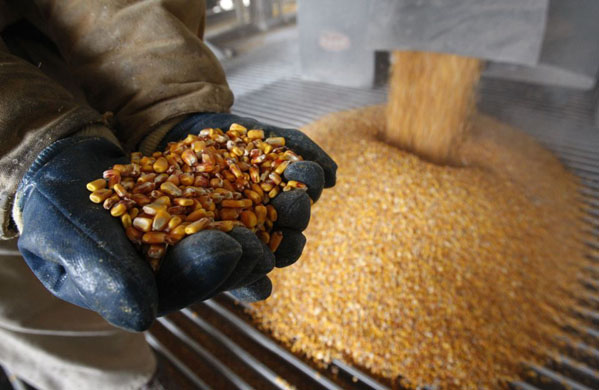
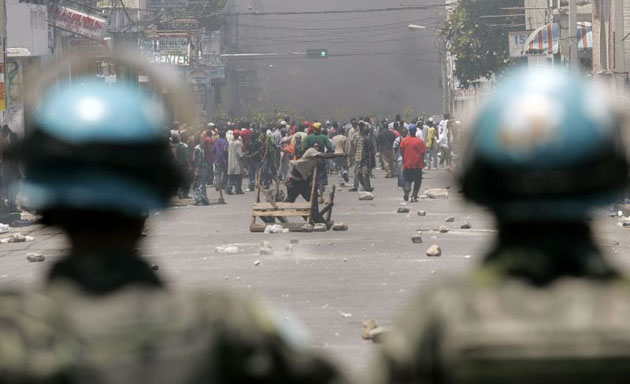
Bakersfield, USA: Sprinklers water a wheat crop. The price of the grain has risen to a 28-year high in 2008. Photograph: David McNew/GettyOntario, Canada: An operator shows a handful of corn at an ethanol plant. More than one-third of US corn is used to produce ethanol, while about half of EU vegetable oils go towards the production of biodiesel.Photograph: Mark Blinch/ReutersPort-au-Prince, Haiti: Residents protest against food price rises in front of UN peacekeepers in April this year. Five people died in the protests. Food riots have broken out in 36 other countries this year.Photograph: Eduardo Munoz/Reuters
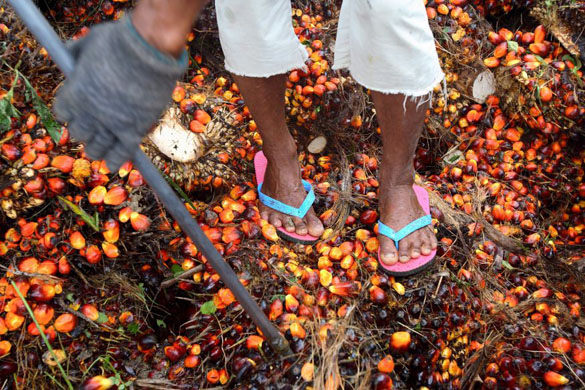
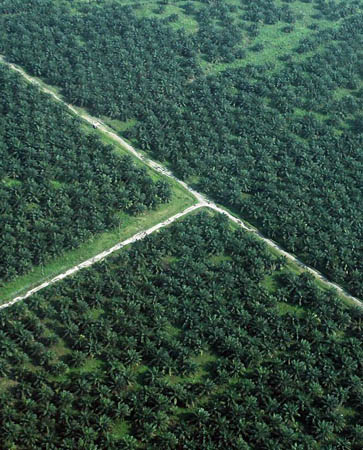
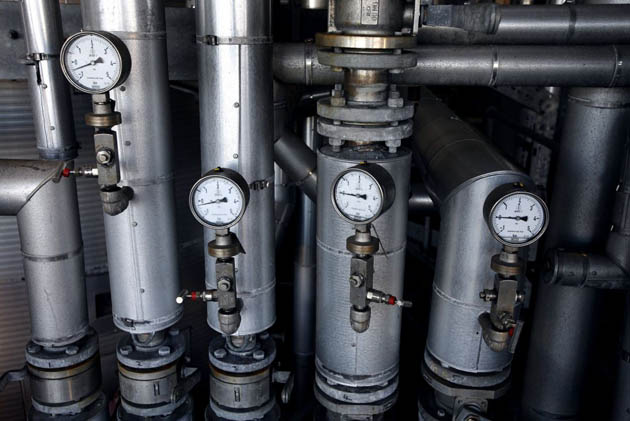
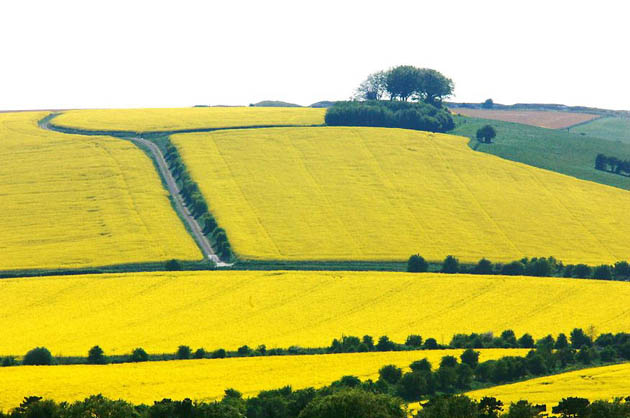
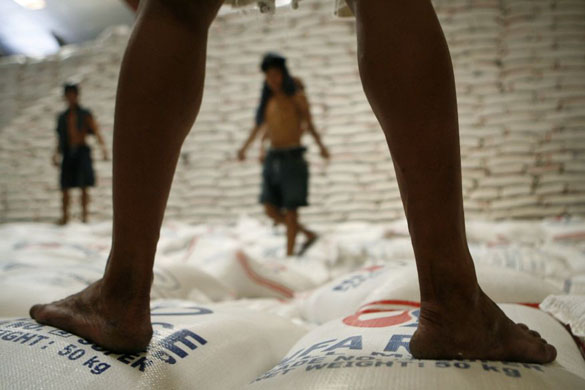
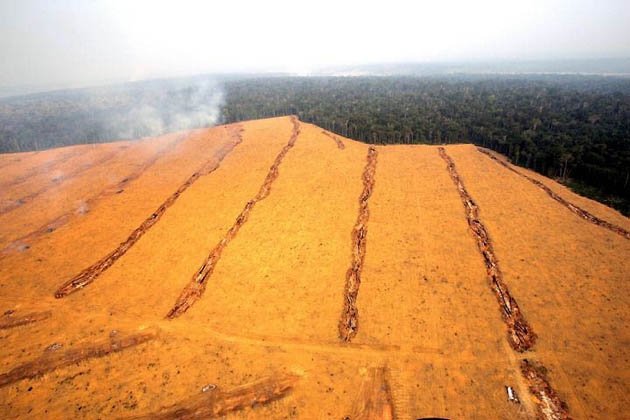
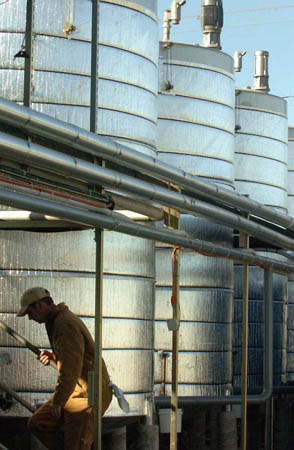
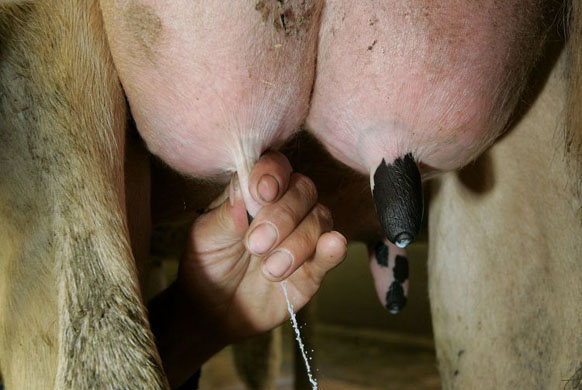
Borneo, Malaysia: A worker harvests palm oil. Much of the rainforest in Malaysia and Indonesia has been cut down to make way for palm oil plantations. Malaysia and Indonesia are responsible for 80% of global palm-oil production. Consumption has more than doubled to more than 30 million tonnes each year in the past decade.Photograph: Barbara Walton/EPAMedan, Sumatra: A palm plantation. The oil palm originated in west Africa and was introduced to Sumatra in the early 20th century. Palm oil is used in the production of biodiesel, and around half of global output now comes from Indonesia.Photograph: AFPLincolnshire, UK: Biodiesel Immingham Limited is a biorefinery run by Greenergy and turns oilseed rape into biodiesel for the UK market.Photograph: David Sillitoe/GuardianWiltshire, UK: Oilseed rape growing on the Lambourn Downs. The plant is used in the production of biodiesel. Since April, all petrol and diesel in Britain has had to contain 2.5% of biofuels, a stepping stone towards a 2010 target of 5%. The EU is contemplating a 10% target by 2010. But the long-awaited Gallagher report on biofuels is likely to suggest these goals will have to be reconsidered.Photograph: Jonathan Player/Rex FeaturesManila, Philippines: Workers load sacks of imported rice inside a National Food Authority warehouse. Some rice farmers have chosen to grow the crop as biofuel rather than as food. The price of rice hit a 19-year high in 2008.Photograph: Cheryl Ravelo /ReutersPara, Brazil: Large fields of soy. Government satellite images show that at least 1,280 sq miles (3,235 sq kilometers) of rainforest were lost between August and December 2007, mainly because of soy planting and cattle ranching. Demand for soy is expected to rise 40% this year.Photograph: Victor R Caivano/APSalem, US: A worker near reactor tanks used by SeQuential Biofuels at a biodiesel processing plant. The EU is being urged to take action to stop a biofuel trading scam that exploits US agricultural subsidies and undermines the fight against global warming. Up to 10% of biofuel exports from the US to Europe are believed to be part of the rogue scheme reaping big profits for agricultural trading firmsPhotograph: Greg Wahl-Stephens/APCalifornia, USA: A worker at the Kehoe Dairy milks a cow by hand. With animal feed prices at record highs driven by demand for biofuels, milk prices have soared. Photograph: Justin Sullivan/Getty
Sign up to read this article
Read news from 100’s of titles, curated specifically for you.