Extracts from a bioengineered chewing gum reduced HPV levels by 93% in saliva samples and 80% in oral rinse samples taken from patients with head and neck cancer, according to researchers at the University of Pennsylvania School of Dental Medicine.
The work is preclinical. No person chewed the gum as a treatment in this study. Researchers took samples from patients, treated those samples with gum extracts in the laboratory, and measured what happened to the microbes in them. That design cannot tell anyone whether chewing this gum would prevent or treat cancer, and the researchers do not claim it does.
The reason the finding is worth attention anyway is that persistent oral infection with high-risk HPV is associated with increased risk of cancers of the oropharynx, the middle part of the throat including the tonsils and base of the tongue, and there is currently no treatment aimed at clearing an established oral HPV infection.
What the Laboratory Testing Actually Showed
The gum is made from lablab bean powder, which contains a lectin called FRIL that has antiviral activity. Researchers led by Henry Daniell tested whether FRIL could trap HPV in saliva and oral rinse samples from patients with head and neck squamous cell carcinoma, alongside samples from participants without cancer.
Bean gum extract reduced HPV by roughly 93% in saliva and 80% in oral rinse. In some samples, the gum aggregated all detectable HPV present.
The team then engineered the gum to also produce protegrin-1, an antimicrobial peptide. Bean gum alone had limited antibacterial effect. With protegrin added, a single dose reduced Porphyromonas gingivalis and Fusobacterium nucleatum, two bacteria associated with head and neck cancer, to nearly zero. Reductions were reported in the range of 4 to 6 logs.
Notably, the treatment did not appear to harm beneficial bacteria that normally live in the mouth. The researchers contrast that with radiation therapy, which reduces beneficial oral bacteria while increasing the disease-causing yeast Candida albicans. The findings were published in Scientific Reports and described by Penn Today.
The Distance Between a Sample Dish and a Patient
Several things must happen before this could become a product, and none of them has happened yet.
An ex vivo result, meaning one obtained in samples removed from the body, does not establish that the same effect occurs in a living mouth. Saliva is continuously produced and swallowed, gum is chewed for minutes rather than hours, and concentrations achievable in a real mouth may differ substantially from those used in a dish.
Reducing detectable virus in a sample is not the same as clearing an infection. HPV in the oropharynx resides in epithelial cells, and a gum acting in saliva does not obviously reach infected tissue.
Even if the gum reduced oral HPV in people, that would not automatically translate into fewer cancers. Oropharyngeal cancers develop over years to decades after persistent infection, so a prevention claim would require long clinical follow-up.
Safety in humans has not been assessed for repeated use, and protegrin-1 is a peptide with antimicrobial and anticancer activity that would need its own toxicity evaluation.
Daniell has said the results support advancing the therapy into clinical trials, either alongside existing cancer treatments or as a preventive approach. That is a statement about next steps, not about current availability.
The work was supported by the National Institutes of Health, an Academic Senate Grant from the David Geffen School of Medicine at UCLA, and a National Cancer Institute Cancer Center support grant, as noted in coverage of the study.
Why Oral HPV Is a Growing Concern
Head and neck squamous cell carcinoma begins in the tissues lining the mouth and throat. It can be aggressive, and outcomes are often poor when found late.
HPV-associated oropharyngeal cancer has been rising in the United States, particularly among men, even as smoking-related head and neck cancers have declined. HPV-positive oropharyngeal cancer generally responds better to treatment than the smoking-related form, but the treatment itself, typically surgery, radiation, and sometimes chemotherapy, can permanently affect swallowing, speech, and salivary function.
Most oral HPV infections clear on their own. A minority persist, and persistence is the step associated with cancer risk. There is no routine screening test for oral HPV comparable to cervical screening, and no established way to treat an infection that has been detected.
Symptoms that warrant evaluation include a sore throat that does not resolve, a persistent lump in the neck, difficulty or pain with swallowing, unexplained ear pain on one side, a mouth sore that does not heal within a few weeks, or a change in voice lasting more than two or three weeks. These are far more often caused by something other than cancer, but they should be examined rather than watched indefinitely.
The Prevention That Already Exists
While this gum is years from any clinical use, an effective preventive tool is already available and underused.
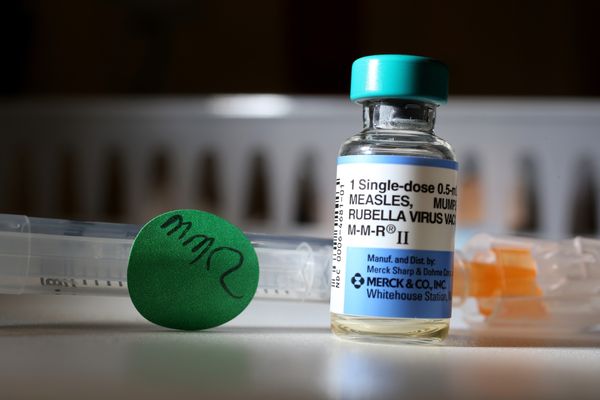
HPV vaccination protects against the high-risk types responsible for most HPV-associated cancers, including oropharyngeal cancer. It is routinely recommended starting at ages 11 to 12 and can be given from age 9. Catch-up vaccination is recommended through age 26 for those not adequately vaccinated, and adults aged 27 through 45 can discuss vaccination with a clinician based on individual circumstances.
Not smoking and limiting alcohol reduce risk of head and neck cancers generally. Regular dental visits matter because dentists and hygienists examine the oral cavity and can identify lesions early.
Do not treat this study as a reason to buy any chewing gum product. Nothing commercially available contains FRIL at the concentrations tested or protegrin-1 at all, and any product marketed on the basis of this research would be making a claim the research does not support.
If you have been treated for head and neck cancer, discuss oral care with your oncology team. Do not add supplements or products aimed at the oral microbiome without asking, since some can interact with treatment.
Frequently Asked Questions
What did the study find? Extracts from a bioengineered chewing gum reduced HPV by about 93% in saliva samples and 80% in oral rinse samples from head and neck cancer patients, tested in the laboratory.
Was this tested in people? No. Samples were taken from patients and treated in the laboratory. No one chewed the gum as a treatment in this study.
Can I buy this gum? No. It is an experimental research product. No commercial gum contains the tested components at the tested concentrations.
Does it prevent cancer? That has not been shown. Reducing virus in a sample is not the same as clearing infection or preventing cancer, which develops over years.
Why does oral HPV matter? Persistent infection with high-risk HPV is associated with increased risk of oropharyngeal cancer, and there is currently no routine screening or treatment for oral HPV infection.
What symptoms should I get checked? A sore throat or mouth sore that does not resolve, a persistent neck lump, painful swallowing, one-sided ear pain, or a voice change lasting more than two to three weeks.
What actually prevents HPV-related cancers now? HPV vaccination, routinely recommended at ages 11 to 12 with catch-up through 26 and shared decision-making for adults 27 to 45.