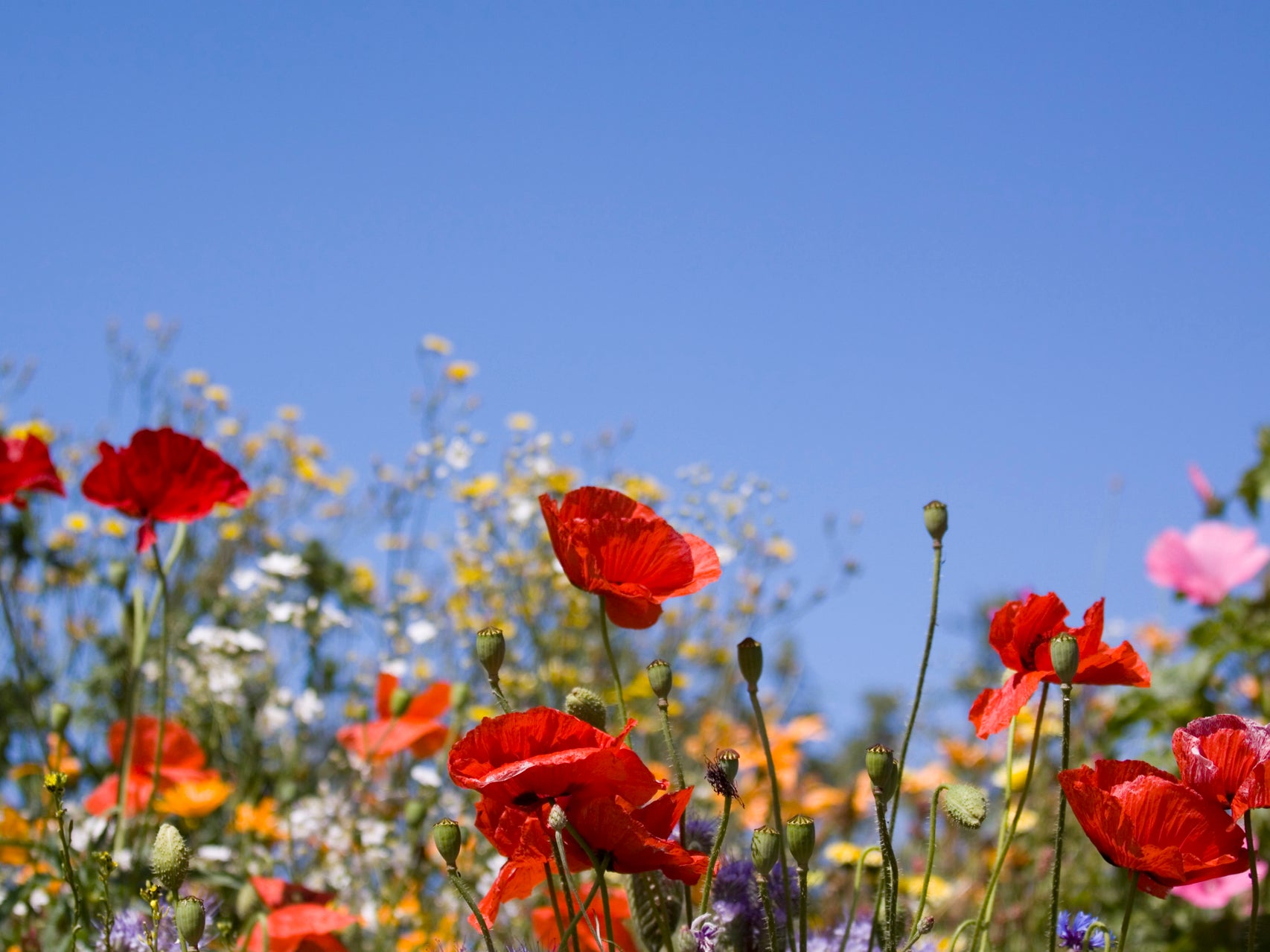
A national network of linked wildflower highways has been launched this week to provide more habitat for the UK’s vital pollinating insects, including bees, butterflies, hoverflies and moths.
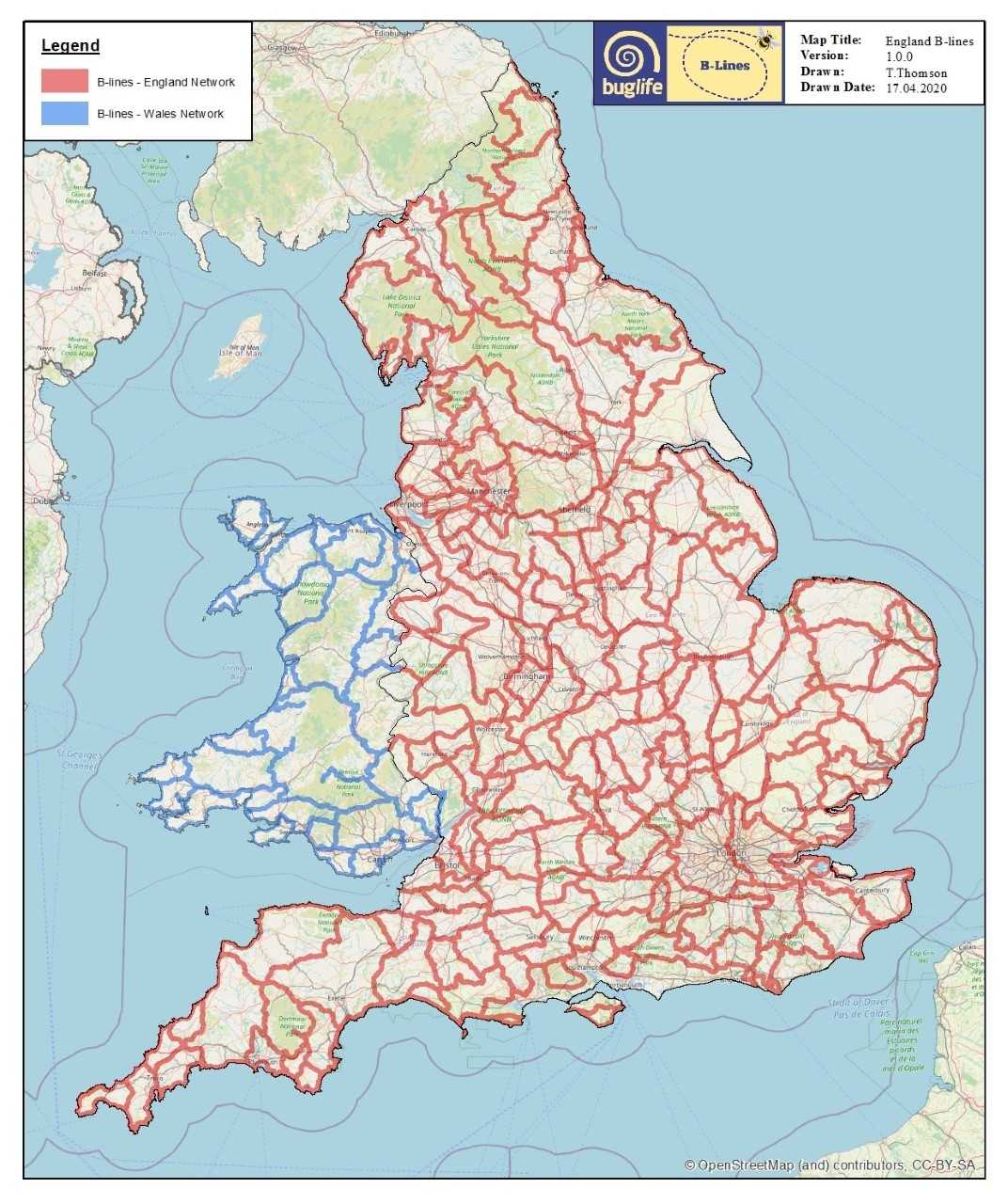
The newly completed B-Lines network for England has been launched by conservation charity Buglife with support from Defra.
The scheme will create a vast interconnected web of potential and existing wildflower habitats across the whole country.
It is designed to identify where creating new habitat will provide the greatest benefit for pollinators and aims to help restore populations of insects, which have seen catastrophic declines in recent years.
The charity has provided a map of the wildflower network and is encouraging local authorities and individuals to help take action to make the network thrive.
Catherine Jones, pollinator officer at Buglife, said: “A complete England B-Lines network is a real landmark step in our mission to reverse insect declines and lend a helping hand to our struggling pollinators.
“We hope that organisations and people across England will help with our shared endeavour to create thousands of hectares of new pollinator-friendly wildflower habitats along the B-Lines.”
Buglife is also calling on the public to help make gardens and outdoor spaces more wildlife-friendly.
They are asking people to grow more flowers, shrubs and trees, let gardens grow wild and to mow grass less frequently, not to disturb insects, and to try not to use pesticides.
Environment minister Rebecca Pow said: “I am hugely grateful to Buglife for its continued commitment to action for our pollinating insects. Pollinators play a crucial role in food production and agriculture, and are also vital to our ecosystem. They are our unpaid army of friends.
“During this unprecedented time, many of us have connected with nature more than ever before, I would urge everyone who can, to do simple things – like growing more flowers, growing them for a long a season as possible, and cutting grass less often – to ensure our precious pollinators thrive.”
Last week, a major report by the Wildlife Trusts highlighted the scale of the plight faced by insects due to human activity.
The report said that over the last 48 years, 41 per cent of the UK’s wildlife species had suffered strong or moderate decreases in numbers. The chief causes of this decline included habitat loss and industrial-scale use of pesticides.
Almost 17,000 tonnes of pesticides are sprayed across the British countryside each year.
The country has lost 97 per cent of its wildflower meadows since the 1930s and 87 per cent of its wetlands. Both of these habitats support a huge array of wildlife.