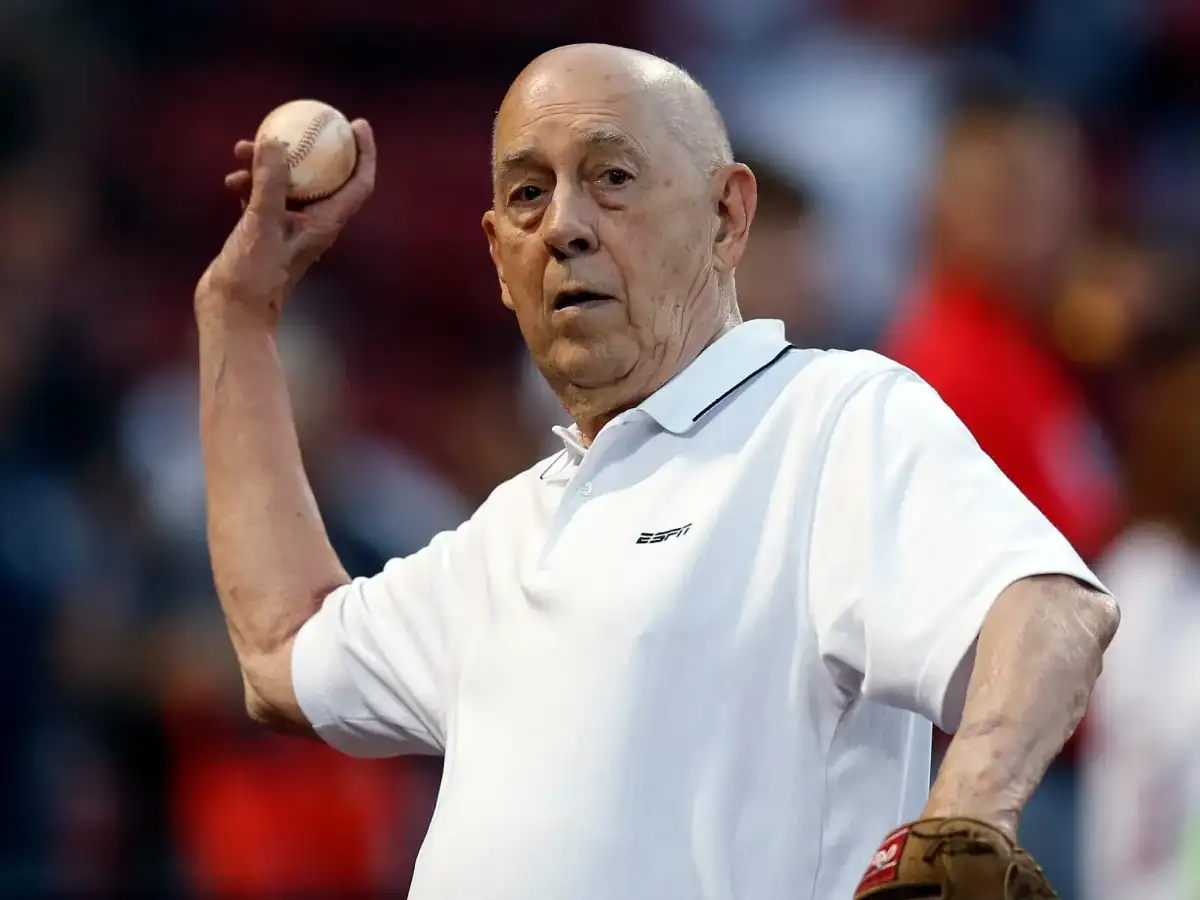
Bill Rasmussen, the visionary who helped turn the idea of a dedicated sports television channel into ESPN, has died at the age of 93 after a battle with Parkinson’s disease.
ESPN announced Rasmussen’s death on its official Instagram account, remembering him as the person whose ambitious idea for a 24-hour sports network transformed the way fans consume sports.
“ESPN founder Bill Rasmussen, whose out-of-the-box idea of a 24-hour cable sports network forever changed the landscape of sports media, died today at the age of 93,” ESPN said in a tribute. “A game-changer for the ages. Thank you for everything, Bill.”
Rasmussen's concept, which emerged at a time when cable television was still developing, would eventually grow into one of the world's most recognizable sports media brands.
The idea that changed sports television
Before ESPN existed, Rasmussen had worked in local television sports and became interested in the possibilities presented by the rapidly expanding satellite and cable television industry.
Rather than building another conventional sports program, he envisioned an entire network dedicated to athletics and broadcasting around the clock.
That idea became ESPN in the late 1970s. The network launched in September 1979 and began building an audience by giving sports fans something television had never consistently offered: a channel devoted almost entirely to sports.
ESPN Chairman Jimmy Pitaro said Rasmussen's vision and determination remained part of the company's identity decades later.
“Bill was a remarkable man — a visionary and an innovator who conceived the idea of a network entirely devoted to sports,” Pitaro said.
He added that ESPN would not exist without Rasmussen's “passion,” hard work and entrepreneurial spirit.
How ESPN became a sports media powerhouse
Rasmussen's influence extended beyond simply creating a sports channel. ESPN introduced programming ideas that helped establish the network as a destination for fans throughout the day.
One of its early breakthroughs came in the spring of 1980, when ESPN introduced round-the-clock sports coverage and began televising early-round games from the NCAA men's basketball tournament, according to Variety.
The tournament coverage helped expose the young network to viewers across the country and demonstrated the potential of filling television schedules with live sports that traditional broadcasters often overlooked.
That strategy would eventually become central to ESPN's identity.
Over the years, the network expanded into major professional leagues, college sports, sports news, debate programming, radio, podcasts and digital platforms.
From one channel to a global sports brand
The scale of ESPN in 2026 bears little resemblance to the small operation Rasmussen launched more than four decades ago.
The company now employs more than 5,900 people worldwide and operates eight US television networks, while also providing sports programming through ABC.
Its broader media operation includes digital platforms, a mobile app, direct-to-consumer services, radio programming, podcasts and social media.
ESPN's portfolio now includes some of the biggest properties in American sports, including Monday Night Football , First Take and extensive NFL and NBA coverage.
The company is currently controlled by Disney, with Hearst and the NFL holding minority investments.
Rasmussen's original concept had evolved into a vast sports media ecosystem reaching millions of fans.
‘Bill was our George Washington’
Chris Berman, one of ESPN's best-known early personalities, paid tribute to Rasmussen after learning of his death.
Berman joined the network just three weeks after its 1979 launch and described Rasmussen as both a mentor and friend.
“Bill was our George Washington and a good friend,” Berman said.
He remembered Rasmussen as someone whose optimism was difficult to contain and whose personality helped shape the culture of the young network.
Berman also pointed to Rasmussen's gratitude and warmth, saying sports fans could recognize the impact of his contribution even decades after ESPN began.
Rasmussen's legacy lives on
Rasmussen's importance to ESPN goes beyond the title of founder. His greatest achievement was recognizing that sports could support an entire television network at a time when the idea seemed unconventional.
That gamble helped reshape the relationship between sports and television.
The rise of 24-hour sports coverage also changed how fans followed teams, tournaments and athletes, creating demand for constant updates, analysis and live programming.
What began as an ambitious idea in the emerging cable era ultimately became a defining force in modern sports media.
Family remembers ESPN pioneer
Rasmussen was preceded in death by his wife of 56 years, Lois, who died in 2011.
He is survived by his sons Scott Rasmussen and his wife Laura, and Glenn Rasmussen; his daughter Lynn Van Hollebeke and her husband Louie; seven grandchildren; and two great-grandchildren.
For ESPN and the broader sports world, Rasmussen leaves behind a legacy that is difficult to measure simply in television ratings or programming hours.
He helped create the idea that sports could have a home of its own — all day, every day. More than four decades later, that idea remains at the heart of ESPN.