Bill Gates’ daughter Phoebe Gates is at the center of a brewing scandal after her multibillion-dollar startup, Phia, was accused of “cookie stuffing,” a deceptive practice that carries a maximum penalty of 20 years in federal prison.
Since July, Phia has been doing damage control after reports claimed the startup was using its technology to take credit for sales it may not have generated.
The company claimed it only recently found out about the issue and blamed it on a “bug.” But new reports claimed that the “nepo baby” knew about the illicit feature for months and may have allegedly used it to inflate their commissions.
Phoebe Gates’ AI startup Phia has been accused of “cookie stuffing” to claim credit for sales it may not have generated

Phoebe Gates, 23, who previously said she had “so much insecurity” about being a “nepo baby” and had “such a desire to prove” herself, founded Phia with her Stanford University roommate Sophia Kianni.
The digital personal shopping assistant, which has over 9,600 retail brand partners, allows shoppers to find discounts and automatically apply coupon codes during online purchases.
“AI is reshaping nearly every industry, but shopping is stuck in the past,” Phoebe previously told People. “Consumers still waste hours comparing prices and hunting for deals, only to still end up overpaying.”
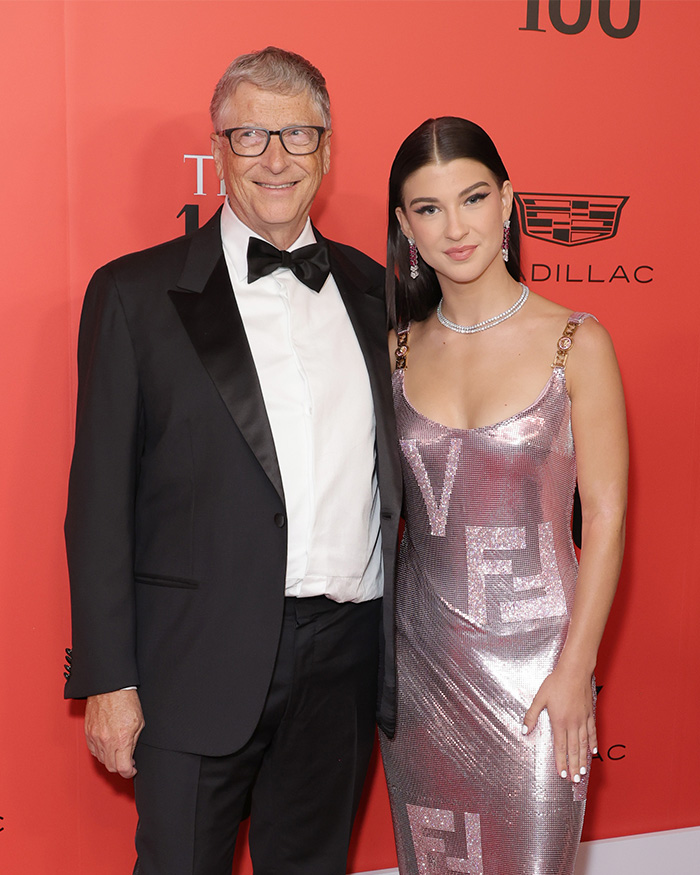
Michael Loccisano/Getty Images
Under normal circumstances, a shopper using a Phia coupon would trigger a tracking cookie, and if the shopper subsequently made a purchase, such as buying a pair of Nike shoes, then this would allow Phia to receive a legitimate commission.
But in the alleged cookie-stuffing scheme that Phia is accused of, a shopper could simply be browsing Nike, see a Phia pop-up, and have a tracking cookie dropped without actually clicking or using a Phia coupon.
Gates reportedly asked developers to ensure cookies were dropped even when shoppers didn’t click Phia coupons

If that shopper then made a purchase even without using Phia, the cookie could make it appear to the affiliate network that Phia had driven the sale.
This potentially allows Phoebe’s startup to collect a commission despite not having generated the purchase, according to a Bloomberg report.
The company initially blamed a software bug, but Bloomberg found that it was actually a feature called “enable coupon auto drop,” and they were simply able to be switched on and off.

Bloomberg claimed that Phia’s alleged cookie-stuffing practice could be traced back to at least December and accounted for about 51% of the merchandise value that Phia claimed credit for in June.
When they disabled the features in July, their average daily revenue of around $80,000 plunged to numbers between $10,000 and $28,000.
Moreover, Bloomberg also alleged that the company’s founders knew that this was happening for months, based on messages shared on the company’s Slack channels.
The alleged cookie stuffing reportedly accounted for 51% of the merchandise value Phia claimed in June

Elle Bramble/Cultura Creative/Adobe Stock (Not the actual photo)
Phoebe allegedly seemed worried about her startup not generating as much commission from Etsy as she had expected.
So she reportedly sent messages to developers to make sure Phia was dropping a cookie every time its browser extension popped up, even if the shopper didn’t click a coupon, which would allow Phia to earn commission.
“Worried this is an issue across the board…” Phoebe wrote in a December 18 message on Slack. “can u confirm auto pop for cookie drop is live on ALL sites w a coupon to confirm we are monetizing on all gmv.”


Kianni, on a separate occasion, suggested a feature that would drop a cookie each time a user tried to close out a Phia pop-up, prompting a colleague to say that Google Chrome does not allow extensions to drop affiliate cookies on “dismiss events” or when the user is just trying to close out a notification.
“I guess we could say that the user is trying to open us and roll it back if they complain,” Kianni reportedly said.
“‘Are you sure you wanna do this?’” Phoebe recalled her father’s words about starting her own venture
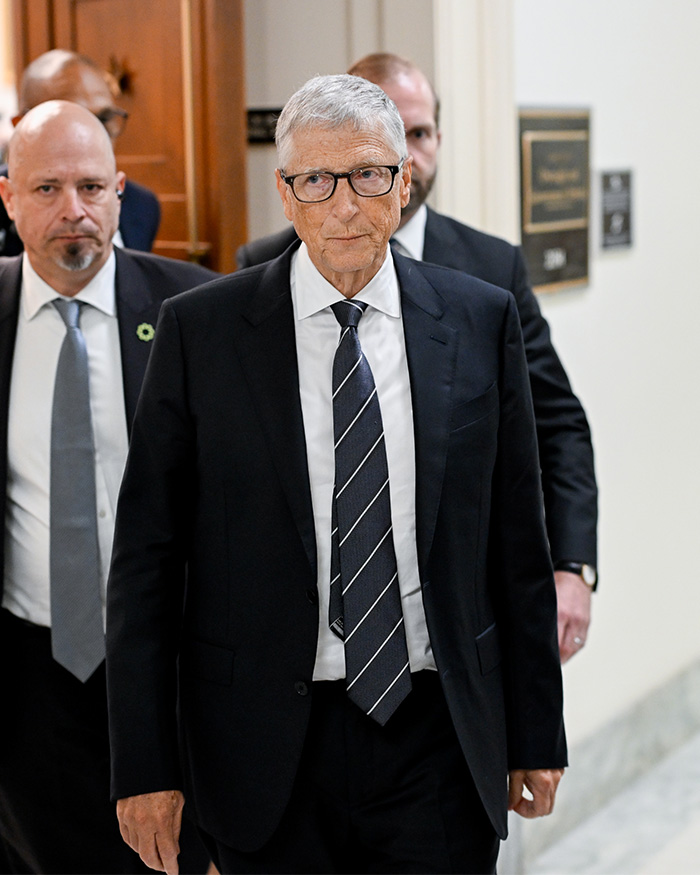
Daniel Heuer/Bloomberg via Getty Images
After the “cookie-stuffing” practice came to light, Phoebe’s representative released a statement saying they were reviewing their transactions over the last few months.
“Any features causing misattributions were immediately removed over a month ago on July 7,” the statement said.
“We are reviewing every transaction,” they continued. “We are fully committed to and have already begun issuing all transaction reversals to brand partners as a result of any misattribution, and we are hiring a head of compliance to make sure something like this never happens again.”
They said they will learn from this and continue to connect their users with products and offers from their brand partners.
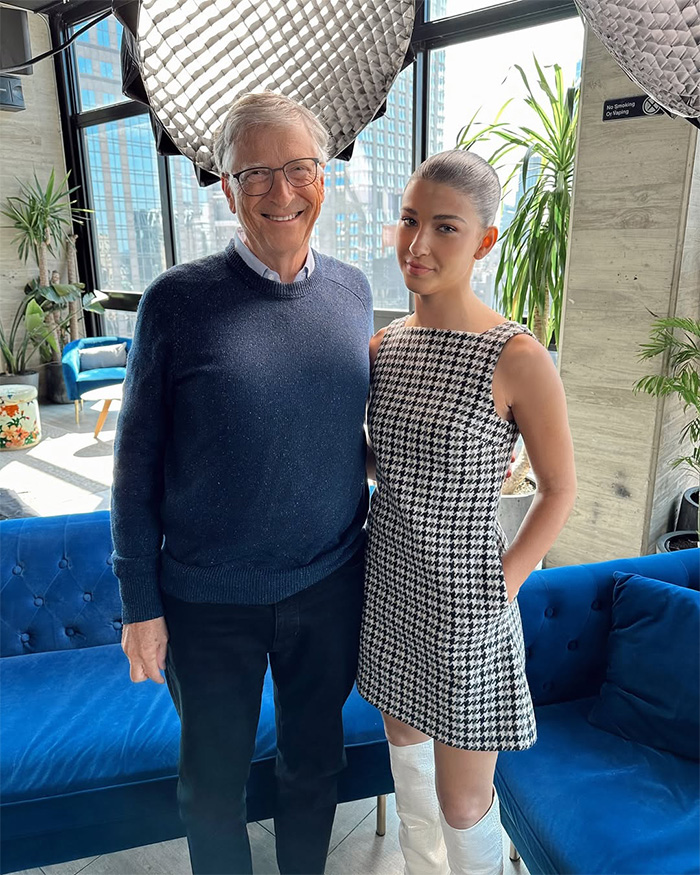
Phoebe and Kianni spoke about starting their own venture on their podcast, The Burnouts, last year.
On the podcast’s debut episode, Phoebe said her $108.4 billion-worth father Bill and mother Melinda French Gates were “really cautious” about her idea.
“‘Are you sure you wanna do this?’” Phoebe recalled her father’s words.
She said she had “such a desire to prove [herself].”
“I was like, I have so much privilege. I’m a nepo baby,” she said, adding that she had “so much insecurity around that.”
Her startup raised a jaw-dropping $30 million in 2025 from backers including Hailey Bieber and Kris Jenner, while this May, they received $35.5 million in new seed funding from even celebrity donors like Jessica Alba, Sydney Sweeney, Paris Hilton, Mindy Kaling, Priyanka Chopra Jonas, and Khloé Kardashian.
“Inheriting a bunch of money makes you look like a bad person now,” one commented online