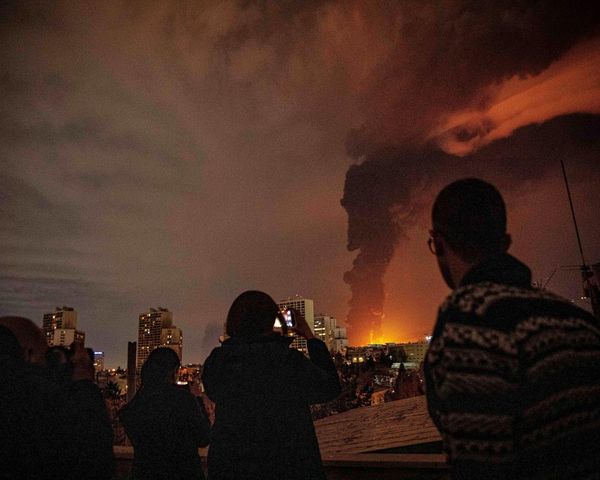
The dense layer of hazy soot that has blanketed much of California's Bay Area and particularly the Monterey Bay region is expected to clear Tuesday with shifting winds that should send smoke from a relentless wildfire near Big Sur south into the Salinas Valley.
The predicted change in wind direction, air pollution experts said Monday, should bring relief back to the Bay Area but could send the sooty air as far south as Pismo Beach in the coming days.
"There will be some relief for the rest of the week," said Dave Frisbey, planning and air monitoring manager for the Monterey Bay Air Resources District.
On Monday, the soot was thick enough to reduce visibility at Bay Area airports and forced astronomers at Lick Observatory on Mount Hamilton near San Jose to shut down their four research telescopes to avoid ash from damaging the delicate lenses. Last Monday, Tuesday and Wednesday, similar shutdowns were required.
"You can tell it's not fog or smog. It's an orange-brown haze," said Kostas Chloros, superintendent of Lick Observatory. "And we can smell smoke in the air. It's quite strong."
The good news for residents is that in most communities outside the fire area it is not exceeding federal health standards.
That's because the blaze, known as the Soberanes Fire was burning in the Santa Lucia Mountains on steep, remote slopes. The soot that has drifted northward has stayed roughly 1,500 feet up in the air or higher, its densest concentrations well above where people live and work.
"What's happening is the smoke from the fire is going up very high and is staying aloft," said Kristine Roselius, a spokeswoman for the Bay Area Air Quality Management District in San Francisco.
"At times, it is dropping down, but for the most part it is staying up high."
The fire began July 22, and as of Monday afternoon had blackened 40,618 acres in coastal Monterey County east of Highway 1 around Garrapata State Park, Palo Colorado Road and across the Los Padres National Forest.