On May 7, 2026, the Supreme Court of India ruled that electricity consumers in Delhi shouldn’t be charged for depreciation costs related to a TATA Power Delhi Distribution plant, as it no longer provides power to the city.
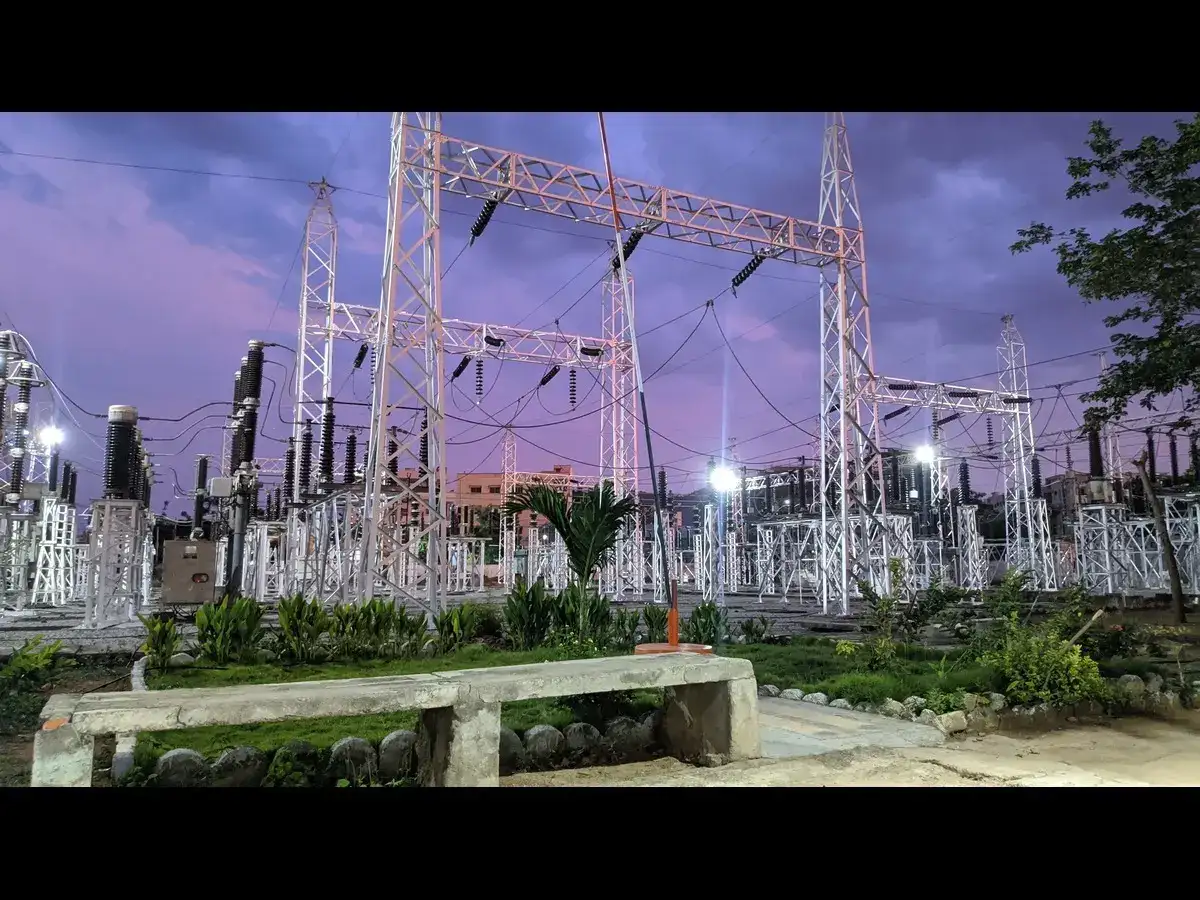
This case involved a disagreement between the Tata Power Delhi Distribution and the Delhi Electricity Regulatory Commission regarding a 108 MW gas-based power plant set up by Tata Power Delhi Distribution Limited (TPDDL) before the 2010 Commonwealth Games to meet the peak electricity demand in the city.
This power plant project was a temporary arrangement with Tata Power Delhi Distribution and they asked DDA (Delhi Development Authority) for land for the five to six years operational period.
On August 31, 2017, the Delhi Electricity Regulatory Commission (DERC), approved the plant's power purchase arrangement till March 2018, while simultaneously accepting a technical useful life of 15 years for the purpose of depreciation methodology. The capital cost approved by DERC stood at Rs 197.70 crore, against TPDDL's claim of Rs 320.17 crore.
After the plant stopped supplying electricity to Delhi consumers in March 2018, DERC allowed depreciation recovery only for the six-year operational period during which the plant served consumers. This resulted in depreciation recovery of Rs 83.34 crore, while the rest Rs 94.59 crore was disallowed, as reported by LiveLaw.
The Supreme Court observed in its judgement (2026 INSC 461) that even though the power plant’s life was 15 years, this doesn’t give Tata Power Delhi any right to claim depreciation cost for the entire technical life of the project.
The Supreme Court of India said that tariff determination is not just a mathematical exercise but a regulatory balancing act as well. The objective of enabling reasonable cost recovery for utilities must be weighed against and calibrated with the obligation to safeguard consumer interest.
The Supreme Court pointed out that in this case, electricity has not been supplied to the consumers after March-2018 and consumers cannot be required to pay for a service which they no longer receive, as reported by LiveLaw.
Under the PPA, TPDDL had to supply electricity only for a period of six years. It should be noted that the Commission on September 4, 2012, had clarified to the Managing Director of TPDDL that the plant could be treated as a merchant generator which is free to sell the power anywhere other than to the distribution utilities in Delhi or outside the state or to captive consumers within the state.
The Supreme Court said: “There was no legal impediment to either sale of the Plant or sale of electricity as a merchant generator. Therefore, TPDDL cannot be permitted to burden the consumers with tariff charges beyond March-2018. Therefore, the first substantial question of law is answered in the negative.”
The Supreme Court also said that Regulation 6.32 of the 2011 regulations prescribes the methodology of calculating depreciation over the useful life of the asset. It is a settled canon of statutory interpretation that no provision has to be read in isolation.
The Supreme Court said that regulation 6.32 of 2011 Regulations must be construed harmoniously with Regulation 4.1 of 2011 Regulations, which mandates that the tariff for supply of electricity by a generating company to a distribution licensee is to be determined in accordance with PPA or any other arrangement for such period as may be approved or adopted by the Commission, to the extent of existing installed capacity contained in the PPA.
The Supreme Court said that Regulation 4.1 of 2011 Regulations confines tariff entitlement to the period approved in the PPA. The order dated August 31, 2017 fixed the operational and recovery framework of the plant up to March-2018.
The Supreme Court said that the 2011 Regulations have to be read in conjunction with Section 61(d) of the 2003 Act which places the consumer interest at the centre of tariff Regulation.
The Supreme Court said: “Thus, Regulation 6.32 of the 2011 Regulations does not, and cannot, override the broader statutory and regulatory framework and the same does not confer an absolute and unconditional right upon the generating utility to recover depreciation from the consumers even for a period when the asset is free to supply electricity.”
For the aforementioned reasons, the substantial question of law no. (ii) is also answered in the negative by the Supreme Court.
The Supreme Court said that the Government of the National Capital Territory of Delhi (Delhi Government) granted permission on a temporary basis for 5 to 6 years. TPDDL was directed to obtain all necessary regulatory approvals before starting power generation.
The commission in its order dated August 31, 2017, which was not challenged by TPDDL, approved the PPA only for a period of six years from the date of commercial operation till March-2018.
Thus the Supreme Court said that the Appellate Tribunal for Electricity (APTEL) ought to have appreciated that the distinction between 15 years technical useful life and 6 years regulatory recovery period is not merely semantic but the tariff framework was also clearly different. APTEL’s approach was inconsistent with the order dated 31.08.2017, which was accepted by TPDDL and thus had attained finality.
The Supreme Court said that the true-up proceedings are intended to give effect to the tariff framework and not to reopen or reconfigure it. The APTEL erred, therefore, in disregarding the regulatory framework and conditions of approval. Therefore, the third substantial question of law, is answered in the affirmative
Supreme Court order
The Supreme Court said that for the foregoing reasons, the substantial questions of law which arise for consideration in this appeal, are answered in favour of the Commission and against the TPDDL.
- The impugned judgment dated 10.02.2025 passed by the APTEL is set aside and order dated 11.11.2019 passed by the Commission is restored. In the result, appeal is allowed. There shall be no order as to costs.