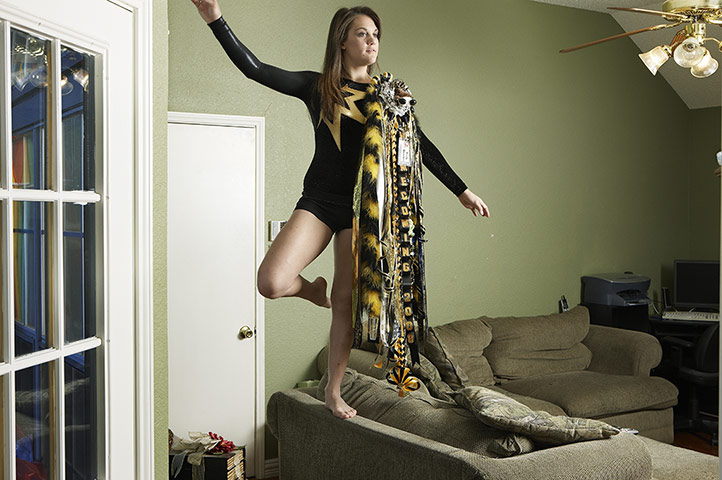
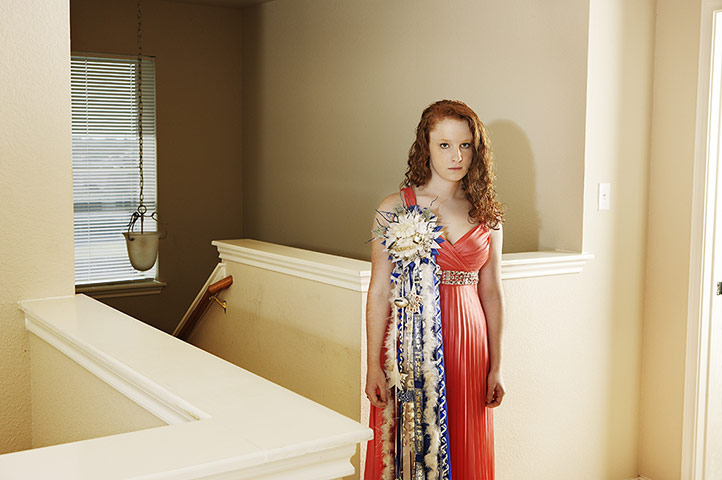
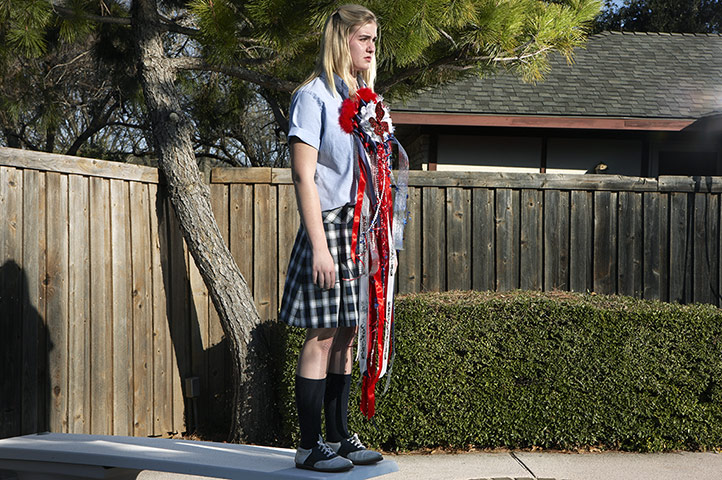
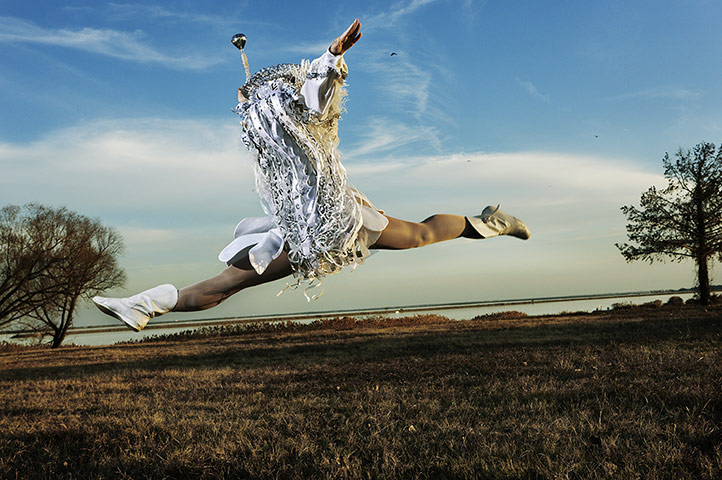
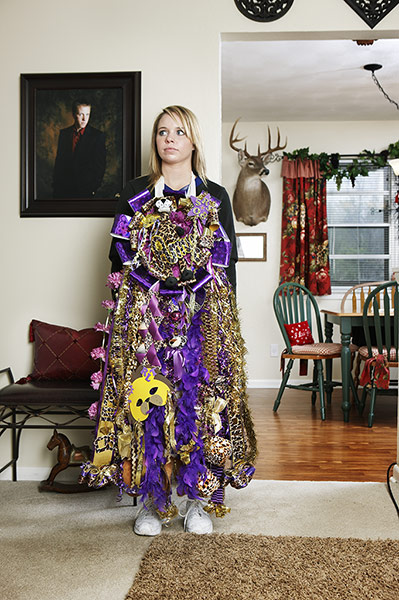
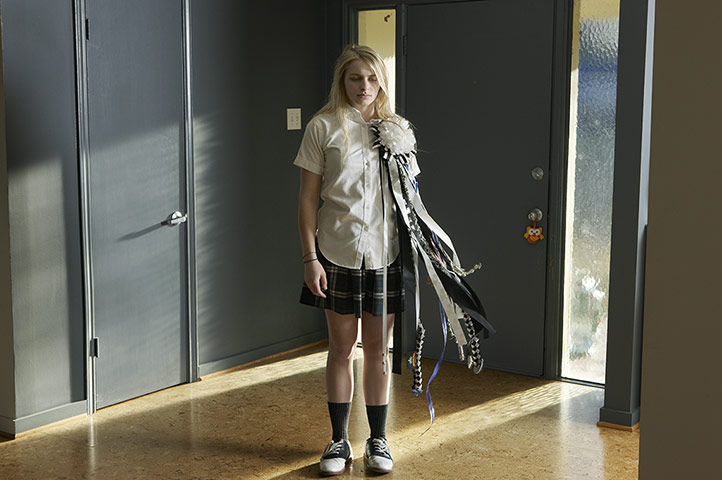
A “mum”, in the state of Texas, is an elaborate, decorative corsage worn by schoolgirls during high school homecoming festivities (“garters” are the schoolboy equivalent). →Photograph: Nancy NewberryHeld in early autumn, homecoming is one of the most important events in the American school calendar, with dances, football games, a parade and a homecoming king and queen. →Photograph: Nancy NewberryMums have their roots in the 1930s – a quick way to indicate social status at homecoming games. Boys offered their dates real chrysanthemums – hence the name – as a corsage, and to receive one of these flowers during that depressed era was seriously flattering. And, being given out in limited quantities, there was harsh competition for them among the girls. →Photograph: Nancy Newberry
Today, mums are given by friends as well as by boyfriends, their size and flamboyance still an indication of your all-important social standing. A subtle flower with a ribbon – or, worse, no mum at all – will out you for the bookish, boyfriendless no-hoper that you are. →Photograph: Nancy NewberryLike most things, they grew to today’s garish proportions during the 1980s. Rosettes are routinely larger than a dinner plate and the ribbons often trail the floor, adorned with silk flowers, feather boas, trinkets, stuffed animals and LEDs. Some even connect to iPods. →Photograph: Nancy NewberryUnsurprisingly, a top-end mum can cost up to $500, and they have spawned a multimillion-dollar industry of cottage mum-makers and retailers. Boys’ garters, worn as armbands, are less baroque, more akin to a cheerleader’s pompom. →Photograph: Nancy NewberryMums, once worn, are subsequently immortalised, tacked to bedroom walls like hunting trophies. Shot in these domestic environments, and juxtaposed with adolescent faces, school uniforms and football kit, the mums in Nancy Newberry’s portraits seem out of place, more Sex And The City than Glee club. Yet for all its stressful social significance, there is a certain sweetness to this cultural ritual, as the unselfconsciousness of Newberry’s subjects shows.Photograph: Nancy Newberry
Sign up to read this article
Read news from 100’s of titles, curated specifically for you.






.png?w=600)