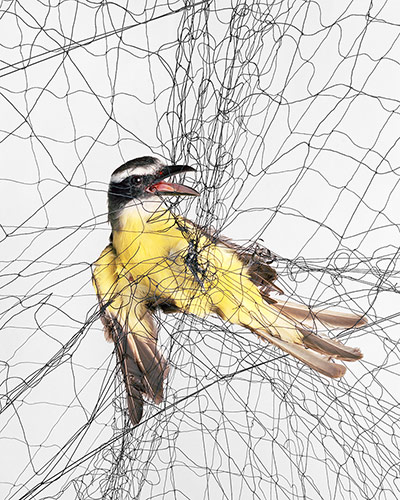
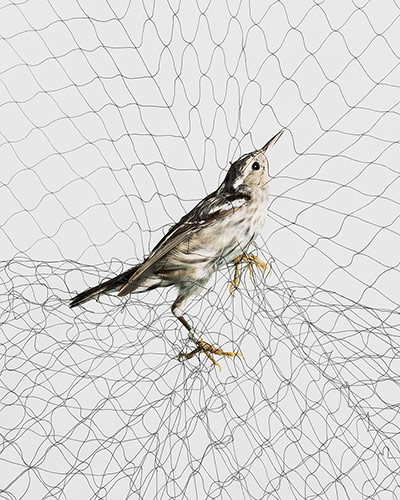
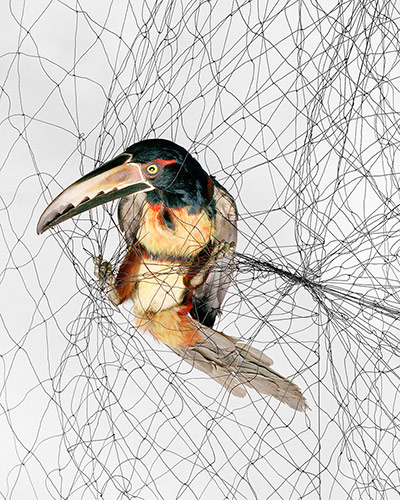
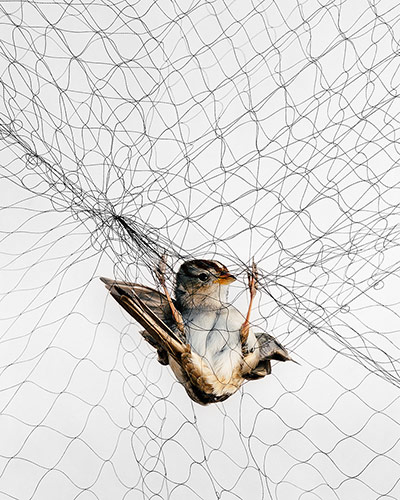
Big picture: Birds in nets, by Todd Forsgren - in pictures
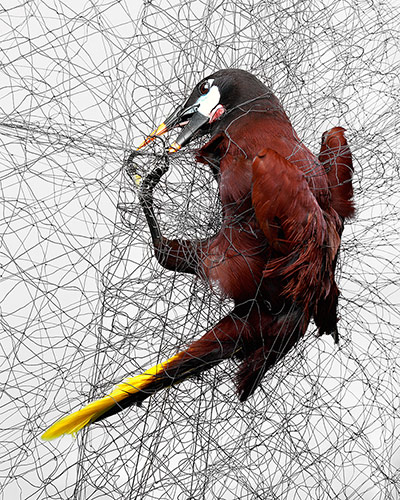
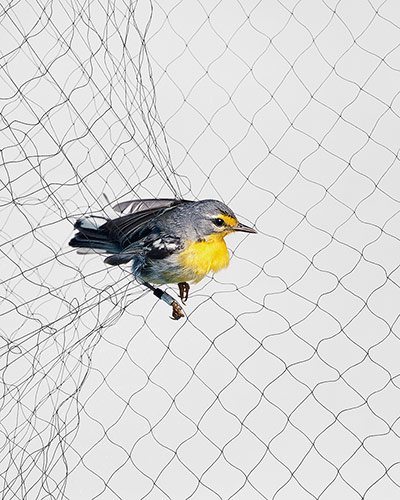
These birds are tangled up in “mist nets” – giant webs made from thin, nylon mesh suspended between poles, designed to capture the birds so ornithologists can study them up close. They are carefully extracted and, once the data is collected, released unharmed, usually moments later. If it still seems a little inhumane, consider this: Victorian artists such as John James Audubon, who wanted to study birds up close, used shotguns. Photograph: Todd ForsgrenThey are captured this way to obtain information that can’t be collected using binoculars, microphones or telephoto lenses. They are weighed, measured, aged, sexed and banded with a numbered anklet to help biologists identify them and their behaviour when they are back in the field. Occasionally, blood samples are taken. Fewer than 1% are injured during the process. Photograph: Todd ForsgrenPhotographer Todd Forsgren, a keen birder, sets up a “guerrilla studio” in the field with a white backdrop, and shoots fast. He started in 2006 and has since worked with a dozen ornithologists in the US, Costa Rica and Puerto Rico. Like the hooded warbler he is hoping to see, he is migrating south from his home in Baltimore this winter to photograph species in Mexico. Photograph: Todd Forsgren
There is no doubt that these photographs are unsettling – a creature that symbolises flight and freedom cruelly, it appears, unable to fly. But Forsgren set out to continue the work of Audubon, author of Birds Of America, and another hero, Roger Tory Peterson – who pioneered field guides for hobbyists – in showing birds in sublime detail, while they are still “unknown”, before being catalogued. In this way, for this brief moment, the birds are caught between the wild and captivity. Photograph: Todd ForsgrenBird caught in a netPhotograph: Todd ForsgrenBird caught in a netPhotograph: Todd Forsgren
Sign up to read this article
Read news from 100's of titles, curated specifically for you.