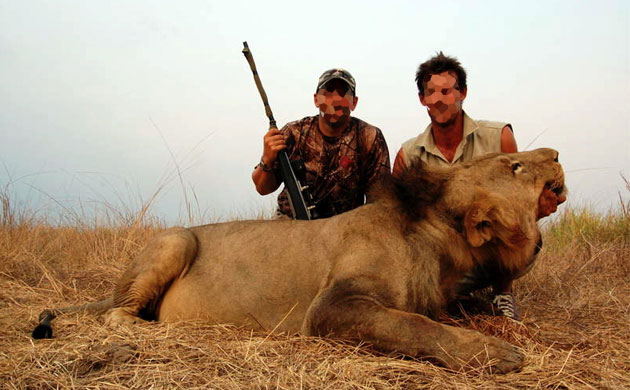
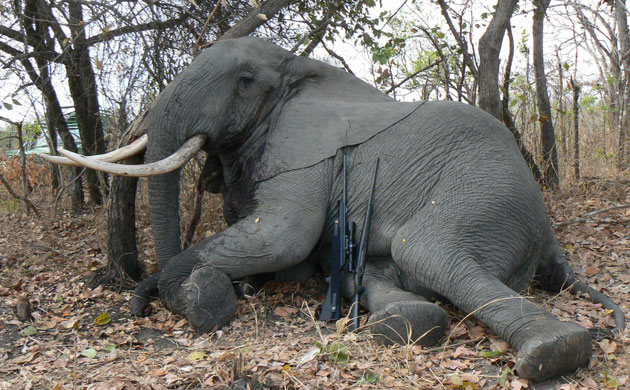
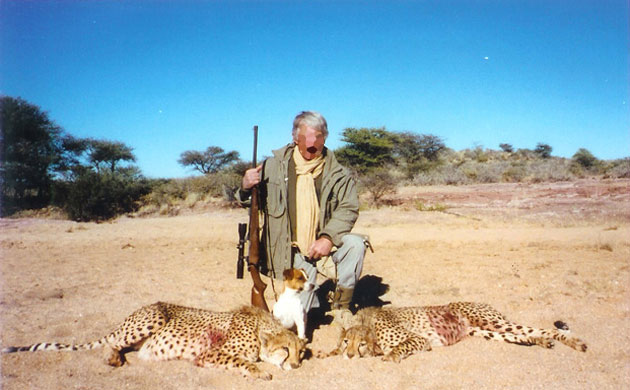
Hunters with a male lion in Tanzania. Hunt fees often include the cost of skinning and export licences so that the hide can be taken home as a 'trophy'. Most big game hunters in Africa are from the US. Lions are listed by the International Union for Conservation of Nature as vulnerable. It says the species population has decreased 30% over the past two decades, over approximately three generations. It blames retaliatory or pre-emptive killing to protect life and livestock, habitat loss and conversion. But the IUCN's latest report says: 'Trophy hunting is carried out in a number of sub-Saharan African countries and is considered an important management tool for providing financial resource for lion conservation for both governments and local communities. However, there is concern that current management regimes can lead to unsustainable offtakes'Photograph: miombosafarisElephants are highly prized among trophy hunters who can pay £10,000 or more for a kill. Elephants are categorised as near threatened. African Elephants currently occur in 37 countries in sub-Saharan Africa but they are known to have become nationally extinct in Burundi in the 1970s, in the Gambia in 1913, Mauritania in the 1980s, and in Swaziland in 1920, where they were reintroduced in the 1980s and 1990 Photograph: Christophe Morio/africahuntingHunting cheetahs, which are listed as vulnerable, is not legal in all Afrian countries. These were shot in Namibia, which would have cost the trophy hunter around £2,500. It is estimated that cheetahs have disappeared from 76% of their historic range in Africa. Populations vary, but there are estimated to be 1,800 in Botswana, 2,000 in Namibia, 550 in South Africa, 400 in Zimbabwe and only 25 in Malawi, 50 in Mozambique 50. Cheetahs are the fastest mammals on land, and can reach speeds of up to 70mphPhotograph: nicknoltsafary
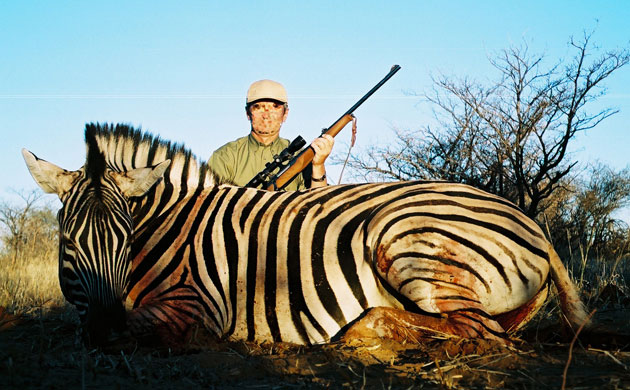
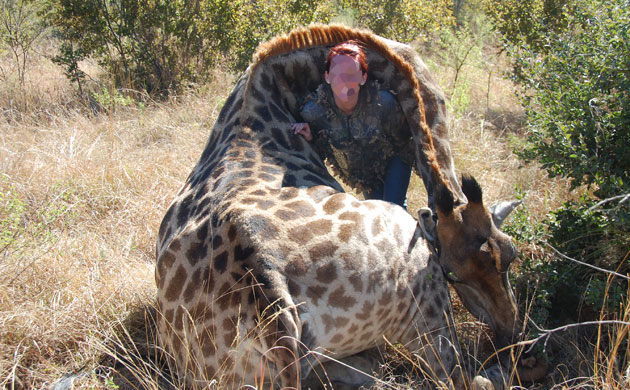
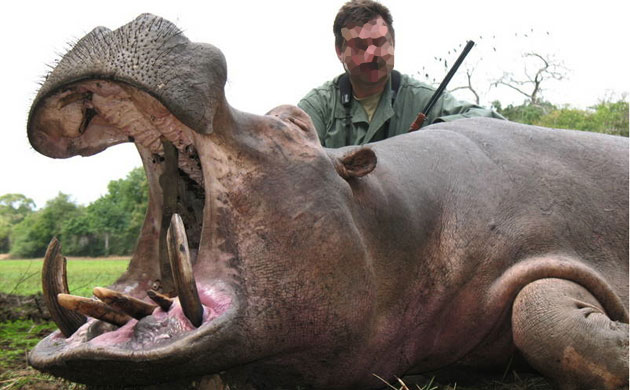
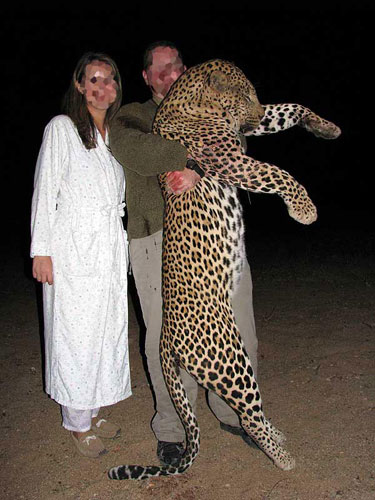
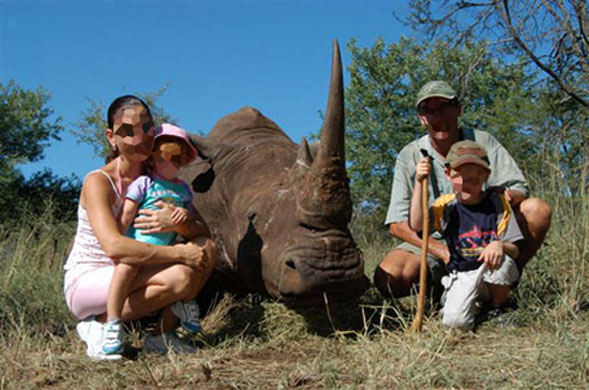
This zebra was shot in Namibia. Populations of around 660,000 mean zebras are of not yet a conservation concern. However, they are regionally extinct in Burundi and Lesotho, and possibly in AngolaPhotograph: redivorysafarisThe IUCN does not list giraffes as a concern, as the species remains widespread. But recent population estimates suggest a decline which, if substantiated, could mean that the species would be elevated to a higher category of threat Photograph: redivorysafarisThe hippopotamus is listed as vulnerable, following a 7–20% decline in population numbers in the past 10 years. The increasing severity of drought is a real problem for the hippo, which needs a supply of permanent water, large enough for the territorial males to spread out, and adequate grazing on open grassland nearby. The IUCN says that the primary threats to common hippos are illegal and unregulated hunting for meat and ivory (found in the teeth) and habitat loss. Illegal or unregulated hunting of common hippos has been found to be particularly high in areas of civil unrest. A recent field survey found that common hippo populations in the Democratic Republic of Congo have declined more than 95% as a result of intense hunting pressure during more than eight years of civil unrest and fightingPhotograph: miombosafarisA leopard kill shown off for the camera in Zimbabwe. Leopards are classified as near-threatened. The IUCN says there are no reliable continent-wide estimates of population size in Africa, but the most commonly cited estimate is 700,000 Photograph: huntingreportA family poses beside a rhino in South Africa. Black rhinos are categorised as critically endangered and white rhinos as near threatened. Kido Safaris also runs photographic safaris which they say can be very effective at protecting wildlife. The tour operators recently introduced 27 highly endangered animals into their reserve. Henk Brink of Kido Safaris says they operate an ethical hunting policy. 'We do sometimes hunt black rhino, for which you need to apply for a special permit. But the only time that would happen is if it was on the verge of dying already'Photograph: kidosafaris
Sign up to read this article
Read news from 100’s of titles, curated specifically for you.