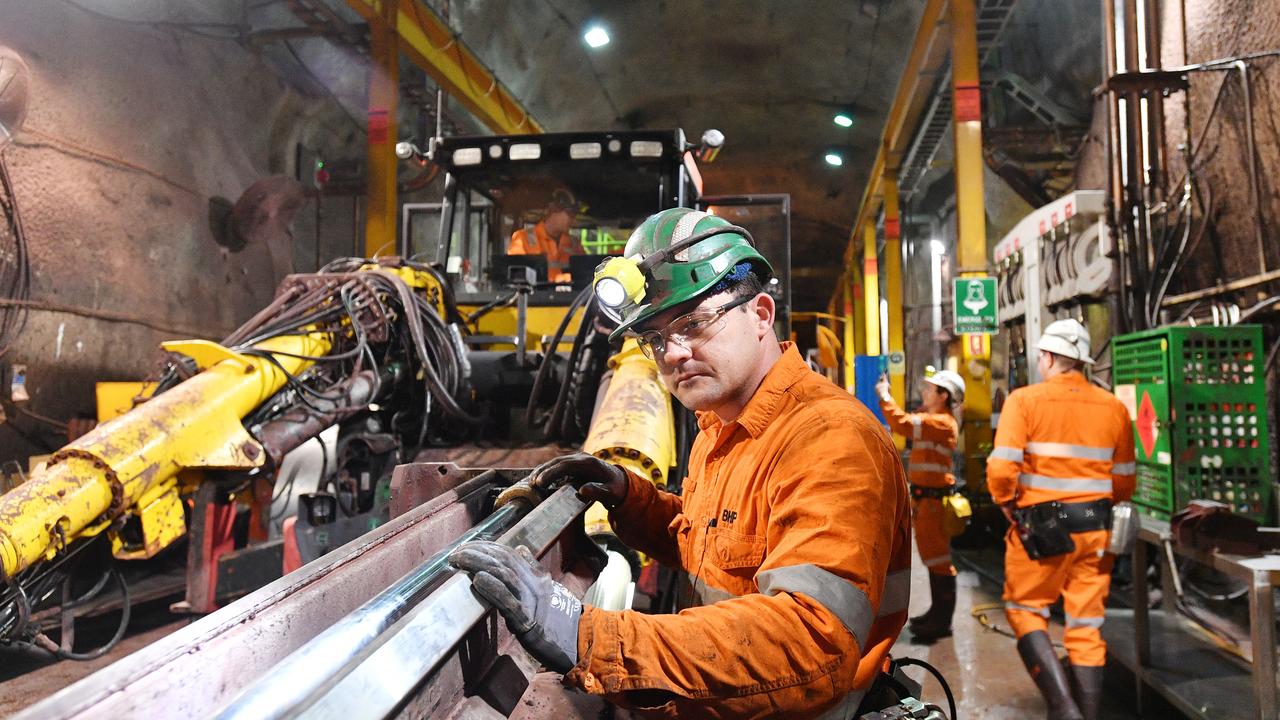
Australia's largest listed company sees its growth tied to copper rather than iron ore due to the metal's vital importance in AI data centres and the transition to renewable energy.
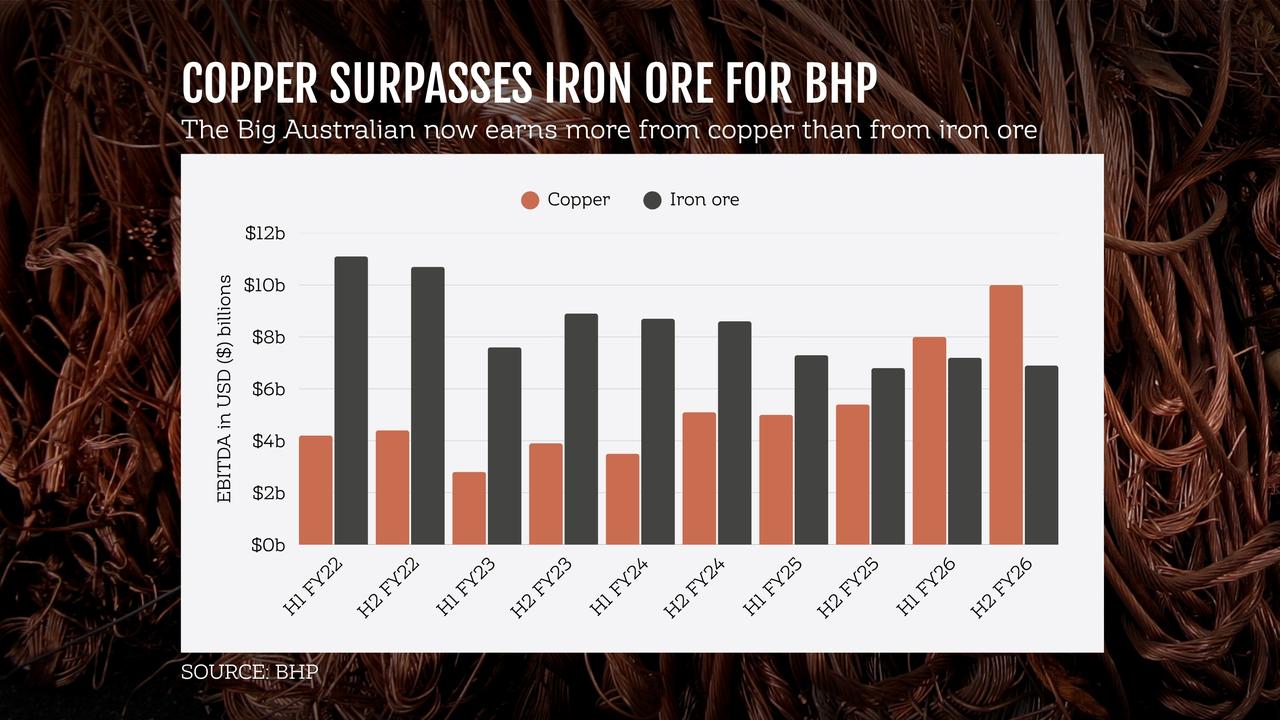
For the first time, BHP's full-year earnings from its copper mines in South Australia and Latin America surpassed those from its Western Australia iron ore operations, the Big Australian disclosed on Tuesday.
The world's biggest miner extracted $US18.2 billion ($25.6 billion) in underlying earnings from the metal in the 12 months to June 30, up from $US12.3 billion ($17.3 billion) a year ago, while earnings from iron ore were stable at $US14.5 billion ($20.4 billion).
More than half of BHP's total underlying earnings of $US33 billion ($46 billion) came from copper, generating significant free cash flow that the company plans to use to fund new copper projects in South Australia, Chile and Argentina.
More than half of BHP's growth spending in the new financial year will go toward copper projects, or around two-thirds when non-operated joint ventures are included.
BHP is forecasting its copper production will dip in the current financial year but increase by 50 per cent by 2035.
"When you consider that we are already the world's largest producer, that is very, very substantial growth," chief executive Brandon Craig told an earnings call on Tuesday.
"Copper is the engine that is driving BHP's growth."
BHP produced 1.9 million tonnes of copper in 2025/26, down three per cent from the prior year, but its average realised sale price jumped 35 per cent to $US5.74 a pound.
Copper prices also boomed in the late 2000s following rapid urbanisation in China, but prices crashed during the 2008 financial crisis.
This time, BHP sees demand for copper as part of a broad-based global mega-trend, rather than driven by a single country.
"A lot of capital is flowing into artificial intelligence, data centres and the energy transition, and countries and companies are increasingly focused on energy and food security, supply chain resilience and industrial capacity," Mr Craig said.
"That equates to broad-based demand for commodities such as copper."
Global X investment strategist Justin Lin said the results showed BHP was - for the first time - a genuinely copper-led company rather than an iron ore giant with a copper side business, which should force a rethink of how investors viewed the company.
"The old perception is of a lumbering, old-world commodity giant heavily dependent on Chinese demand," Mr Lin said.
"Increasingly, though, BHP is becoming a much cleaner exposure to the future economy."
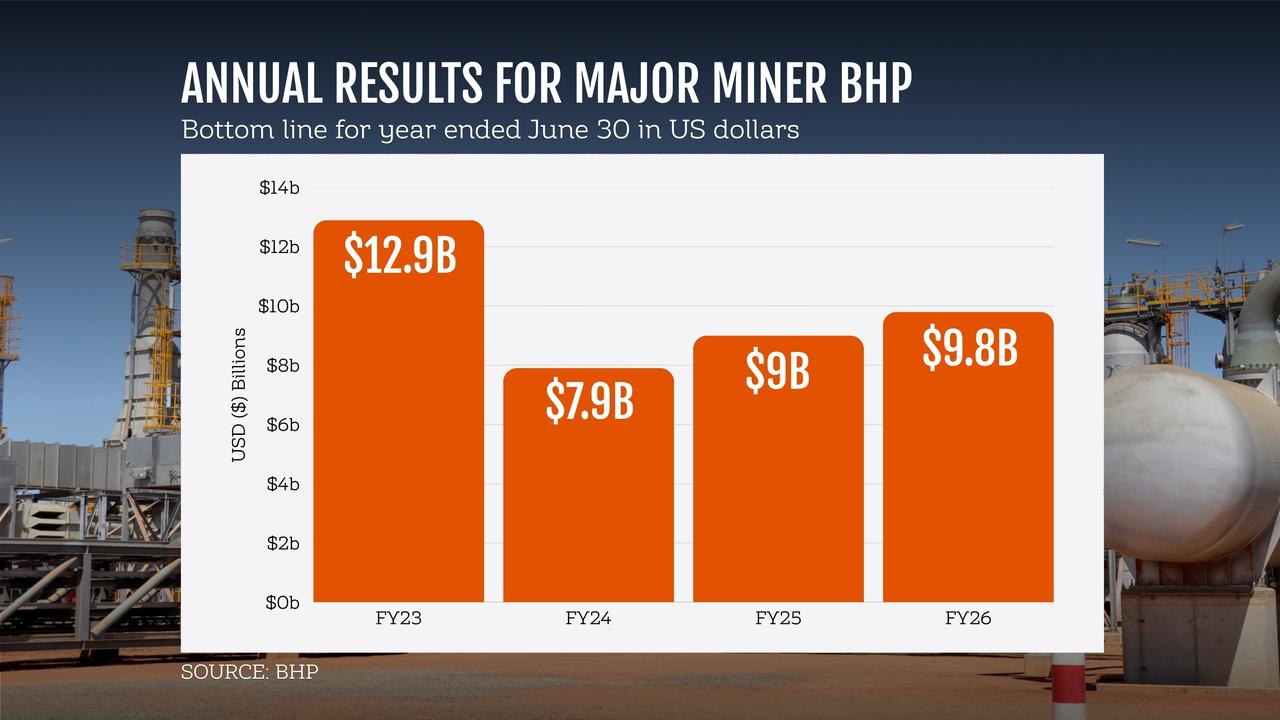
Overall, BHP delivered a nine per cent lift in group bottom-line net profit to $US9.8 billion ($13.8 billion), while revenue grew 15 per cent to $US58.8 billion ($82.8 billion).
BHP will pay a final dividend of 99 US cents per share, taking the total payout for the year to $US1.72, up from $US1.10 in the previous year.
RBC Capital Markets analyst James Redfern said BHP's dividend was 10 per cent more than analysts predicted, while its underlying profit was four per cent ahead of consensus estimates.
BHP shares were changing hands at $63.93 early Tuesday afternoon, up 2.8 per cent from Monday's close and up 39.6 per cent year to date.