President Biden is signaling that he is prepared to make significant border security concessions to secure a bill that provides funding for Ukraine and Israel. Among the factors being considered include raising criteria for asylum seekers, policy enabling swift expulsion of migrants at the border, and expanding detention capacity.
An advocate for tougher border security, Congresswoman Victoria Sparks illustrated the concern, stating that over 90% of asylum claims are legitimate. She believes that rising standards would help secure the border by providing Border Patrol with additional tools.
Another point of contention lies in the utilization of parole authority, which was not intended to be applied to groups but rather on an individual basis. Sparks suggested that the President and Senate Democrats could find common ground by revising this practice and viewing it through a case-by-case lens.
Turning to the issue of foreign policy, the Congresswoman criticized the slow pace of aid delivered to Ukraine. According to Sparks, an ill-conceived strategy for sending aid and a lack of enforcement of sanctions have created loopholes that Russia has capitalized on. She stressed the urgency of the situation and urged for prompt action.
Twitter Post On Biden open to border security concessions, Sparks reveals
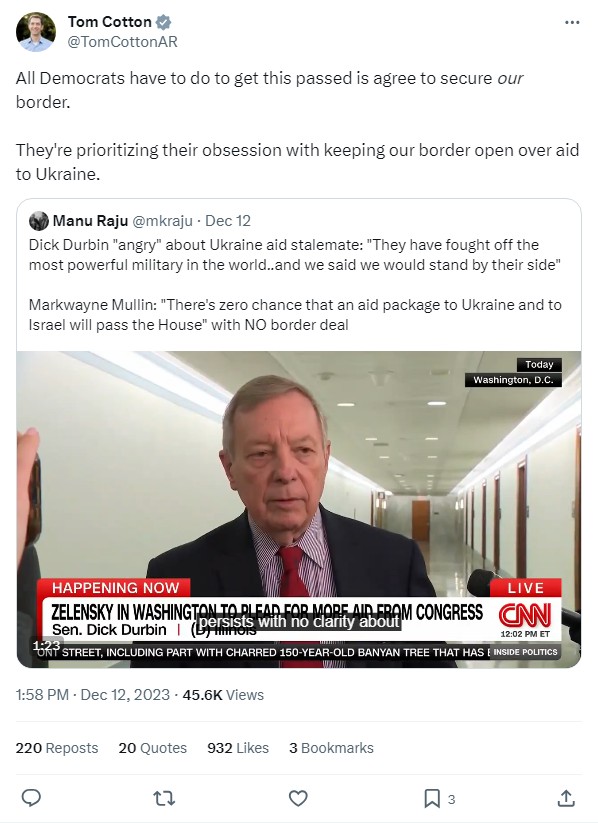
Discussing intra-party contention, Sparks acknowledged various ideologies within her party. However, she argued that within a party, different ideas should exist, and brushed off critics who engaged in binary thinking or all-or-nothing politics.
The Congresswoman also showed support for adjusting language in the Secure Border Act that requires all American workers to receive federal approval before starting or changing jobs. While this move is seen by some as the government overreaching, Sparks highlighted the challenges with government databases and raised concerns about their potential misuse.
Overall, the Congresswoman presented a sweeping case for security reforms at the border, a reconsideration of parole authority, and closer scrutiny of aid to Ukraine. The concerns raised in Sparks' discourse underscore broader debates about immigration policy, foreign involvement, and the appropriate scale and role of government in the lives of citizens.