WASHINGTON — The Biden administration offered humanitarian protections to Venezuelans on Monday that would alleviate the threat of deportation for over 320,000 eligible individuals who have sought refuge in the United States.
The administration determined that Venezuelans qualify for temporary protected status and also vowed to review imposing new sanctions that would further isolate Nicolás Maduro. More than 5.4 million Venezuelans have fled their country in recent years, according to the United Nations, among the largest displacement crises in the world.
“The living conditions in Venezuela reveal a country in turmoil, unable to protect its own citizens,” Homeland Security Secretary Alejandro Mayorkas said in a statement. “It is in times of extraordinary and temporary circumstances like these that the United States steps forward to support eligible Venezuelan nationals already present here, while their home country seeks to right itself out of the current crises.”
Eligible Venezuelans have 180 days to apply for the protective status, which requires a $50 application fee, an $85 biometrics fee and a $410 fee for those seeking work authorization. Individuals will also undergo a background check and are required to provide proof they entered the United States before the March 8 order was issued.
Once granted, the protective status lasts for up to 18 months. Biden administration officials underscored that TPS protections could be extended, but that they are not permanent, and that the action should not be a signal to Venezuelans outside of the United States to come.
“We very much expect that smugglers and other unscrupulous individuals will be now claiming that the border is open, and that is not the case,” one administration official told reporters in a call.
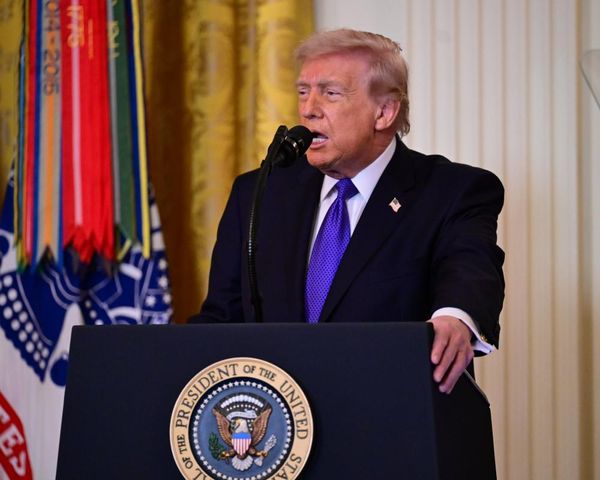
For years, a bipartisan group of senators lobbied former President Donald Trump to grant TPS to Venezuelans. Instead, on the last day of his presidency, he issued a memorandum deferring the forced departure of Venezuelans without legal status in the United States.
In addition to fulfilling a campaign promise by President Joe Biden, the TPS designation puts to rest a yearslong fight in Congress. Republicans in the U.S. Senate blocked attempts to pass TPS, and the Trump administration didn’t act until after the 2020 election.
Florida Republican Sen. Marco Rubio said he supports the TPS designation.
“Venezuela remains a nation in crisis,” Rubio said in a statement. “I have long advocated providing much-needed relief to help eligible Venezuelan nationals residing in the U.S. with a work permit and a temporary solution, which is exactly what the Trump Administration did earlier this year. I am glad the Biden Administration shares that commitment, and I support granting TPS status to eligible Venezuelan nationals currently in the U.S.”
The Deferred Enforced Departure, or DED, order issued by Trump remains in place, and “the protection is essentially the same,” a Biden administration official said. But TPS provides a structure for these individuals more grounded in law.
“The individuals who apply for and receive TPS and are also covered by DED don’t need to apply for employment authorization documents under both programs,” the official said. “People can make their selection, if you will.”
But Miami Republican Rep. Mario Diaz-Balart, who authored legislation that would grant TPS to Venezuelans, said in a statement that Venezuelans applying for work authorization under TPS will need to pay fees that do not exist under the DED designation. Diaz-Balart has asked the Department of Homeland Security for clarification on the procedures to obtain work authorization under DED.
“Rather than Venezuelans automatically being protected by DED, as they were under the Trump Administration, they will need to apply for TPS and pay a fee, which was not required under DED,” Diaz-Balart said in a statement.
DHS did not immediately respond to a request for comment on the differences in the work authorization process.
The TPS designation comes after Florida Republicans campaigned on Venezuela policy for years, using the nation’s humanitarian crisis as a rallying cry for Venezuelans and other Hispanics in Miami-Dade County. Republicans repeatedly hammered local Democrats for statements by others in the party that were seen as conciliatory toward the Maduro regime and Cuba.
While South Florida Democrats pushed back against statements by some in their party who referred to the recognition of Juan Guaidó as Venezuela’s legitimate leader as “a U.S.-backed coup,” Hispanic voters in Miami-Dade County swung sharply toward Republicans during the 2020 election and helped Trump win Florida by 3.3%.
Local Democrats celebrated the TPS designation Monday.
“By using the law to lift the threat of deportation and grant employment authorization, the Biden administration helps hundreds of thousands of families stay safe and earn a living without fear of being returned to Maduro’s dangerous and cruel regime,” said Rep. Debbie Wasserman Schultz, who represents thousands of Venezuelan-Americans in Broward and Miami-Dade counties.
As of this week, 19 Venezuelans remained detained at the Broward Transitional Center in South Florida — the U.S. Immigration and Customs Enforcement detention center that for years has remained the hub facility for Venezuelans awaiting deportation. It is unclear how many are detained nationwide.
Following in line with the Trump administration, Biden is continuing to recognize the 2015 National Assembly as the last remaining democratic institution in Venezuela, and Guaidó as the nation’s interim president.
Leaders of the Venezuelan community in the United States immediately celebrated the announcement.
“This measure will allow them to live, work and be legally protected in the United States, resting on the knowledge that they will not be deported,” said Carlos Vecchio, Guaidó’s diplomatic representative to the United States. “Venezuelans are hardworking, intelligent and productive people that have much to contribute to the progress and prosperity of the United States.”
Biden officials said the administration is working to broaden a pressure campaign on Maduro that began under Trump by coordinating new sanctions with several other countries, including allies in Latin America and the European Union. The U.S. has instituted stricter sanctions than any other nation thus far. Opposition leaders have been pressing other countries to institute similar measures in a bid to further isolate Maduro.
“We have to recognize here that unilateral sanctions over the last four years have not succeeded in achieving an electoral outcome in the country,” a second senior administration official said.
“The United States is going to continue to increase the pressure,” the official said. “It’s going to expand that pressure multilaterally to ensure that those that are guilty of human rights abuses, that are robbing the Venezuelan people, that are engaged in rampant criminal activity find no quarter anywhere until they sit down to the table in earnest.”
———