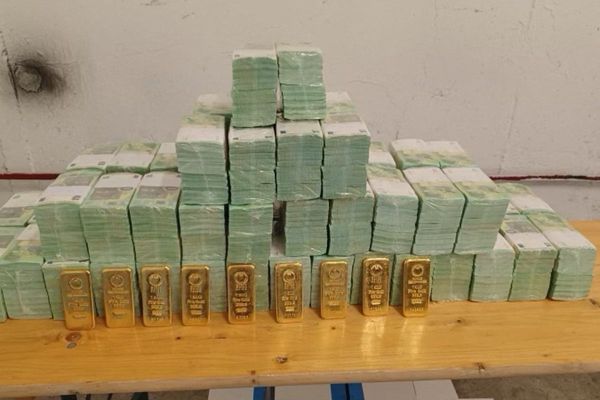
Death threats; hasty transfers of cash to Sweden; an unexplained £1.5m loan to a company that owned his father’s house. Yes, it’s another instalment from life in the slow lane of department store retailing.
As it happens Dominic Chappell denied menacing BHS chief executive Darren Topp. And Chappell maintained, in the face of obvious scepticism among MPs on the business select committee, that there were innocent explanations for the cash transfers whizzing in and out of BHS and his Retail Acquisitions company.
Yet one conclusion was crystal-clear from Wednesday’s arresting session in Westminster: nobody could view Chappell, a former bankrupt, as ever being a fit owner of a loss-making chain of department stores with 11,000 employees and a large deficit in its pension fund.
Chappell – regardless of whether he is “mythomaniac” and a “Premier League liar,” as BHS’s former financial consultant put it – was plainly foolish to buy the business from Sir Philip Green for £1 in the first place.
Chappell grumbled that the stores were shockingly under-invested, but he was free to inspect them beforehand. His working capital arrangements for a business losing £1.5m a week appeared to be an exercise in hope and high-interest loans. And, most absurdly, he seemingly failed to appreciate that the deficit in the pension fund – a colossal £571m on one count – might scupper any theoretical possibility of reversing BHS’s fortunes.
This was despite Chappell’s account that he was warned by Green not to approach the Pensions Regulator, on pain of seeing the deal pulled. A 10-year-old would have twigged that it would be in his own interests to get to the bottom of the unresolved pension issue; after all, the deal, as originally conceived, had excluded the pension liabilities, or so the MPs were told. Instead, Chappell carried on regardless.
Whether Chappell was motivated by greed, naivety or incompetence is one question. Another is whether Green and his advisers enticed Chappell to the table. Green’s version of events is keenly awaited. It would also be sensible for the MPs to recall Goldman Sachs’ Anthony Gutman, whose role as an unpaid go-between in the negotiations was originally under-appreciated, given the dozens of emails that have subsequently been produced to the committee.
In the end, however, this complicated affair boils down to a few simple points. Green and his Monaco-based wife enjoyed the lion’s share of £400m in dividends paid out by BHS over the years. Yet Green sold the business to an individual who was never likely to save BHS because he lacked talent and funds. And the losers are the BHS staff plus 20,000 pensioners whose scheme has now fallen into Pension Protection Fund, which is funded by a levy on other defined-benefit funds. That same BHS scheme had been in surplus when Green bought BHS in 2000.
View Wednesday’s session, then, as a warm-up before Green’s appearance next week. The billionaire faces two tasks. First, explain why he gave Chappell the time of day, let alone ownership of BHS. Second, announce how much he is prepared to contribute to repair the hole in the pension fund; the moral obligation to cough up looks as plain as it did on the day of BHS’s collapse.
Sorrell’s pay packet under fire
Defending Sir Martin Sorrell’s indefensible £70m pay package is not easy, but WPP chairman Roberto Quarta could surely have done better than this watery line delivered to one protesting shareholder at Wednesday’s annual meeting: “Rest assured we hear your comments and your voice today and certainly we will take them into account as we … consult at the end of the year.”
This is nonsense. Sorrell’s pay is out of the door already. Even if a majority of shareholders, rather than a third, had rebelled against WPP’s remuneration report, the company would have been compelled to do precisely nothing because the vote was advisory.
Nor will WPP change a thing for next year. The incentive scheme that produced Sorrell’s mighty rewards – known as Leap, or leadership equity acquisition plan – has one more year to run and WPP won’t be altering it. Those investors who find £70m hard to stomach will have to console themselves that Sorrell’s maximum in the current financial year will be “only” £40m.
At that point, Leap expires, to be replaced by a scheme under which Sorrell’s maximum bonus is £11m. That change followed a shareholder rebellion back in 2012. Maybe Quarta’s promised consultation referred to the possibility of reducing Sorrell’s maximum annual jackpot to less than £10m. But one doubts it. Sorrell is not the sort of chap who chases single digits.