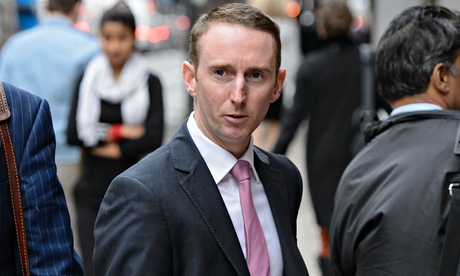
The British Horseracing Authority said on Thursday that it will not bring misconduct charges against the jockeys Martin Dwyer and Paul Mulrennan over the recording of a telephone conversation between the two jockeys in which they discussed betting in races in India while both were riding in the country in 2010.
However, the authority also expressed its “grave disapproval” of the content of the recording, and will require both riders to attend a meeting with the regulator at which its concerns will be discussed in more detail.
The tape of Dwyer and Mulrennan’s conversation, which was sent anonymously to the Royal Western Indian Turf Club in September 2013, focuses on a discussion about the 2010 Eclipse Stakes of India at Mahalaxmi racecourse in Mumbai, in which Mulrennan was due to ride Onassis.
Dwyer appears confident that Icebreaker, who was to be ridden the next day in the race in question by David Allan, will emerge as the winner, saying: “You either want to back the filly [Icebreaker] or leave it, I wouldn’t be backing yours against it.” Later, when discussing his riding tactics in the race, Mulrennan says: “I’ll try and sit last on mine, then get out of the way.”
The RWITC decided last year that it would not take any action over the recording, although the club also stated that neither jockey would be allowed to ride in the country in the future without first attending an inquiry into the tape and its content.
The BHA too has now decided that no formal charges will arise from the recording, although both jockeys will be informed that their conduct was unacceptable at a meeting which it is understood Nick Rust, the new chief executive of the BHA, will also attend.
“Having interviewed both Dwyer and Mulrennan, and taken all reasonable steps available to investigate the matter, the British Horseracing Authority does not consider that the evidence available justifies charging either rider with misconduct under BHA’s Rules of Racing,” Robin Mounsey, the BHA’s spokesman, said on Thursday.
“While the BHA is conscious of the fact that neither rider admitted that the recording was a complete or wholly accurate record of the conversation that took place between them, BHA expresses grave disapproval that two licensed jockeys found it appropriate to hold any sort of conversation of the nature apparent from the recording.
“The BHA is disappointed that senior jockeys considered such a conversation appropriate on any terms and will speak further with both jockeys in due course. In the meantime, BHA reminds all jockeys of the standards of behaviour and integrity that are expected of them at all times.”
Paul Struthers, the chief executive of the Professional Jockeys’ Association, issued a brief statement on the case on Thursday.
“Whilst the investigation has concluded and the jockeys will not be charged,” Struthers said, “the BHA wishes to speak further to the two jockeys and therefore it would be inappropriate for them to comment until that has taken place.”
The BHA also announced on Thursday that its new “zero tolerance” policy on the use of anabolic steroids in horse racing is on course for implementation in March, two months later than originally planned.
The BHA’s new scheme will make it compulsory for British-bred thoroughbred foals to be registered with the authority within 12 months of birth, and within six months of birth from 2017, after which they will be liable for random testing for anabolic steroids at any time. The mandatory “stand down” period from training for any horse testing positive for steroids, or which the authority is satisfied has been treated with steroids, will increase from six months to 14 months.
The BHA said that the delayed implementation of the new regime had been caused by a need for “clarification and consensus” with bodies including the Racehorse Owners Association, the National Trainers’ Federation and the Thoroughbred Breeders’ Association.
The precise definition of a “responsible person” – the individual with the responsibility for ensuring that a horse is not administered with an anabolic steroid – was among the issues which had not been resolved in time for the planned launch on 1 January.
“The implementation of an entirely new and far-reaching set of anti-doping rules has been a complex process,” Jamie Stier, the BHA’s director of raceday operations and regulation, said on Thursday.
“We are naturally pleased to have reached consensus with all parties regarding the outstanding issues and while it was disappointing not to implement the policy on 1 January, it was certainly the right decision not to rush the introduction of the rules until consensus was reached.”
The guiding principle of the BHA’s new regime is that “a horse must not be administered an anabolic steroid at any point in its life”, while the introduction of random testing of foals and yearlings will extend its regulatory powers to Britain’s stud farms and pre-training facilities for the first time.
Horses bred elsewhere and imported into Britain to race must be registered with Weatherbys, the sports “civil service”, within three months of arrival, and in addition supply a sample that shows no evidence of steroid administration. The regulations for foreign-bred horses will not apply to those arriving from Ireland, France or Germany, however, provided they have spent at least 12 months under their “equivalent” drug-testing regulations.
The BHA’s intention to introduce a “zero tolerance” policy on anabolic steroids was announced in June 2014, 16 months after the Mahmood al-Zarooni doping scandal at Godolphin’s Moulton Paddocks stable in Newmarket. Zarooni, a Classic-winning trainer with nearly 200 horses in a yard ultimately owned by Sheikh Mohammed of Dubai, the sport’s most powerful owner, was found to have doped at least 22 of his horses with anabolic steroids, including Encke, the winner of the St Leger at Doncaster in 2012.
Rupert Arnold, the chief executive of the National Trainers’ Federation, stressed the organisation’s support for the new regime on Thursday while also underlining the NTF’s concerns about the extra administrative duties placed on its members. “We are completely in line with the objectives of the new rules,” Arnold said.
“The next step is to make sure everyone involved understands the practical requirements. Regrettably, they will impose an additional bureaucratic burden on trainers when horses move away from their care and control. However, constructive discussions with the BHA and ROA have enabled us to minimise that impact.”
African Story, the winner of the Dubai World Cup in March 2014, will not line up for this year’s race after a disappointing performance when only seventh of the 11 runners in the Group Two Al Maktoum Challenge at Meydan on Thursday.
Saeed bin Suroor’s eight-year-old was making his debut on Meydan’s new dirt surface, and running for the first time since winning the final World Cup on artificial Tapeta last year. He broke well to sit just off the pace in the early stages but never travelled with any fluency and was coming under pressure turning for home.