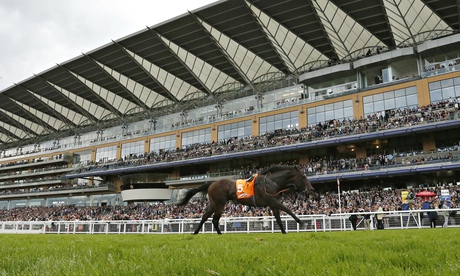
One can readily appreciate that officials at the British Horseracing Authority are not keen on handing money to bookmakers with no prospect of a return. Several of them spend most of their professional lives pondering ways to extract more money out of the betting industry on behalf of racing.
But there comes a time when the only dignified thing to do is to cough up. That, in my view, is a point the BHA has reached over last month’s Speculative Bid fiasco, when a series of contradictory announcements caused Ascot bookies to pay winning punters in full and then to refund many of those who had backed the “losing” favourite.
The BHA’s report on the subject, published on Thursday, is a lengthy confession, detailing “procedural failings in three principal areas” and recording that a member of raceday staff has been disciplined for their part in same. Nick Rust, the BHA’s chief executive, is quoted as saying: “I would like to once again apologise to off‑course betting operators and on-course bookmakers and their customers for the inconvenience and cost caused by the confusion which subsequently arose after the premature announcement of the ‘weighed in’ signal.”
Only at the very end of the report does the tone change from contrition to defiance, as the BHA insists it will not compensate bookmakers for the losses they sustained. “The BHA is clear that there is no legal basis for such claims.”
That assertion may now be tested in court, since one of the bookmakers, Geoff Banks, has said he will sue. He accepts that the value of his claim is not high but seeks to prove that the BHA owes a duty of care to bookmakers and must compensate when its negligence causes them foreseeable loss.
The BHA has not spelled out the reasons behind its confidence but it is hard to shake the suspicion that it may not be well founded. Banks’ lawyer will surely be delighted to read the report and, not least, Rust’s quote above in which he accepts that official bungling “caused” cost to on-course bookmakers.
It could have caused more than that. It could be said that officials, by announcing first that bookmakers should pay out as if the result were not in question and then later by going back on that, created the conditions for scenes of violence in the betting ring. Some Speculative Bid backers demanded refunds from bookmakers who felt they had to refuse. Only one punch was apparently thrown, which says something for the restraint of all others present.
At the root of this unhappiness is Rule 10.5.2, introduced some years ago by the BHA and apparently forgotten until the Ascot stewards tried to apply it. The rule imagines a horse emerging riderless from the stalls, just as Speculative Bid did. In such a case, it allows the stewards the option of retrospectively declaring it a non-runner, so that its backers can be refunded. The money for same is to come from those who struck successful bets on the winner and placed horses, from whom the bookmakers must withhold a deduction.
In short, the collective lot of punters is not improved by this rule, which robs some to pay others. Play the game for long enough and this rule will cost you as much as you gain by it. Why did we ever create a rule that merely displaces bitterness from one group of bettors to another? And why, having done so, was no effort made to let everyone know the rule existed? What is the point of such a rule if punters don’t know to go and ask for their money back? In the event, it seems that even some officials were unaware of the rule.
The BHA will now consider whether they should persist with this rule and a negative verdict is devoutly to be wished. I am told that it could even be killed off before the traditional annual review of Flat racing rules in the spring.
Jamie Stier, the BHA’s director of raceday operations and regulation, describes himself as “one of the main drivers” behind the creation of Rule 10.5.2. He was also present at Ascot as the official bungling began and failed to contain it in time to avoid all that friction in the betting ring.
The BHA now knows what should have happened. Its report says: “With hindsight, given that the ‘weighed in’ signal had incorrectly been announced before the stewards’ inquiry had concluded, the issues for betting operators and bettors would have been avoided had communication taken place from the stewards’ room with the racecourse announcers, the media, the betting ring inspector and off-course bookmakers before the result of the stewards’ inquiry was made public.
“The communication should have advised of our error in announcing the ‘weighed in’ signal and reiterating that, for betting purposes, the result at ‘weighed in’ signal would stand and could not be overruled.”
Is it asking too much for Stier to have seen the need for that course of action on the day? Considering the importance of sustaining confidence in the sport among punters and bookmakers, Stier must count himself fortunate to retain his job after contributing to this mess by two different means. Banks’ legal action means he is not out of the woods yet.