Chaiyos Pinpradab, founder of the magazine Phuket Bulletin, is now retired and living in his home on the island. Whenever he hears news regarding loss of innocent lives during local unrest, he is heartbroken.
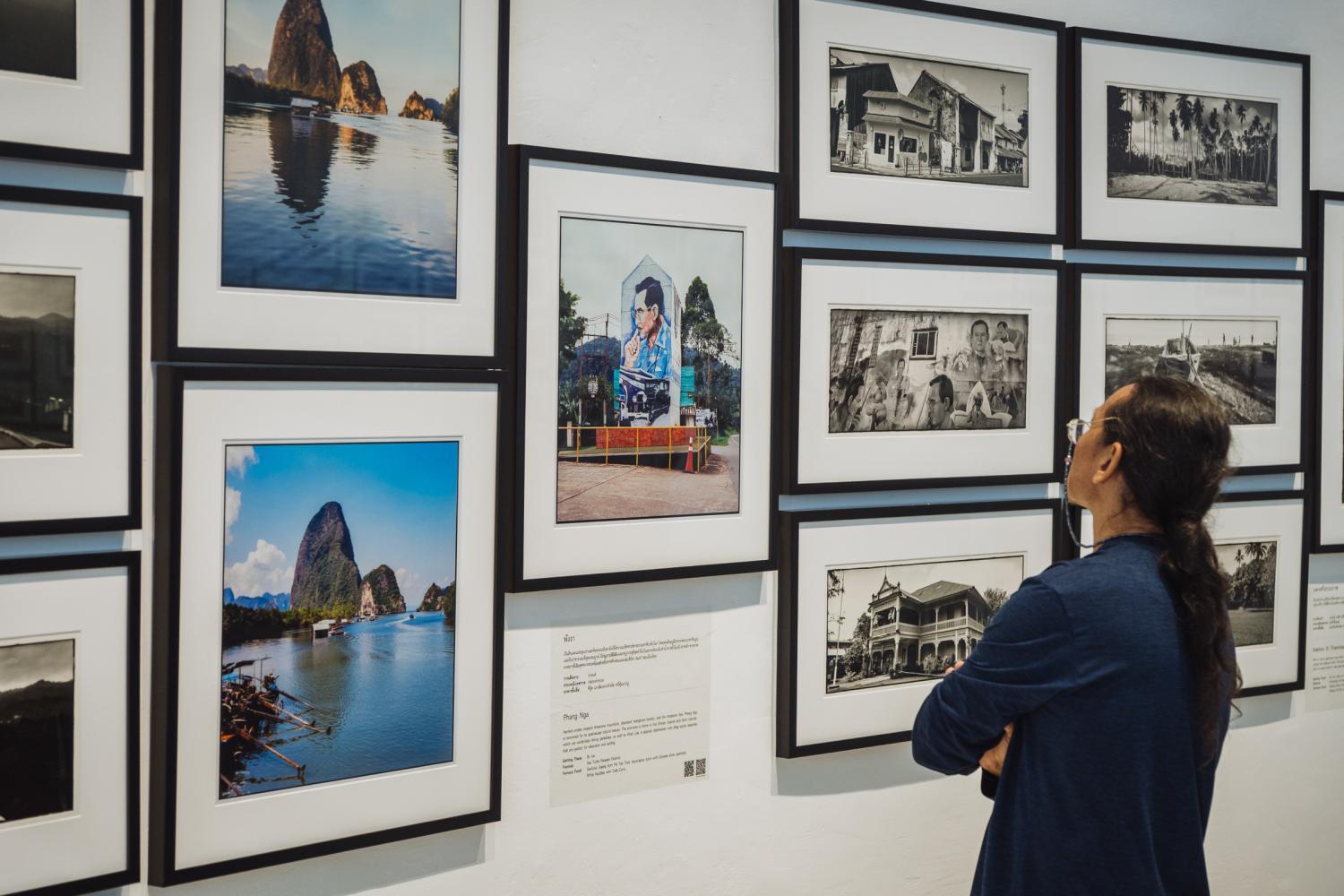
The conflict in southern Thailand has created an atmosphere that makes people afraid to visit the area. Since his whole life had been involved in publishing, he decided to create a photo book and exhibition titled "The Road To The Golden Peninsula" to reveal the true beauty of the South.
"Unrest that leads to the loss of innocent people creates a tense atmosphere, and makes people afraid to visit the area. I believe that I should bring out the beauty of the South and share it with others," Chaiyos explained.
As an alumnus of Industrial Design at King Mongkut's Institute of Technology Ladkrabang, Chaiyos has a keen eye for art and a passion for photography. He believes that art should not only express beauty, but also serve society.
Chaiyos draws inspiration from the works of legendary artists. For instance, Picasso, who created the painting Guernica in 1937. Considered one of Picasso's masterpieces, it reflects the brutality of war by portraying the bombing of Guernica in Spain in black and white. Meanwhile, Tchaikovsky's 1812 Overture is a patriotic musical piece celebrating the victory of the Russian army.
While "The Road To The Golden Peninsula" captures the aesthetics of the South, Chaiyos also incorporated poetic texts that he wrote in his photo book, which is on display at Bangkok Art & Culture Centre.
"I use the expression 'The fragrant pikul flowers falling from the southern land; we hope for love, pride and devotion to the Golden Peninsula', to offer deeper reflection. The pikul flowers symbolise innocent lives lost."
"The Road To The Golden Peninsula" features the region's distinct architecture, landscapes, ways of life and the enduring spirit of the Golden Chersonese -- the ancient name for the Malay Peninsula and Southern Thailand -- captured through 114 photos using 50 rolls of film.
Both the photo book and exhibition serve as a travel journal documenting the artist's 150-day solo road trip (from September 2024 to January 2025) through the southern peninsula, a region to which he feels deeply connected.
The journey began in Pran Buri in the province of Prachuap Khiri Khan, the gateway to southern Thailand, and continued south to the Sankalakhiri Mountain Range and Tak Bai in Narathiwat, one of Thailand's southernmost areas.
Chaiyos captured his travelogue using a Hasselblad XPan panoramic rangefinder film camera, with its distinctive 24mm by 65mm format offering expansive perspectives and an artistic depth that digital cameras cannot easily replicate.
"I use film cameras because they have proved to be durable. I chose the Hasselblad XPan because it is a panoramic rangefinder film camera. Humans have two eyes, resulting in a wide field of vision of almost 180 degrees. Unlike standard 35mm film formats, images captured by the Hasselblad XPan allow viewers to see closer to what I actually saw," said Chaiyos.
During his roadtrip along the coastal route between Nakhon Si Thammarat and Songkhla, Chaiyos was impressed with the kindness of local people when he had a hard time finding a roadside restaurant.
"I was hungry and when I drove past a local house and saw three or four pots of curry set up in front, I thought they were selling rice noodles. It turned out the food was for monks at a merit-making ceremony. I told them I was very hungry and they offered me a meal. Although I tried to pay for the lunch, they refused to accept my money," he said.
During the trip, Chaiyos witnessed many architectural structures that reflect the diverse cultural influences in the South. He explained that many temples were built with influences from Westerners who entered through Malaysia. These temples incorporated Renaissance-style architectural elements with the ordination halls and sermon halls featuring beautiful curves, which was quite unusual.
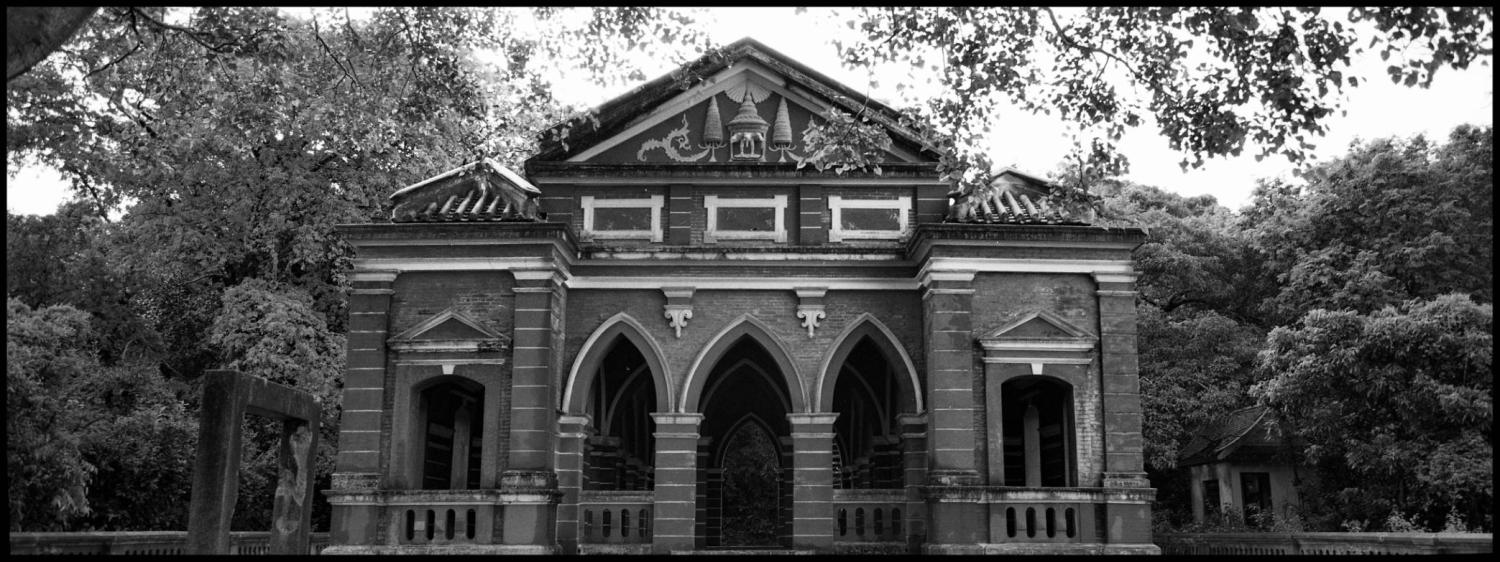
"Located on Tang Kuan Hill in Songkhla, Sala Phra Wihan Daeng was commissioned by King Rama IV as a royal residence and completed during the reign of King Rama V. Built in a Gothic style with beautiful arched details, the structure looks like a Western architectural structure that has been uprooted and brought over to Thailand," he said.
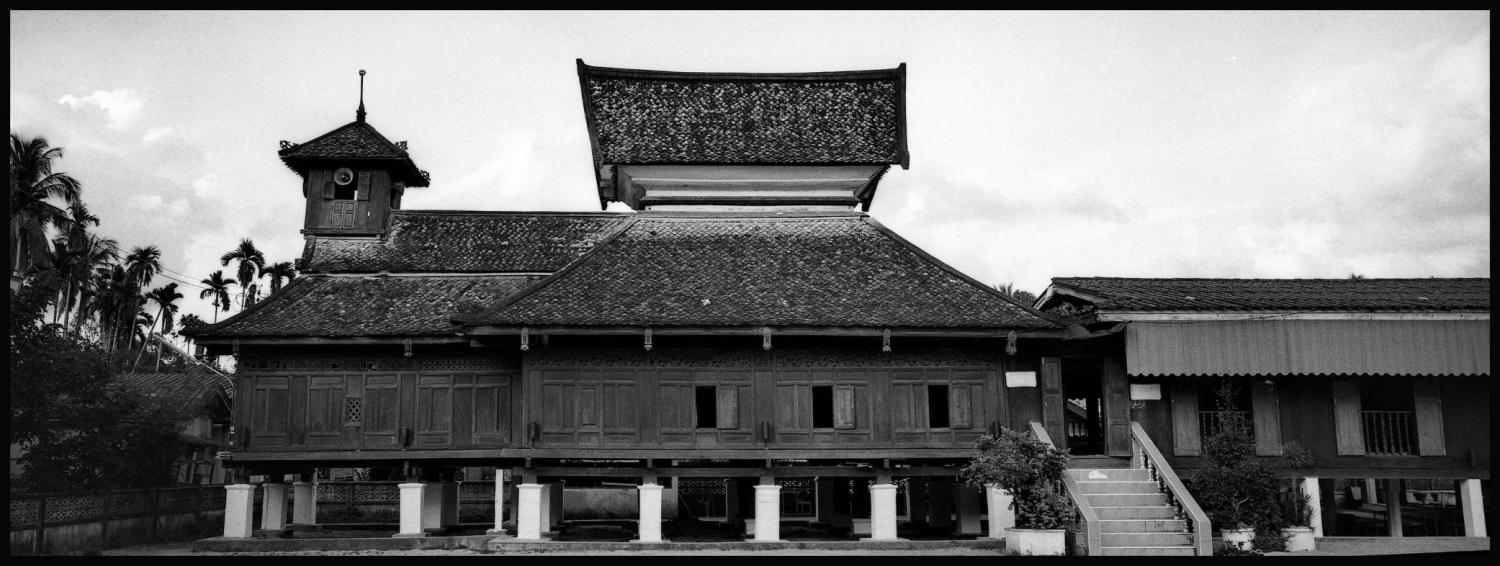
"Talo Mano Mosque in Narathiwat is almost 400 years old and was influenced by Indonesian residential architecture. Although the mosque was built without using nails and used wooden wedges instead, it is still in good condition.
"In amphoe Panare, Pattani, I was surprised to see Buddhist temples located within Muslim communities. People here speak in a dialect similar to that of Sukhothai and Ayutthaya. A local teacher told me that their ancestors were forcibly relocated there from Sukhothai and Ayutthaya by authorities.
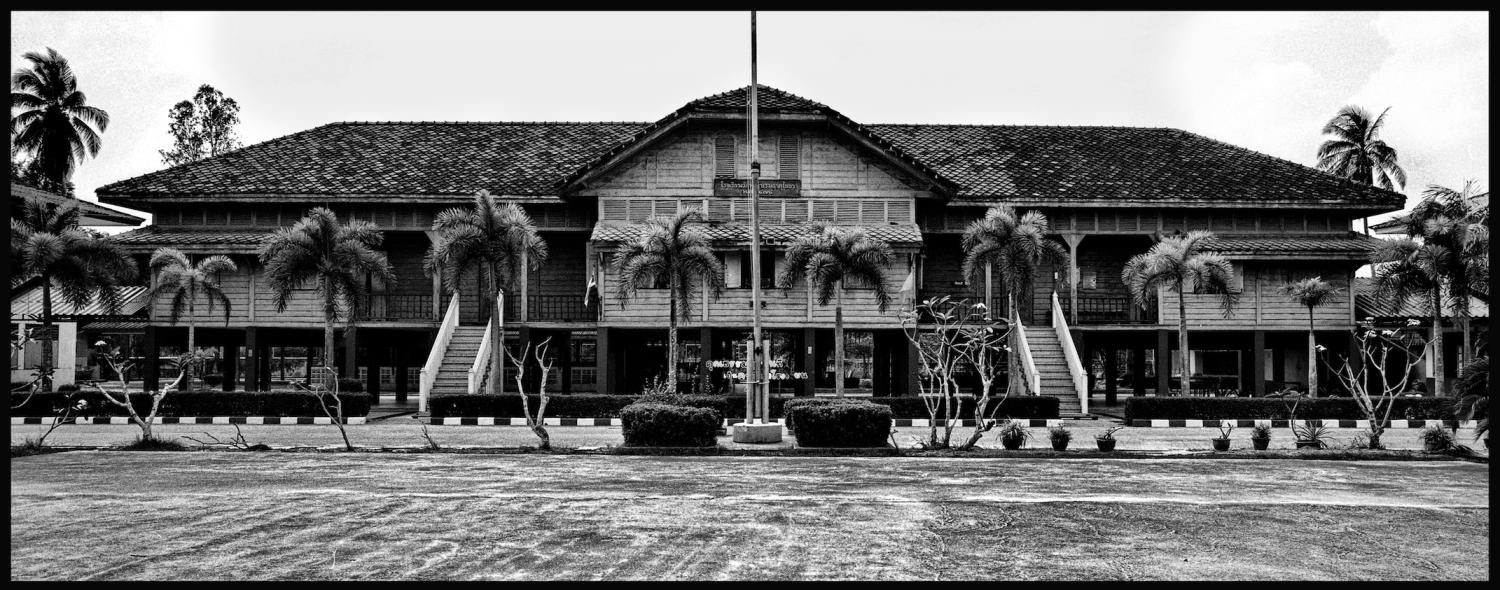
"At the same time, Muslims from the South were forced to relocate to Chiang Mai and areas in Bangkok like Min Buri and Ban Khrua. It was a strategy to dismantle the local power structure."
Chaiyos worked closely with Srisuphat Satiansri, founder of Min Black and White Darkroom, a renowned darkroom specialist. This darkroom meets international standards and serves international publications including The New York Times. Since film can be damaged by airport X-rays, Chaiyos could not travel by plane and had to send the films via mail instead.
"The developing process of panorama films is complicated and requires a professional enlarger. The exhibition includes images that required cropping to correct minor tilts of about 3-5 degrees while preserving the original composition. This tilt is not noticeable in smaller prints, but it becomes clearly visible in panoramas which makes cropping necessary," explained Srisuphat.
Before exhibiting at Bangkok Art & Culture Centre, "The Road To The Golden Peninsula" was shown at the creative design festival Pattani Decoded in July. The exhibition will later be showcased in Phuket. Both Chaiyos and Srisuphat hope that visitors will understand what they are trying to present. Srisuphat said at least they could enjoy the visual aesthetics.
"I hope people will come to see this exhibition. I brought it to Bangkok because many people from the South have settled down in the city and rarely have the chance to return home. Through these images, I hope they will feel a connection to their homeland and ancestral roots," added Chaiyos.
"The Road To The Golden Peninsula" runs at the Curved Wall on the 5th Floor of the Bangkok Art and Culture Centre until Sunday. Admission is free. For more information, visit facebook.com/cpinpradab.