
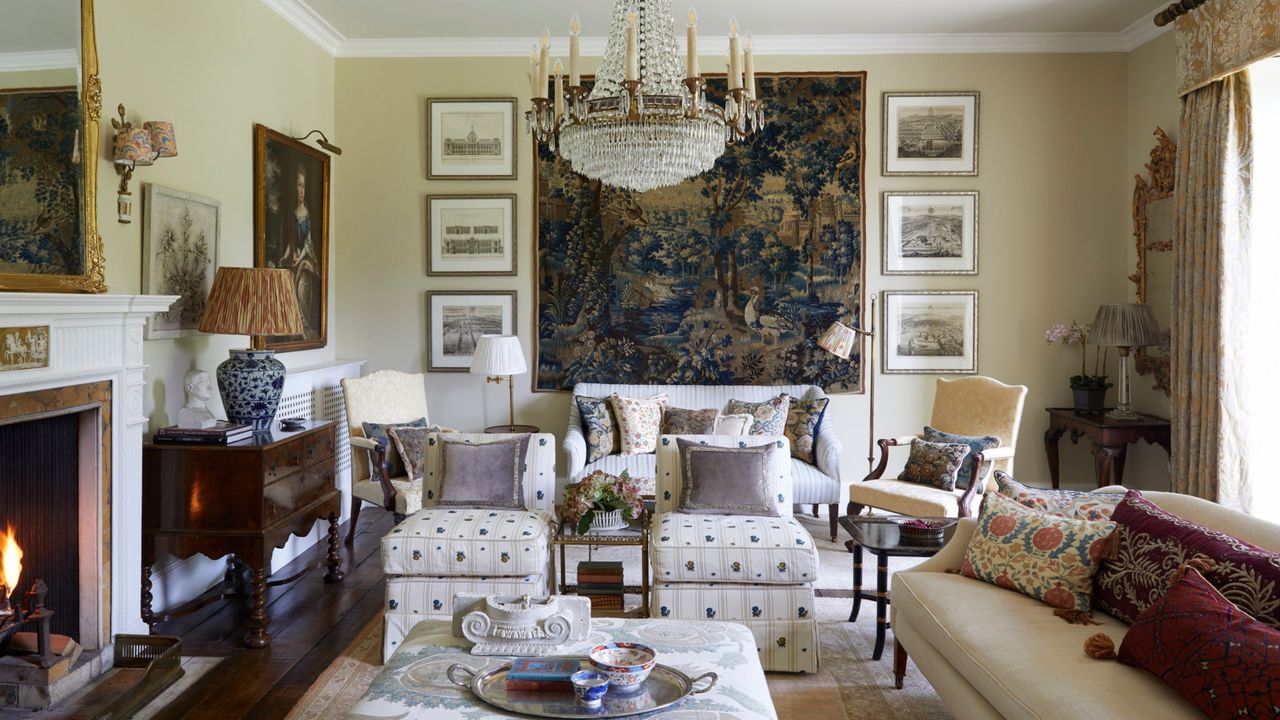
This year’s renewed interest in medieval interiors and the ever-trending castlecore isn’t about suits of armor or stone-walled pastiche. It’s about atmosphere: rooms that feel layered and deliberately composed rather than visually flat.
Decorating with tapestries sits at the center of this shift. Once essential architectural tools – regulating warmth and acoustics in great halls – they’re being reintroduced as a way to soften space and restore depth to contemporary interiors.
And while European medieval works may dominate the conversation, these vintage tapestries are only part of a much wider textile lineage. From Flemish verdure and Scandinavian folk works to Central Asian suzanis and embroidered wall hangings from across the Silk Road, these textiles share a common purpose: to turn walls into tactile, expressive canvases.
The History of the Tapestry
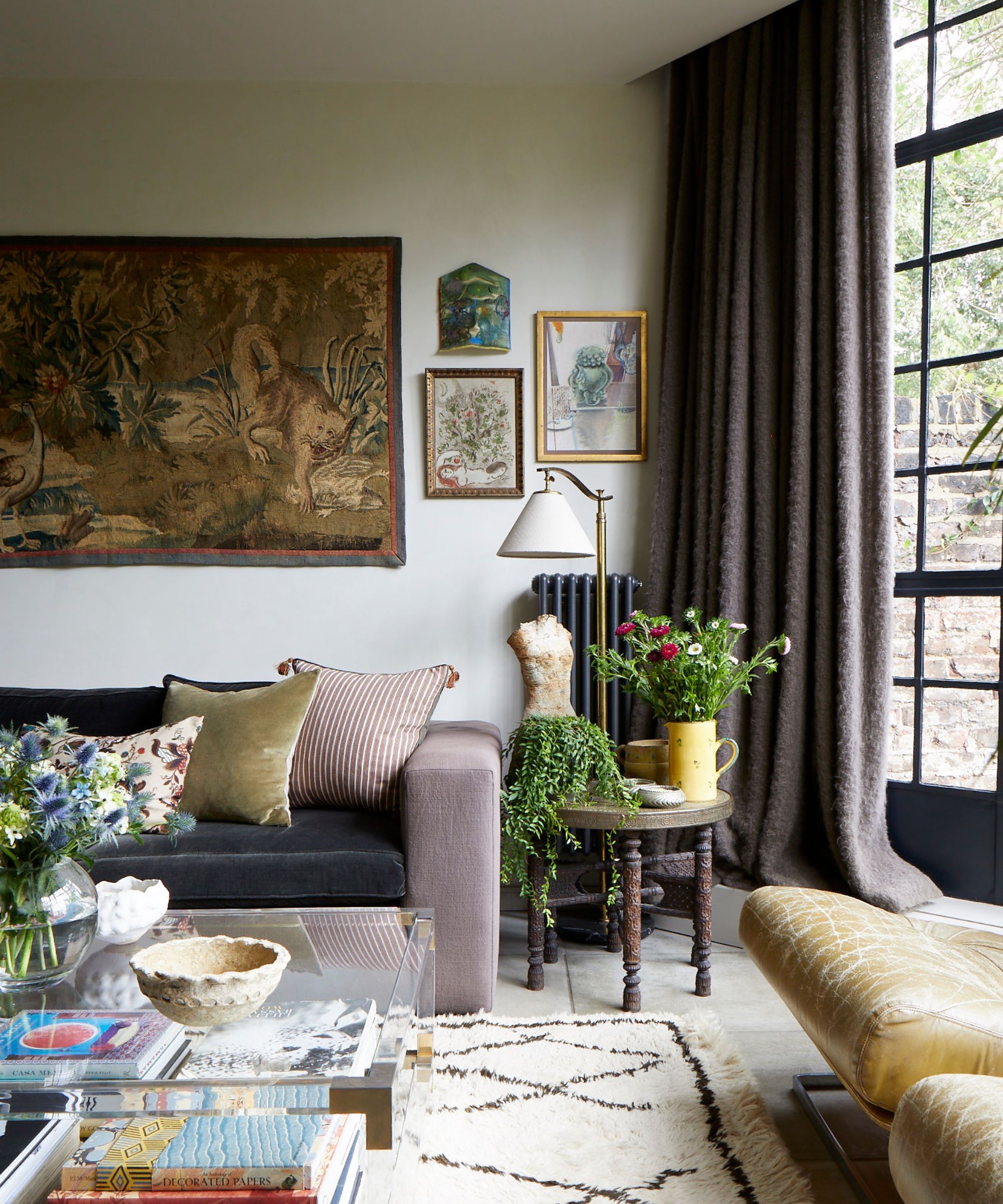
Tapestries are among the earliest forms of interior storytelling. Long before wallpaper or framed art, they transformed drafty castles, churches, and grand houses into inhabitable, insulated spaces. From medieval Europe through the Renaissance, they functioned as both art and architecture for the aristocracy – to be transported from one property to the next, and rehung according to season, ceremony or whim.
Henriette von Stockhausen, founder of VSP Interiors, describes them as ‘the earliest form of portable decoration,’ objects that ‘traveled from house to house and gathered a life of their own.’ Georgina Cave, creative director of Cave Interiors adds, ‘tapestries were not simply static objects, but were often rolled up and moved between residences’.
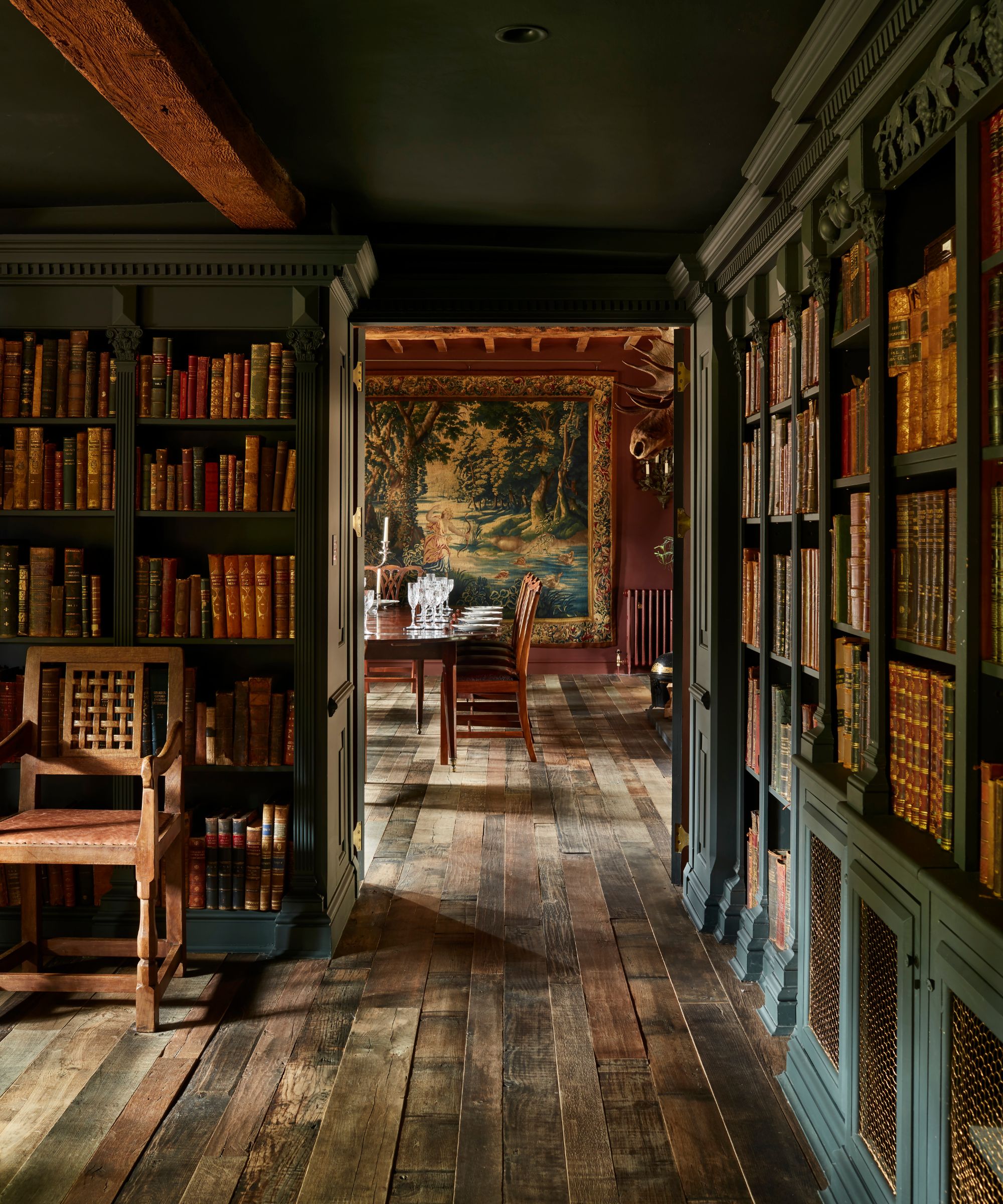
Across cultures, storytelling remained central. From pastoral Aubusson pieces and Flemish workshops producing monumental hunting scenes to Central Asian suzanis embroidered with suns, pomegranates, and vines, tapestries recorded belief systems, local flora, social hierarchies, and domestic rituals. Verdure tapestries – lush landscapes of foliage and woodland – were especially prized for their calming, immersive effect, bringing the outside world in long before biophilic design had a name.
As designer Fleur Liversidge observes, ‘historically, they functioned as a visual language – communicating myths, religious narratives, and pastoral ideals – but they were also the result of an extraordinarily slow, disciplined making process.’
Textile artist Chloe Jonason echoes this, describing tapestries as ‘records of culture, craft, and daily life,’ carrying ‘the rhythm of work’ within every stitch, often enriched with silk and metallic thread for the elite to ostentatiously display their wealth, power and victories in battle.
Why are Tapestries Better Vintage?
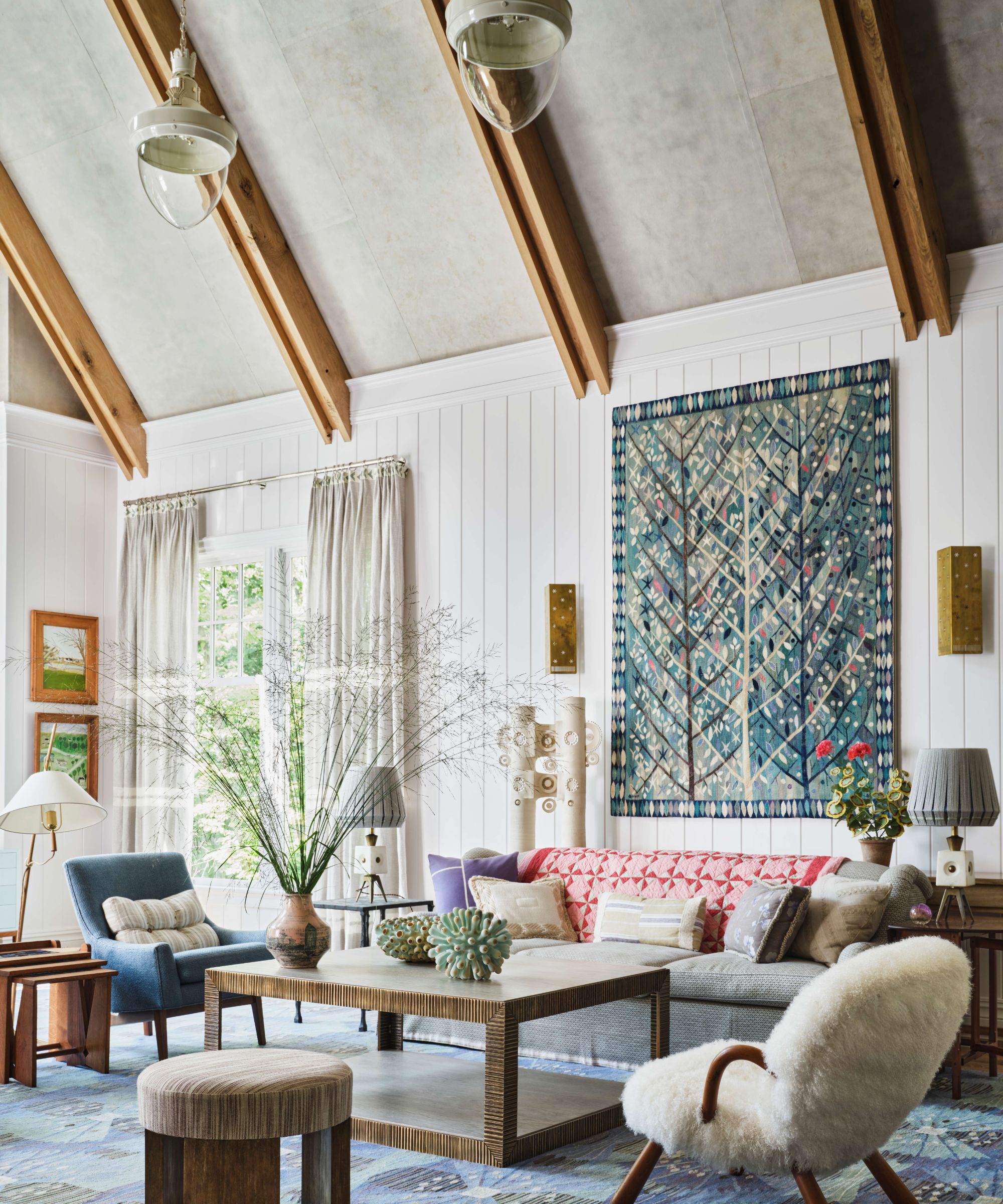
While contemporary reproductions can mimic the look of a tapestry, they rarely capture its depth. Decorating with vintage examples hold a tactile complexity that only time can produce: wool that has relaxed, silk that catches the light unevenly, colors that have softened rather than faded.
Designer Jessica Jubelirer describes antique tapestries as ‘practical artworks,’ honed over centuries to be both beautiful and functional. Originally used to combat damp and cold, their woven density gives them a presence modern wall coverings lack. ‘The older the tapestry,’ she notes, ‘the more story it has.’
That story is visible in the wear. Gentle thinning, repaired edges, areas of abrash – these are not flaws but evidence of endurance. As Fleur Liversidge explains, signs of age ‘become part of the narrative, adding character and authenticity.’ Unlike new textiles, which arrive pristine and anonymous, vintage tapestries ground a space in history and perspective.
There is also an ecological argument. Antique tapestries were painstakingly made by hand to last generations, using natural fibers and labor-intensive methods that resist disposability. Their continued use today is a form of sustainability – one that values repair, reuse, and reverence over replacement.
What to Look For and Where to Buy Vintage Tapestries
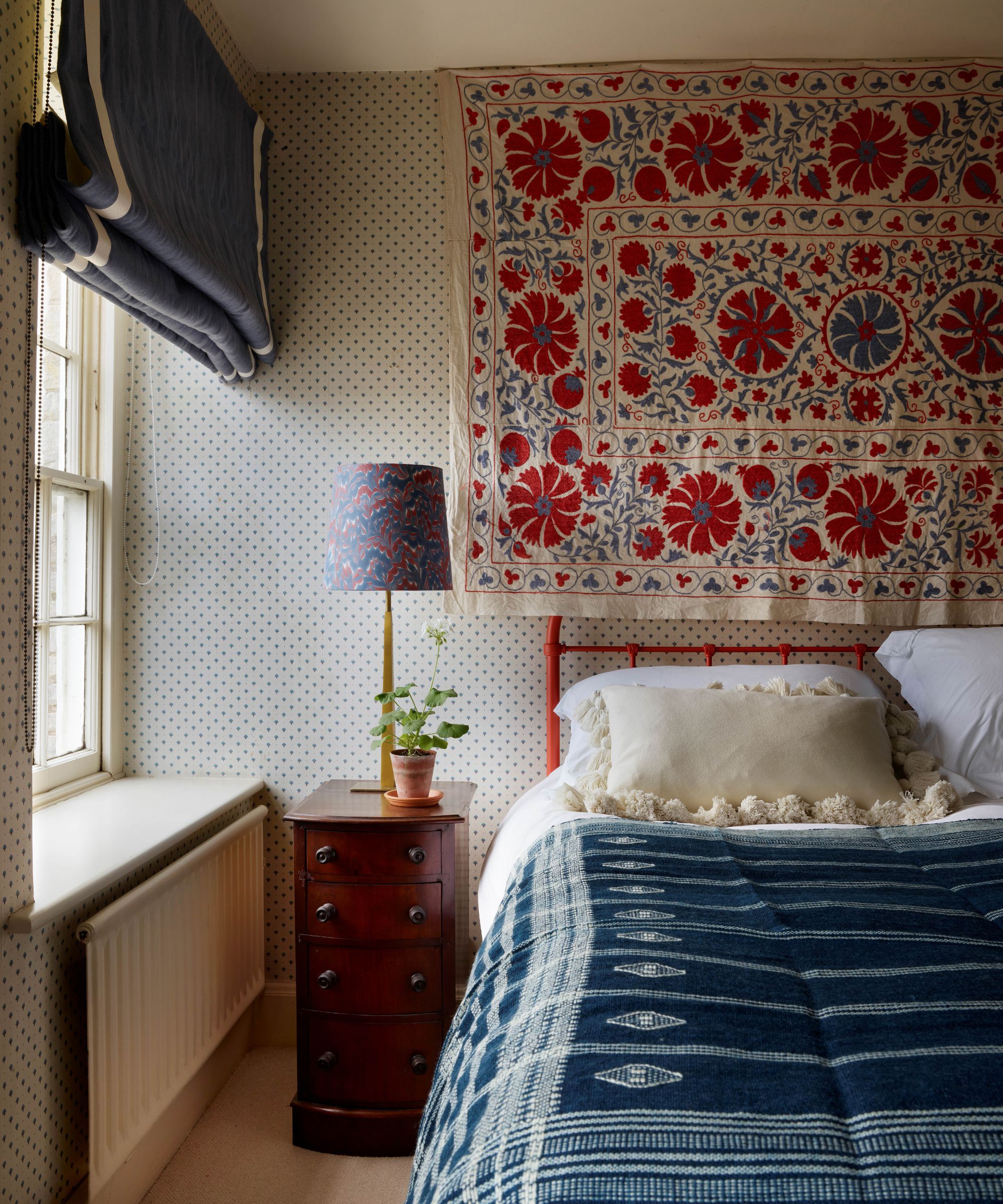
When sourcing a vintage tapestry, integrity matters more than perfection. Look first at structure: strong weaving, stable edges, and evidence of careful repair rather than concealment. Gentle fading, thinning, or historic mending are part of a tapestry’s story, but condition should always support longevity. Color might often be the deciding factor. According to designer Joanna Plant, antique tapestries can hold ‘surprisingly strong color,’ with verdure combinations of blue, green, and buff in particular capable of kick-starting an entire scheme – provided the ground cloth remains sound.
For Jessica, sourcing is as much about relationship as discovery. ‘My favorite way to source vintage tapestries is to organically come upon them during my travels,’ she says. ‘I also have longtime working relationships with world-class dealers, such as FJ Hakimian and Rug & Kilim, who supply breathtaking vintage tapestries’.
Accessibility matters too. As Georgina Cave notes of the tapestry in her own living room, ‘this particular tapestry was sourced from Sauce, a favorite supplier, but they can be found from all manner of antique dealers’ – a reminder that exceptional pieces are not limited to a single route or tier of the market.
Chloe Jonason also emphasizes the importance of informed sourcing, working with ‘trusted dealers, markets, and small-scale suppliers who understand the histories of the pieces’. Chloe continues, ‘I love finding tapestries that feel unexpected – unusual palettes, rare motifs, or embroidery that shows a particularly skilled hand’.
How to Style the Vintage Tapestry Today
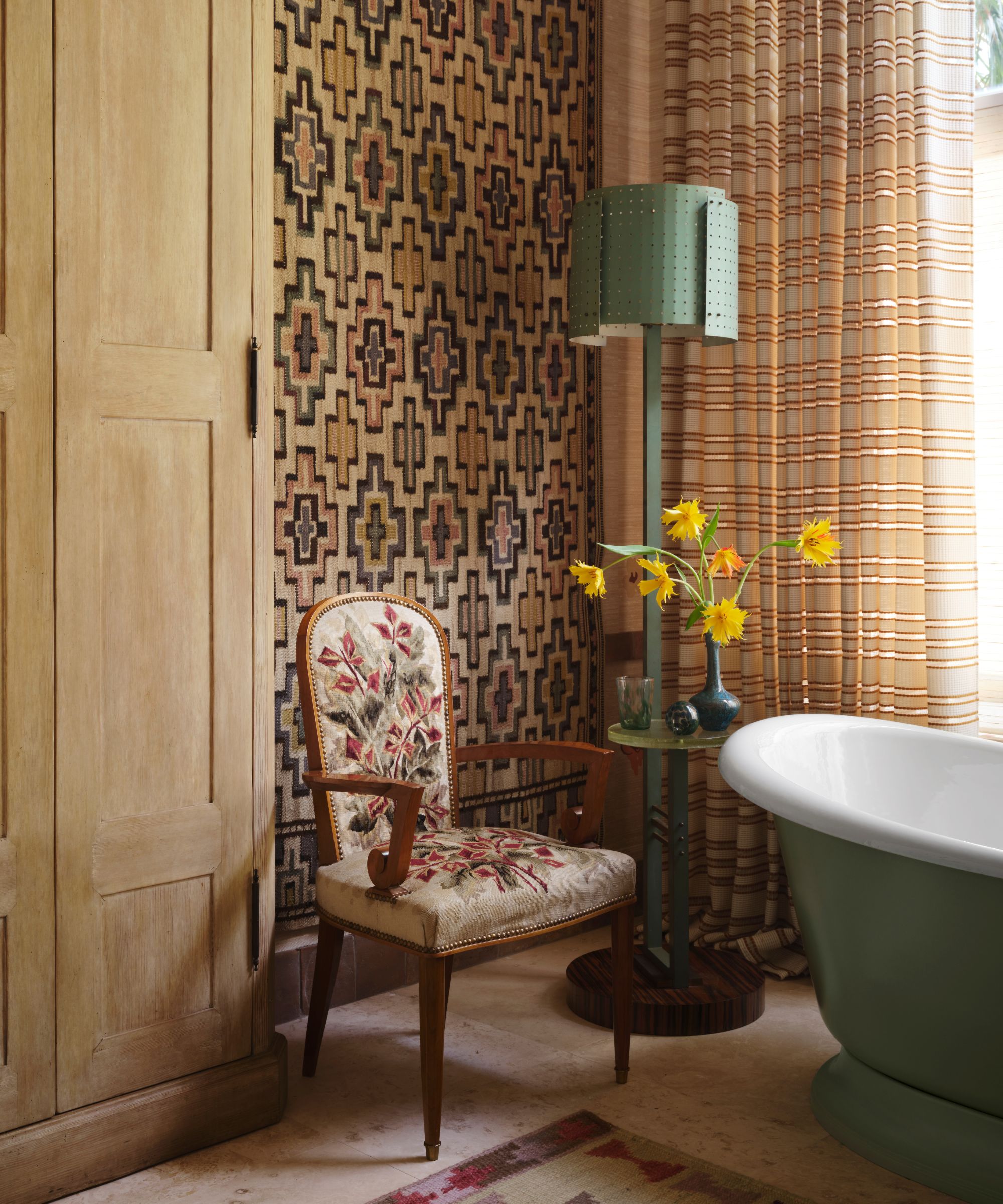
Tapestries work best when they’re treated as structural elements rather than decorative add-ons. Their scale, texture, and visual density allow them to define a room quickly, whether hung traditionally or used more experimentally.
On walls, proportion matters. A large tapestry can anchor a living room or dining room, absorbing sound and giving expansive walls a sense of intention. Smaller pieces, including suzanis, work well above beds, sofas, or consoles, where their detail can be appreciated up close. Chloe encourages relaxed placement, ‘Throw one over the back of a sofa for instant warmth and texture, or lay a suzani across the end of a bed for a layered, luxurious look’.

Designers increasingly favor hanging methods that keep tapestries feeling tactile and dynamic, rather than pinned in place like conventional artwork. Plant prefers to hang tapestries from Robert Kime brass poles, noting that they work best ‘in a place that gets no direct sunlight,’ both to protect the color and to avoid stressing the ground cloth. Cave Interiors treats tapestries as focal points and scene-setters, using their presence to establish mood while keeping the wider scheme deliberately pared-back.
Beyond walls, tapestries are increasingly used to shape space and as clever concealment solutions (to hide TVs, for example). VSP Interiors often incorporates antique tapestries as curtains or room dividers, valuing their ability to ‘instantly ground the room, adding depth, warmth and a wonderfully subtle palette,’ particularly in rooms with generous proportions.
Overall, what the medieval revival has really reintroduced is an understanding of walls as something more than static backdrops. Tapestries return both historical depth and physical softness to those surfaces, reasserting their role in shaping space rather than simply dressing it. Made slowly, altered through use, and endlessly adaptable, they bring a working tactility to today’s interiors.
Shop Vintage Tapestries
Better Vintage is a monthly celebration of objects that prove true style only gets better with time. Each story reveals why these pieces endure and why vintage examples carry more beauty, craft, and soul. With history, expert voices, and styling ideas alongside practical buying guidance, this is a collector’s guide to the most iconic secondhand pieces, because some things are simply better vintage.