Getting people into the right homes with the right support can relieve a huge amount of pressure on the NHS – but to do this we need a seismic shift in how we think about housing services. The current system for housing older residents is no longer workable in the long-term if we want to maintain a higher standard of living.
At the moment, the housing offer is outdated and unappealing. That is why so many people choose to remain in their own home ahead of selecting more suitable supported living options. It puts undue strain on individuals, their families and health services
A report by thinktank the Institute of Public Policy Research North, supported by ForViva group member City West Housing Trust, showed that more than 90% of all homes in England are not fully accessible for older people.
The report, For Future Living, outlines the need for creating developments that encourage communities to take a greater role in looking after each other – simultaneously tackling the issue of isolation while allowing people to live independently for longer with access to integrated health services in their homes and neighbourhoods.
That means we need more and better designed specialist sheltered housing developments, and co-designed schemes created in partnership with prospective residents who can come together to form an “intentional community”.
Schemes such as this are already being adopted across the country, placing older people’s housing at the heart of neighbourhoods and creating better links between those in need of additional support, health services and the wider community.
City West has built its Amblecote Gardens extra care facility, which opened in September 2014 in Salford, using this principle. The development is surrounded by more than 100 newly built family homes, and offers services to the wider community to encourage relationship building, while each resident has a personal health plan that links in with local health services. Just six months on and we are already seeing the benefits of this approach.
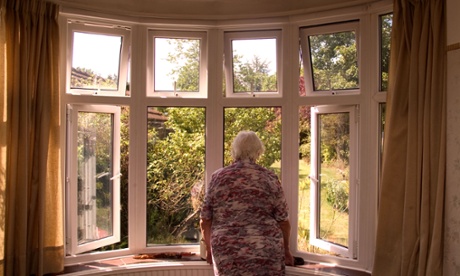
Residents such as 88-year-old Joyce Hayes, who has Alzheimer’s disease, show the impact that schemes such as Amblecote Gardens have on people’s health. After losing her husband last year, Joyce was determined to remain in the home they had shared for 68 years, but as the disease progressed, her family realised this was not possible.
Since moving into Amblecote, Joyce’s life has been transformed. She is coping better with her condition, has new friends, and has even been able to take up knitting again. Crucially, her family no longer have sleepless nights worrying about how to care for her. She has access to the right support and services in her home, and is far less likely to need urgent support from the NHS.
These developments clearly have a lasting impact on health services, but the burning question remains: who will pay for them? There seems little appetite from the open market – especially for those on low incomes – so it will likely be left to social landlords like us.
However, Amblecote Gardens has proved that if we can show people housing options that are suitable, affordable and integrated with health care services, then we can can encourage the next generation of people to live in accommodation with services that will keep them healthy and out of hospital.
This cuts to the core of the challenges facing large parts of the health service. The inability to discharge people back into the community leaves a huge number of patients in limbo: not sick enough for hospital, yet unable to return home.
To change that, health and housing services needs to be closer aligned. Both sides have long agreed that integration is essential, yet for many years it has felt as if the sectors have been exchanging fleeting glances across a crowded room with neither understanding what the other has to offer.
The memorandum of understanding signed between the sectors in January 2015 was a welcome step towards a more productive dialogue. However, the unexpected news of the devolution of the entire NHS budget for Greater Manchester is a game changer.
It will mean that from next year we, in housing associations, will be able to make our offer to the sector with a much clearer voice, talking directly to a local authority with which we have a long-standing relationship.
The role of modern housing professionals goes far beyond laying bricks and fitting double glazed windows. We operate at the heart of our communities, delivering services such as healthy eating programmes and independent living support – all designed to improve the wellbeing of our customers and ultimately keeping them out of hospital.