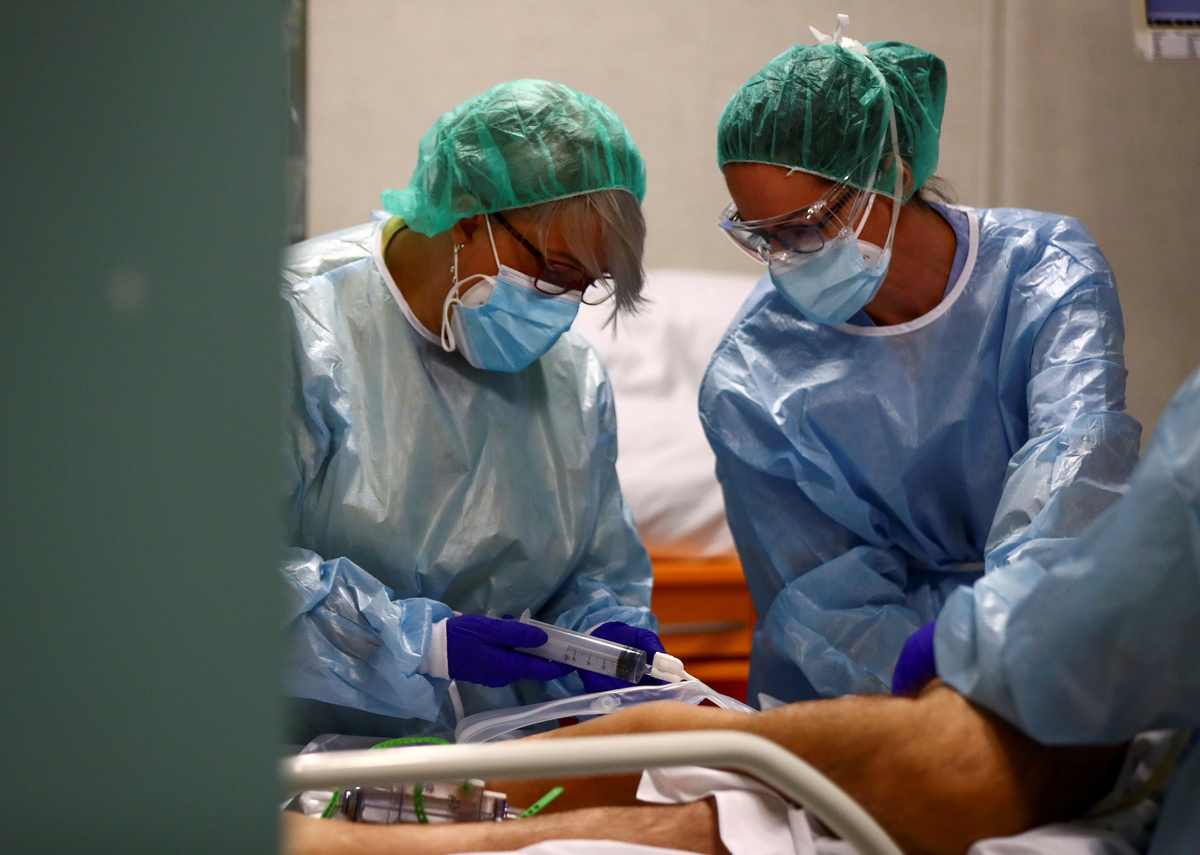
Emotional fatigue has begun to set in among the intensive care staff at the Infanta Sofia hospital near Madrid, even though the team is better equipped now than during the pandemic's March-April peak.
"At that time we had a spike that completely overwhelmed us," said intensive care chief Dr. Miguel Angel Gonzalez Gallego. "We had to increase the number of beds five-fold."
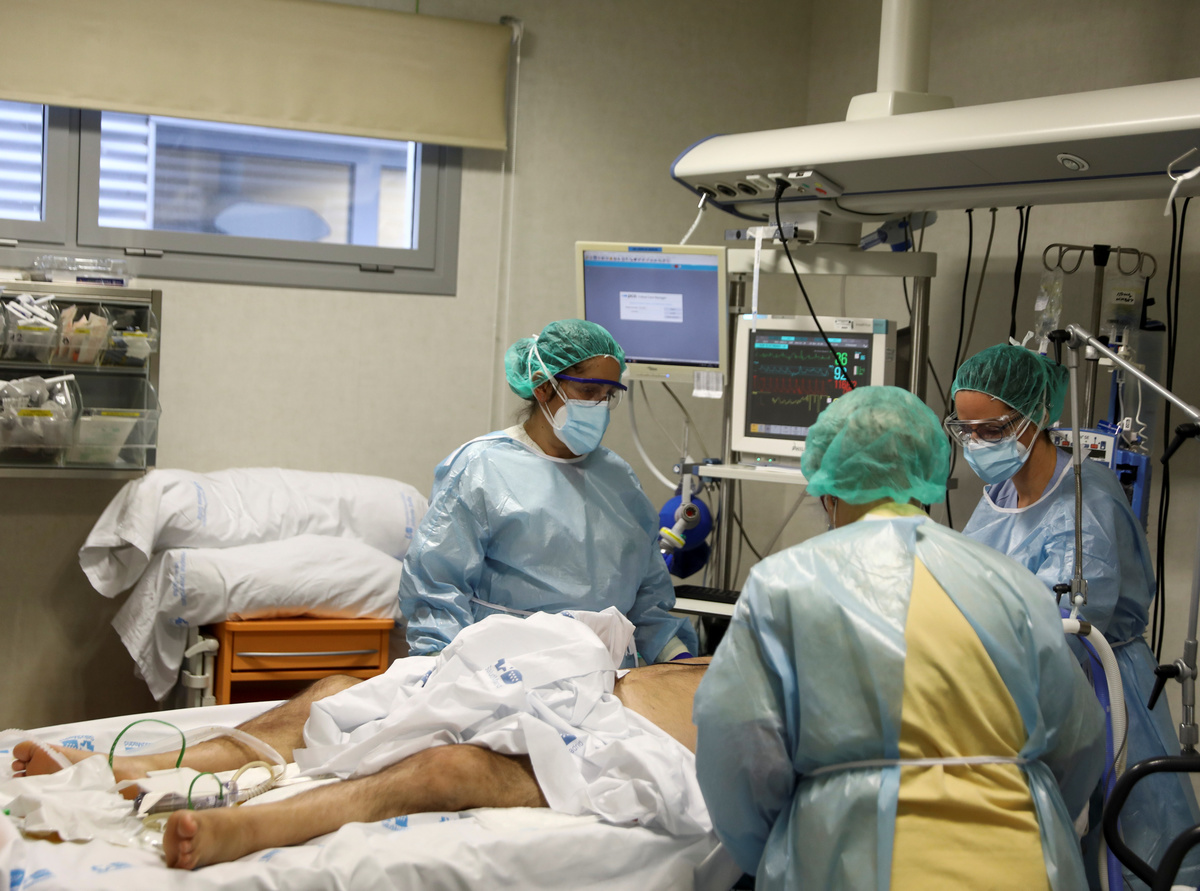
A shortage of personal protective gear as well as respirators and monitors further complicated the situation.
As that first peak receded and admissions dwindled in late spring, the team began to feel the worst was behind them and the situation had become more manageable.
"Then all of a sudden you find yourself with an outbreak that is far from small ... That produces a feeling of emotional exhaustion that we just didn't have during the first wave," Gonzalez said.
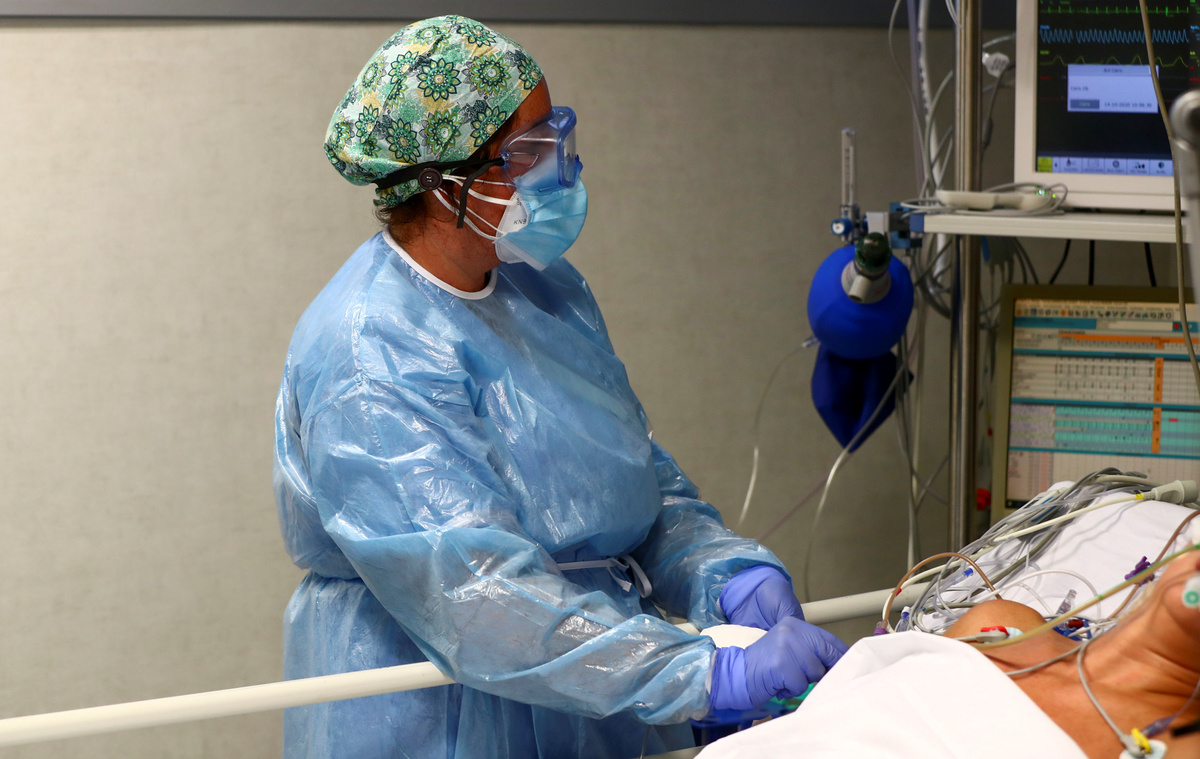
Since Spain exited a tough lockdown in June, the infection rate has soared, with daily diagnoses frequently exceeding 10,000 from late August. Hospitalizations are on the increase too but the number of severe cases remains far lower than during the first wave.
On the ward at Infanta Sofia, a team of three nurses, protected by double masks, turned a comatose COVID-19 patient onto his side to massage his muscles and prevent bedsores from building up.
Gonzalez said treatment for severe cases had improved during seven months of dealing with the coronavirus but acknowledged that the pressure was unlikely to ease anytime soon.
"We still have a lot of sick people admitted and we don't see a clear decline to be very optimistic about."
Intensive-care occupancy in the Madrid region, Spain's hardest-hit, has reached 38%, compared with a national average of around 19%.
Nationwide Spain has recorded 908,506 confirmed infections -- more than anywhere else in Western Europe. The number of cumulative cases rose by nearly 12,000 on Wednesday, while total deaths rose by 209 to reach 33,413, according to the health ministry.
(Reporting by Sergio Perez; Writing by Nathan Allen, editing by Andrei Khalip and Alexandra Hudson)