VR headsets don’t just offer new gaming worlds to play in. They can let you add life to your photos and videos, explore the world from the comfort of your home and transform your movies into an immersive viewing experience. In short, they’re flexible devices that offer unparalleled entertainment, virtual discoveries and travel, and even novel exercise activities for working up a sweat.
However, today’s VR headsets can do vastly different things. Some can help you be more productive at work, some are more geared for games, and some are meant for more casual use. But they don’t come cheap.
With that in mind, I’ve reviewed the best VR headsets, exploring the pros and cons of each to help you choose the right one for you, whether you’re hoping to get some work done or elevate your play.
Read more: The best handheld games consoles in 2025, tried and tested
The best VR headsets for 2026 are:
- Best overall – Meta Quest 3: £469.99, Argos.co.uk
- Best budget buy – Meta Quest 3S: £289.99, Argos.co.uk
- Best for gaming – PlayStation VR 2: £399.99, Argos.co.uk
- Best premium – Apple Vision Pro: £3,199, Apple.co.uk
- Best Meta alternative – Pico 4 Ultra: £529, Very.co.uk
How I tested
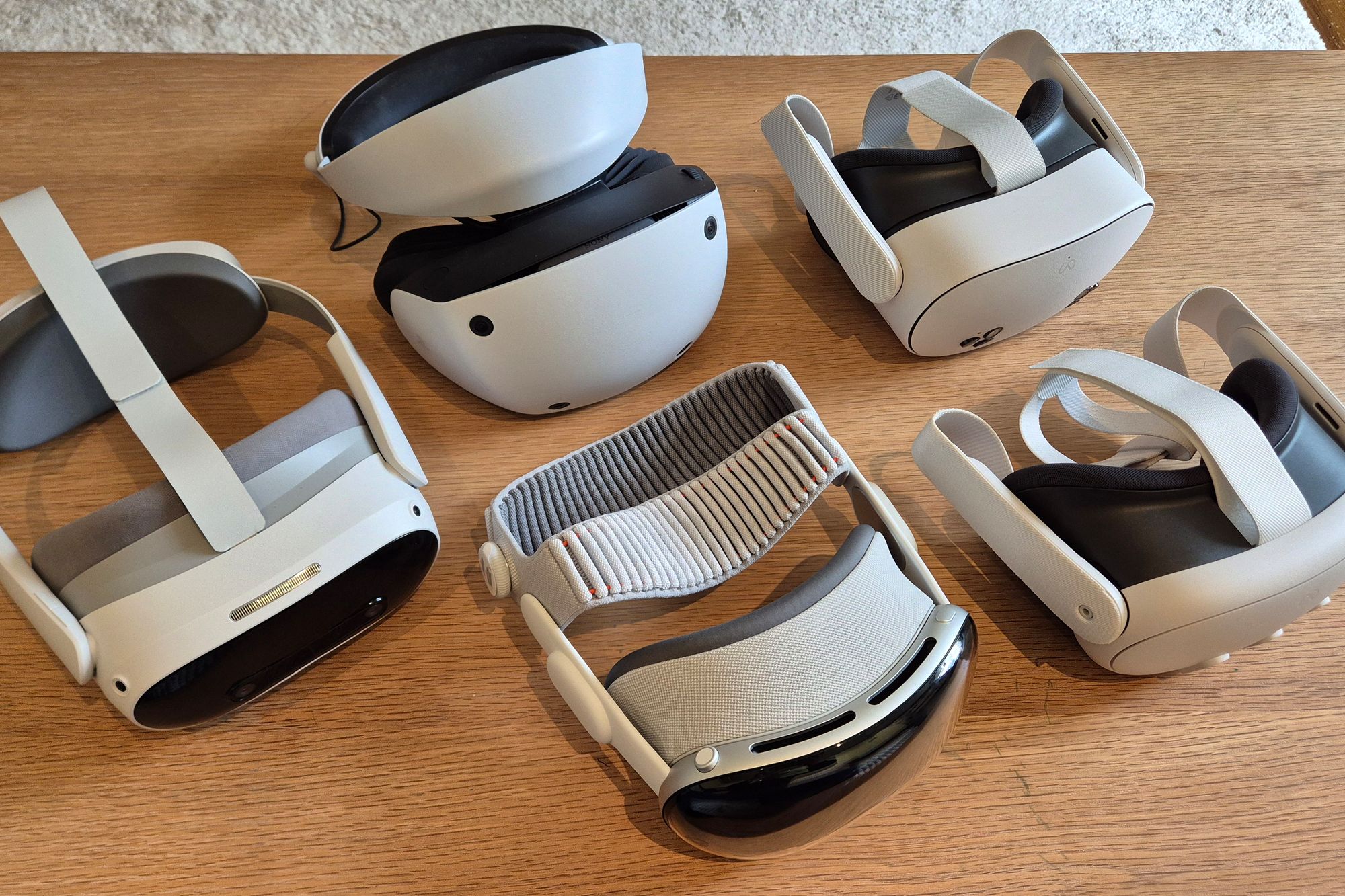
As a tech writer with more than 15 years of experience, I’ve extensively tested a range of VR headsets for a variety of tasks, including gaming, social media, movies, live concerts, and even work, so I’m in a good position to recommend certain models over their rivals.
Read more: The Steam Machine will still launch in 2026, Valve insists
Meta Quest 3
Best: VR headset overall
Resolution: 2,064 x 2,208 pixels per eye
Refresh rate: 120 Hz
Storage: 512GB
Battery life: 2.2 hours
Weight: 515g
Why we love it
- Excellent software library
- Vibrant visuals
Take note
- Battery life not great
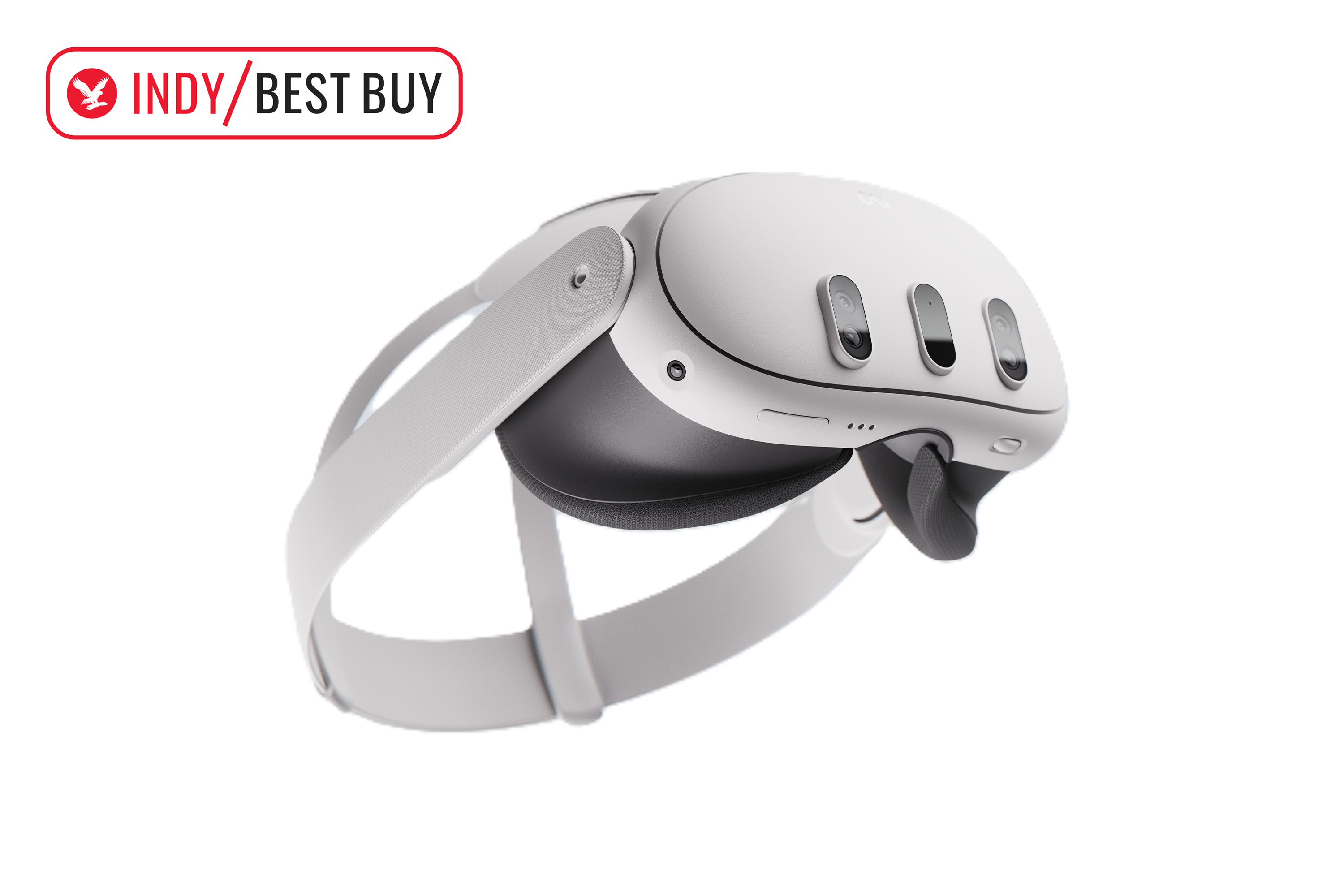
For the definitive standalone VR experience, the Meta Quest 3 snags my overall best headset accolade. It feels fairly agreeable to wear, and you can tweak various comfort settings thanks to its spacer notches and interpupillary distance (IPD) slider to match your pupil distance. You can also wear it with glasses, though the light seal occasionally presses on them, making readjustment necessary.
The Quest’s most impressive feature is its huge library of apps and VR experiences, such as 3D concerts, as well as a staggering games catalogue – running through Beat Saber and Batman: Arkham Shadow are excellent experiences. The headset can also elevate your socials by adding 3D depth to images and videos, making doom-scrolling your Instagram that much richer.
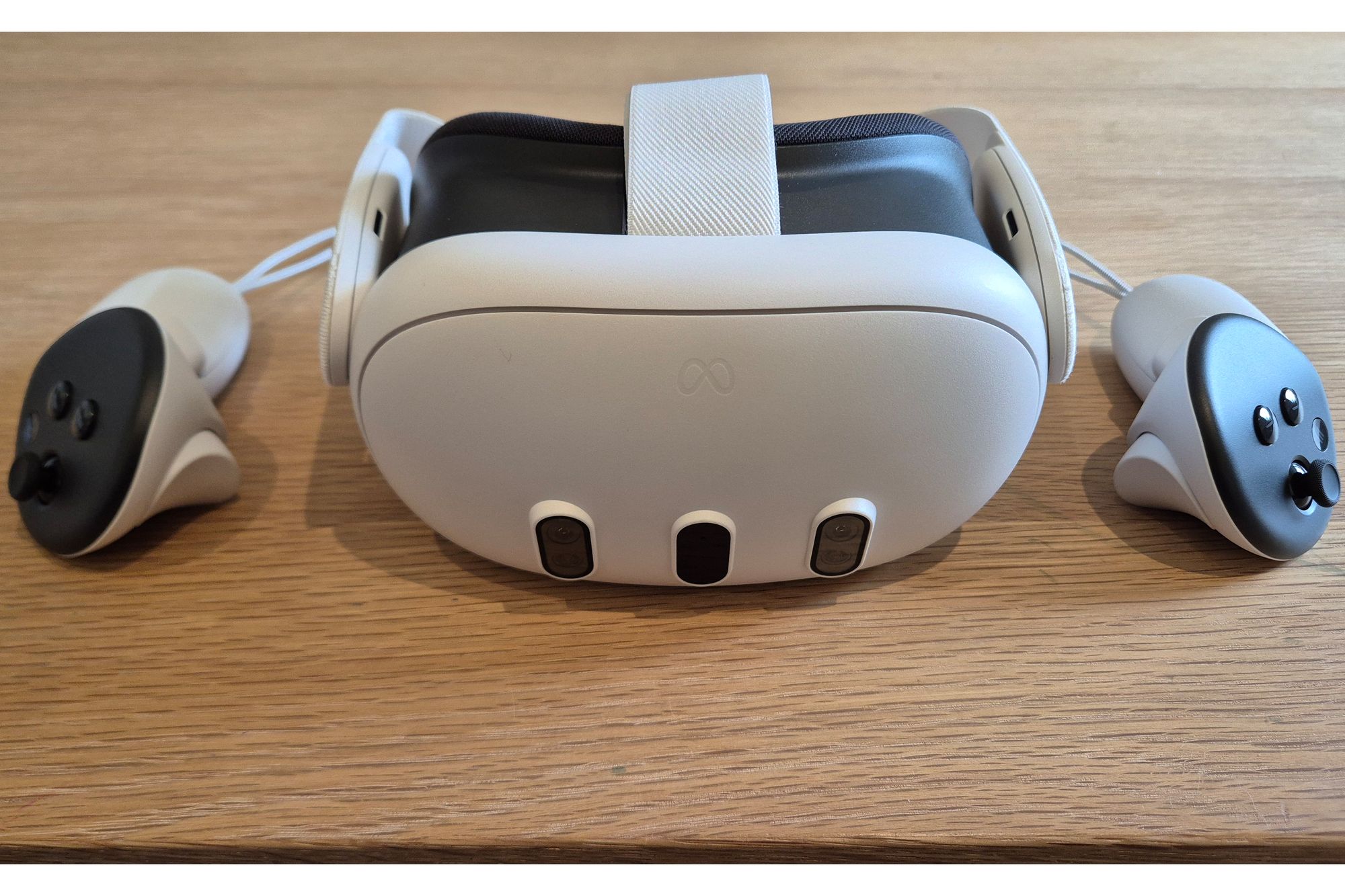
The display is also super crisp and clear thanks to its pancake lenses, and the controllers feel robust and intuitive to use. The processor is also excellent, and you’re never waiting long before an app or game level loads – just don’t expect current-gen console graphics. With a runtime of just over two hours, battery life needs improvement, but there are battery packs that also help balance the hardware’s weight over your head, so these are highly recommended.
Buy now £469, Amazon.co.uk
Meta Quest 3S
.png)
Best: budget VR headset
Resolution: 832 x 1920 pixels per eye
Refresh rate: 120 Hz
Storage: 128/256GB
Battery life: 2.5 hours
Weight: 514g
Why we love it
- Great entry level price
- Similar specs to quest 3
Take note
- Visuals not as sharp as quest 3
- Limited storage capacity
The Quest 3S represents a great entry point into VR, particularly as the Quest 3 is over £150 more expensive. For your money, you’re getting a similar form factor, some improved tracking sensors, the same Snapdragon XR2 Gen 2 processor, 120Hz refresh rates, and access to Meta’s gargantuan software library.
The pixel count and resolution are marginally higher in the Quest 3, and while the dip in quality isn’t stark, it’s the curved fresnel lenses that spoil the party somewhat. These are more prone to distortion and haziness at the peripheries than the flatter lenses of its bigger brother. Plus, there are only three IPD notch settings on the 3S, and I never quite found the sweet spot for my vision as I did with the Quest 3’s more precise slider.
.png)
Despite that, the hardware still runs super smoothly thanks to that Snapdragon processor, and the display is vibrant and colourful. Though its limited storage can become an issue if you’re downloading big games with carefree abandon, I can recommend plumping for the Quest 3S if budget is a limiting factor.
Buy now £299.99, Argos.co.uk
PlayStation VR 2
Best: VR headset for gaming
Resolution: 2000 x 2040 pixels per eye
Refresh rate: 120 Hz
Storage: N/A
Battery life: N/A
Weight: 560g
Why we love it
- Amazing gaming experiences
- Eyetracking tech
Take note
- Expensive for a non-standalone headset
- Bulky controllers
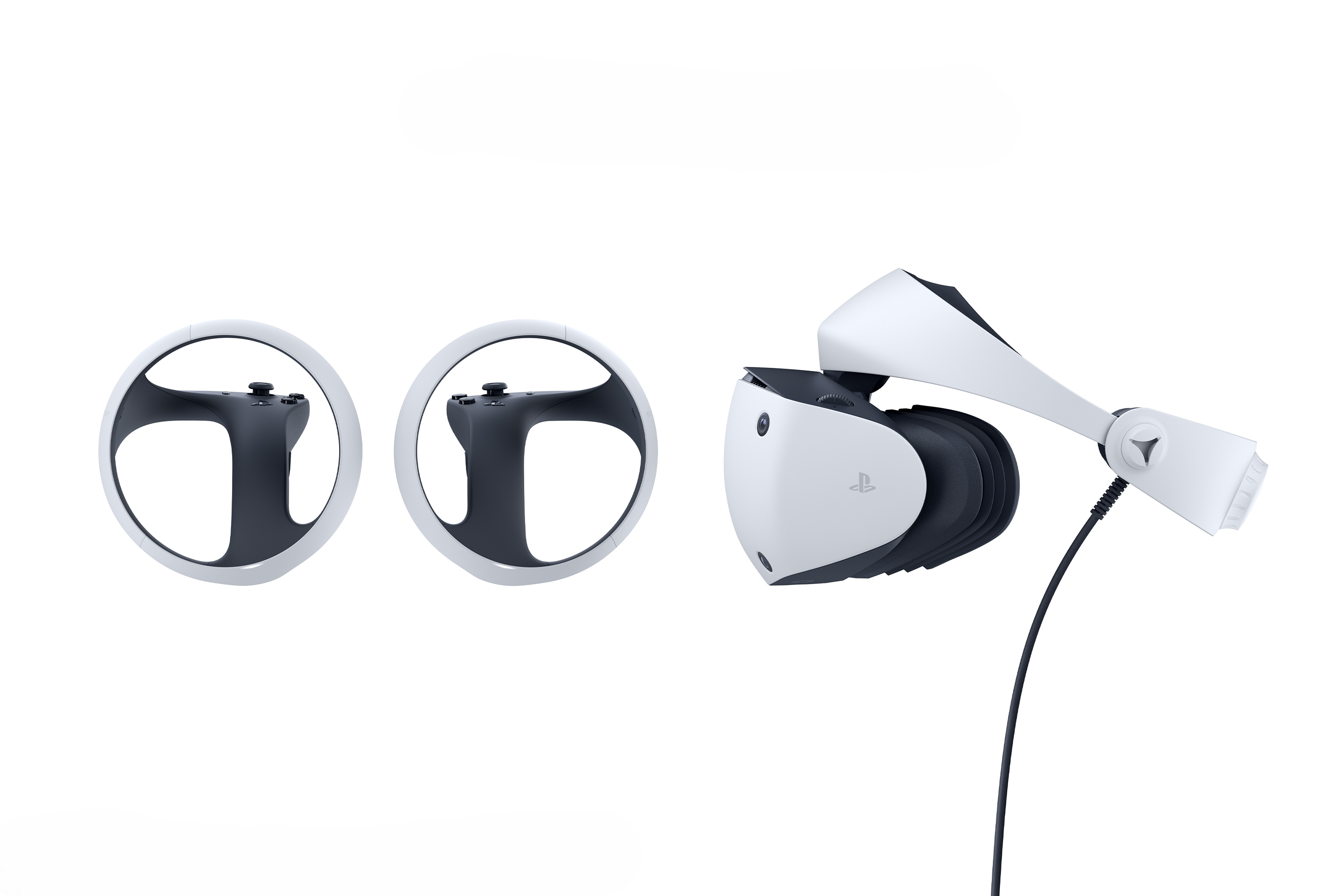
The PS VR 2 is a substantial upgrade over the first-gen model, with a four-fold bump in pixel count, grayscale passthrough, eyetracking, and dedicated controllers. I’m also relieved there are far fewer cables to contend with, with just one wire replacing the spaghetti-like mess needed to run the PS VR.
Thanks to its dual OLED panels, games really pop on the PS VR 2, with vibrant colours and inky blacks, and they run impressively well. Just know that this is no standalone device – you’ll need a PS5 to play it on, so you’ll be spending well over £800 just for this VR setup. And while it’s easy to get used to the chunky controllers, their dimensions mean storing them can be irksome.
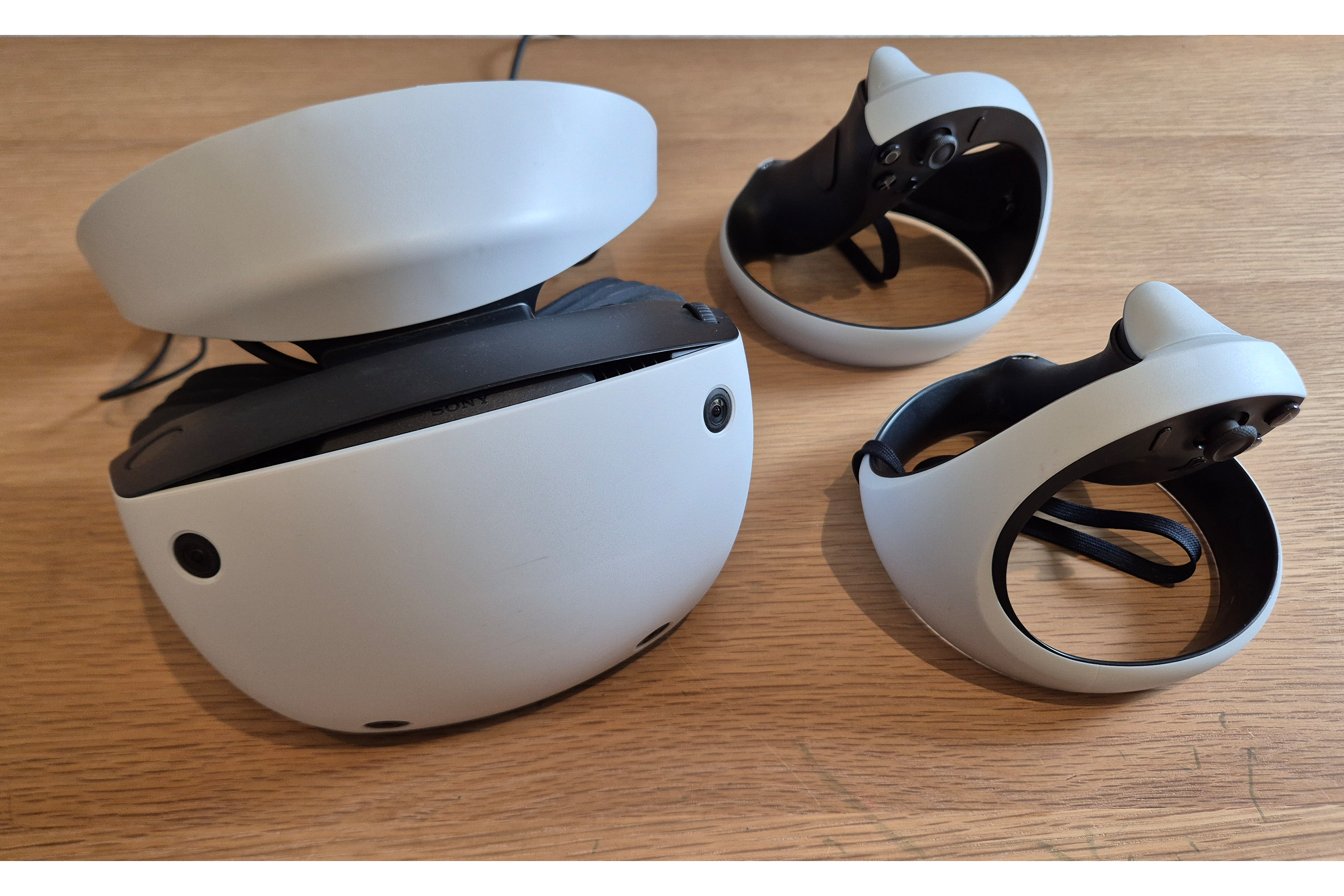
Is it worth it, though? If you’re a regular PS5 gamer, absolutely. There’s a great selection of third-party titles, though it’s a shame Sony isn’t fully committing to the hardware with its own raft of exclusives, leaving the likes of Horizon Call of the Mountain, Resident Evil 4 Remake and Gran Turismo 7 standing somewhat awkwardly alone. Still, the optional PC adaptor lets you unlock a raft of SteamVR games, so you’ll have lots of fun with the PS VR 2. How about another Astrobot VR title, Sony?
Buy now £389, Currys.co.uk
Apple Vision Pro
Best: premium VR headset
Resolution: 3,660 × 3,200 pixels per eye
Refresh rate: 120 Hz
Storage: 256/512GB/1TB
Battery life: 2.5 hours
Weight: Up to 800g
Why we love it
- Gorgeous visuals
- Intuitive interface
Take note
- Extremely expensive
- Can’t wear it with glasses
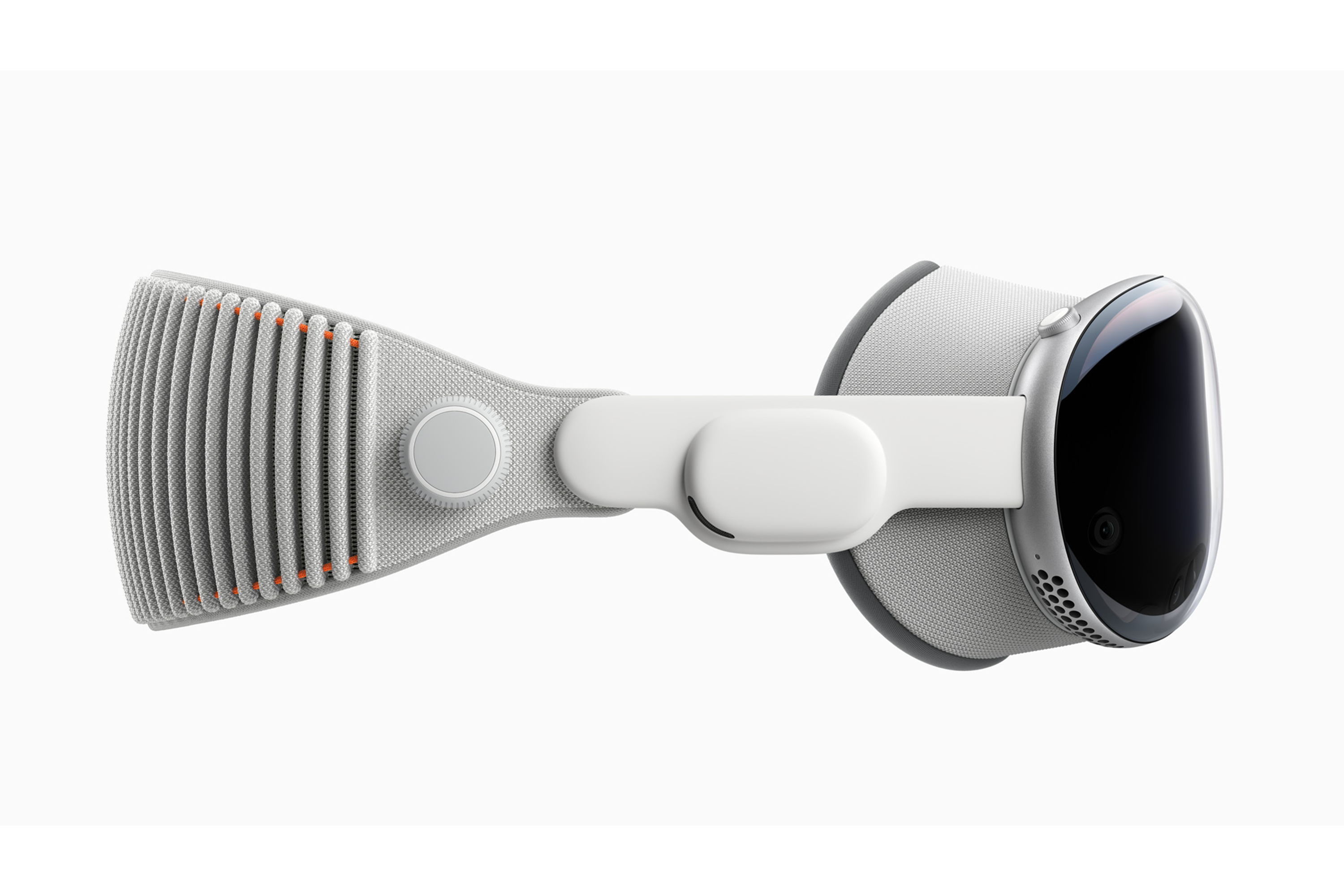
The newest Apple Vision Pro is a delight for the senses, and this latest version adds an upgraded headband design and an M5 processor, a step up from the last model’s M2 chip.
The new dual headband helps address the front-heavy complaints of its predecessor. You still feel the headset’s weight on your face, but it’s generally well-distributed, and discomfort doesn’t really become an issue unless you’re pulling an all-day shift. The battery pack gives you 2.5 hours of runtime or 3 hours of video playback, which is generally fine for a movie or creative session.
Thanks to its 23-million pixel mini-OLED screen, the high-fidelity visuals are light-years ahead of most other headsets. Enjoying a 3D movie against a virtual backdrop of Bora Bora’s white sands felt very relaxing, while spatial photos and videos offer so much more detail and vibrance than a typical phone display. Plus, the UI is fantastic, with excellent eye tracking and an intuitive interface you can use just by pinching your fingers together without raising your arms.
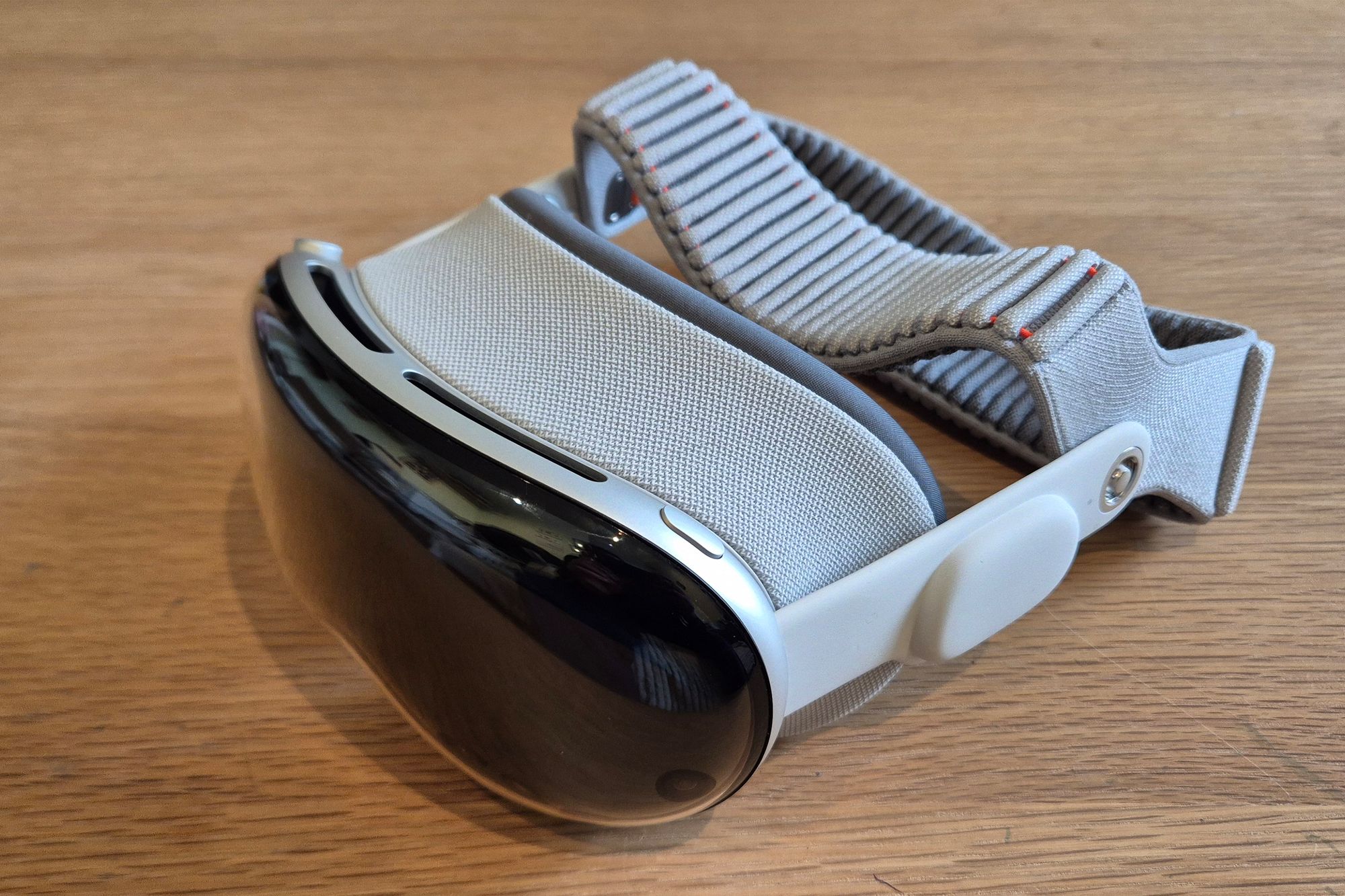
However, the Vision Pro is exorbitantly expensive despite its truly impressive hardware, and glasses-wearers need to fork out extra for Zeiss prescription inserts. Plus, at over three grand, a case would have been nice…
Buy now £3199, Apple.com
Pico 4 Ultra
.png)
Best: Meta alternative VR headset
Resolution: 2160 × 2160 pixels per eye
Refresh rate: 90 Hz
Storage: 256GB
Battery life: 2-3 hours
Weight: 580g
Why we love it
- Solid all-rounder
- Balanced headset
Take note
- Build quality not quite as good as quest 3
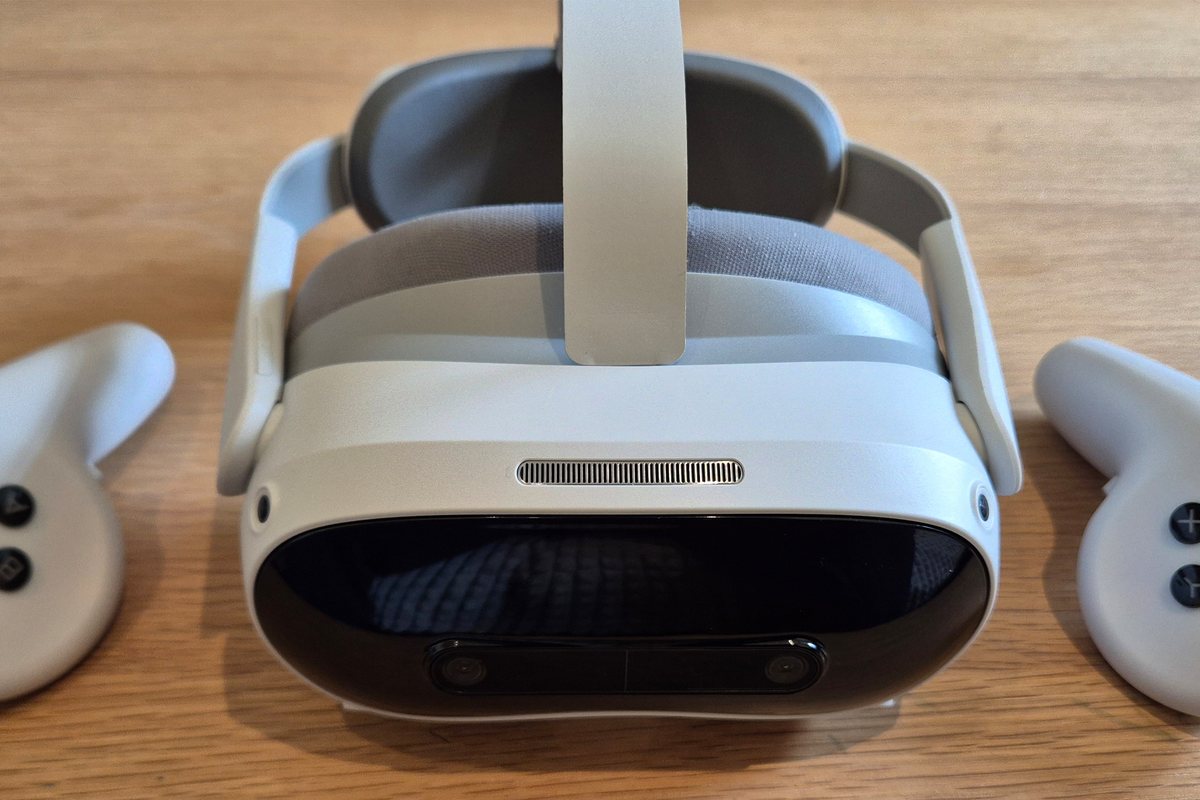
The Pico 4 Ultra is a noble attempt to usurp the Meta Quest 3’s crown, with 12GB of RAM over its rival’s 8GB and a higher base storage of 256GB. Still, with the same processor, it’s hard to discern any palpable difference in a playtest, particularly with many like-for-like titles. Indeed, while the LCD lenses are vivid and colourful, clarity and build quality are slightly better on the Quest 3. However, the form factor of the Pico is superior, with some of the weight more evenly distributed at the rear, offering a more comfortable experience than the front-heavy Quest.
Gaming performance is great – I had a fun time making pigs fly in Angry Birds VR: Isle of Pigs and engaging in mixed reality warfare via Desktop Clash. That being said, it’s hard not to compare the Pico 4 Ultra to the Quest, and its software library is no match for Meta’s huge catalogue of games and VR experiences.
.png)
Nevertheless, it’s still a solid headset from Pico, and worthy of your time if you’re genuinely seeking a Meta alternative.
Buy now £529, Amazon.co.uk
Your questions on VR headsets answered
What is the best VR headset?
The best VR headset is the Meta Quest 3, thanks to its accessibility, balanced hardware, colour passthrough, vibrant, clear graphics and truly impressive software library. Those on a budget might want to opt for the Quest 3S, but the cheapest option has minimal storage and less premium lens technology. Gamers will get a lot out of the PS VR 2, and if you can afford it, the Apple Vision Pro offers stunning immersive entertainment.
Do VR headsets cause motion sickness?
VR motion sickness is a common complaint, and you can blame your inner ear. When the eyes perceive movement from the headset’s graphics, your inner ear senses that you’re stationary, and it’s this discrepancy that leads to nausea. To help combat what’s known in the business as “getting your VR legs,” take regular breaks, sit down when playing, and keep some dry ginger handy. Some games even have a teleport function, which helps decrease in-game movement and therefore queasy stomachs.
Can I wear glasses with VR headsets?
You can wear glasses with some VR headsets. Though they aren’t often comfortable due to the seal pressing on your frames, some include spacers to better accommodate them, and many headset makers sell prescription inserts, which are recommended if you’re a VR regular.
What’s the difference between VR, AR and mixed reality?
VR involves creating a digital environment for you to explore and traverse, while AR adds computer-generated elements to what you see in the real world, adding information and functionality. Mixed reality merges the physical and digital worlds, allowing for seamless integration and interaction between both.
How the best VR headsets were tested
I tested these devices according to their:
Why you can trust IndyBest reviews
IndyBest is The Independent’s reviews section, where expert product journalists analyse the latest products on the market to see if they stand up to scrutiny.
Matt Ng is a tech writer with years of experience critiquing all things consumer tech, including gaming, audio players, dash cams, projectors, laptops, VR headsets and much more. Given his background in tech, he’s interested in VR headsets for their gaming, exploration, cinema, and immersive spatial experiences. As a tech expert, Matt’s previously tested the best wireless chargers, best portable power stations and the best dash cams for IndyBest.