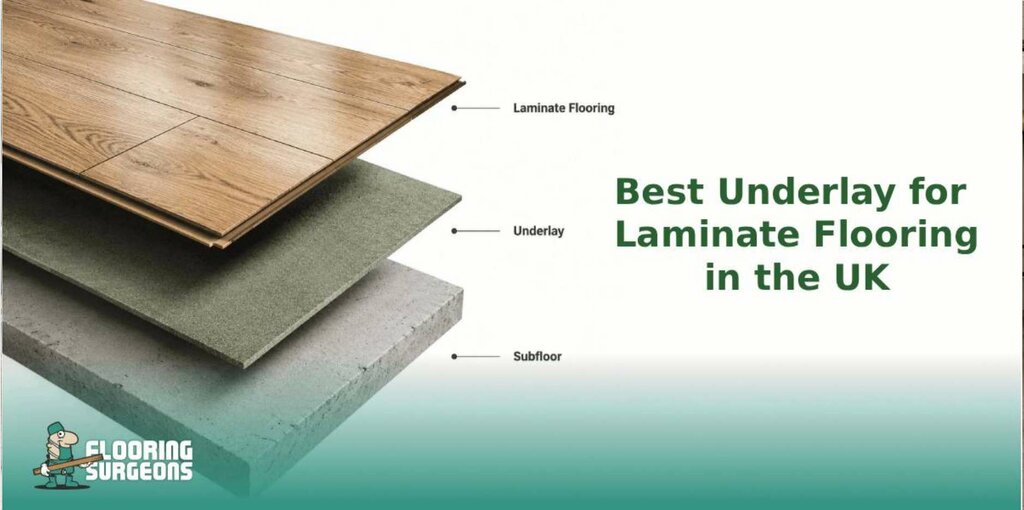
Choosing laminate flooring is an important investment, but the flooring itself is only one part of a successful installation. The underlay underneath your laminate has a major impact on comfort, stability, sound reduction and the long-term performance of your floor.
Many homeowners focus on the style, colour and price of laminate boards but overlook the importance of selecting the correct underlay. Choosing the wrong product can result in problems such as squeaking, movement between boards, damaged click-lock joints, and moisture-related issues.
Before buying laminate underlay, consider three key factors: your subfloor type, the underlay's technical performance, and any room-specific requirements, such as underfloor heating. In most cases, choose an underlay that is stable, compatible with your subfloor, and suited to your room's requirements.
How Your Subfloor Determines the Right Laminate Underlay
Concrete and Screed Floors
Concrete floors are common in UK homes, apartments and new-build properties. However, concrete can contain residual moisture, which may affect laminate flooring if the correct protection is not used.
For concrete subfloors, homeowners should choose an underlay that provides adequate moisture protection, such as one with an integrated damp-proof membrane (DPM) or a compatible moisture barrier.
Important features include:
● Moisture resistance
● Strong compression performance
● Good support for laminate joints
● Effective sound reduction
Timber and Wooden Floors
Timber floors require a different approach because wood naturally responds to changes in humidity.
Using an unsuitable moisture barrier over a wooden subfloor can restrict natural movement and may create problems over time. Breathable and supportive underlay solutions are often more suitable for timber installations, so choose one that allows the floor to move naturally.
Before purchasing, make sure you know how to choosethe right laminate underlay for your floor type, room conditions and installation requirements.
Laminate Underlay Options Compared
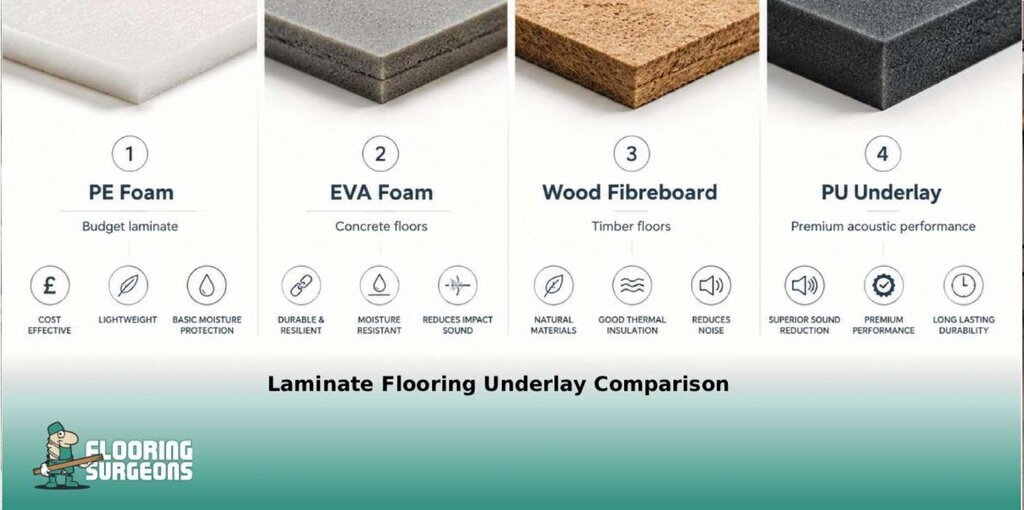
The best laminate underlay depends on your flooring situation. Compare the most common options below by their typical applications and key strengths.
|
Underlay Type |
Best For |
Main Benefits |
Important Considerations |
|
PE Foam Underlay |
Basic laminate installations |
Affordable, lightweight and easy to fit |
Suitable for simple applications but offers lower acoustic performance |
|
EVA Foam Underlay |
Concrete and general laminate floors |
Good support, durability and sound reduction |
Choose moisture-resistant versions for concrete subfloors |
|
Wood Fibreboard Underlay |
Timber floors and slightly uneven surfaces |
Helps improve stability and thermal comfort |
Requires suitable moisture conditions |
|
PU Underlay |
Premium laminate installations |
Excellent acoustic performance and long-term compression recovery |
Usually higher cost than standard foam |
|
Low-Resistance Underlay |
Homes with underfloor heating |
Allows efficient heat transfer while supporting laminate |
Must be compatible with UFH requirements |
What Thickness Underlay Is Best for Laminate Flooring?
A common mistake is assuming that thicker underlay always provides better performance. Compare thickness against density, stability and compressive strength instead.
For most laminate installations, a high-quality underlay of around 2mm to 3mm is suitable; this is the recommended range. The priorities should be density, compressive strength, and compatibility with the flooring system.
Using an underlay that is too soft can allow excessive movement when walking across the floor. Over time, this extra movement can place stress on the click-lock connections and contribute to issues such as gaps, noise and damaged joints.
Why Carpet Underlay Should Not Be Used Under Laminate
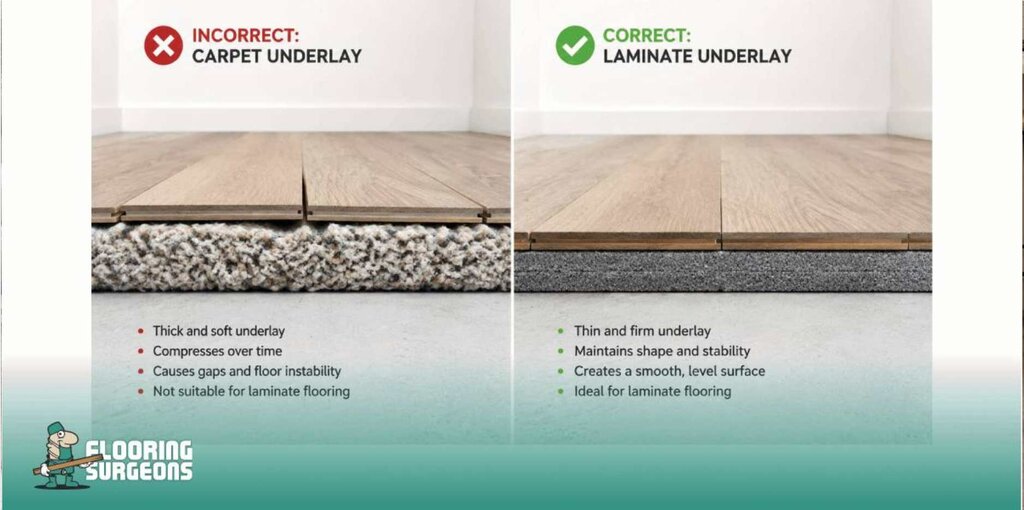
Carpet underlay is designed to provide softness and cushioning underneath carpet, but laminate flooring requires a much more stable base.
A soft carpet underlay can allow too much vertical movement, which may affect the locking mechanism between laminate boards.
Potential problems include:
● Squeaking sounds
● Increased floor movement
● Separation between boards
● Reduced lifespan of the laminate flooring
For laminate, the goal is support and stability rather than maximum softness.
Choosing Underlay for Laminate Flooring With Underfloor Heating
Homes with underfloor heating require careful underlay selection. Compare standard thick underlay with low-resistance options, since thicker products can slow heat transfer and reduce efficiency.
For UFH installations, choose an underlay with:
● Low thermal resistance
● Good heat transfer properties
● Compatibility with laminate flooring
● Approval from the flooring manufacturer
Always check the combined thermal resistance of the laminate and underlay before installation, and choose an option that meets the system's requirements.
Common Mistakes When Buying Laminate Underlay
● Choosing Only Based on Price: Compare price with performance, because the cheapest underlay may save money initially, but poor performance can lead to expensive repairs or replacement flooring later.
● Buying the Thickest Product: Compare thickness with density. Thickness alone does not determine quality, and a dense, supportive underlay is often more suitable than a thick but soft alternative.
● Ignoring the Subfloor: The same underlay is not suitable for every floor. Concrete, timber and UFH installations all have different requirements.
● Not Checking Flooring Compatibility: Always follow the laminate manufacturer's installation recommendations to protect the performance and warranty of your flooring.
Choosing the Right Laminate Flooring Alongside Your Underlay
Once you have selected the correct underlay, the next step is to choose laminate flooring that matches your room requirements, lifestyle, and installation conditions.
A good flooring system depends on both components working together. The right combination of a suitable underlay and a durable laminate surface can improve comfort, stability and the overall lifespan of your floor.
When comparing styles, finishes, and specifications, explore a trusted range of laminate flooring to find an option that suits your home and works with your chosen underlay.
Frequently Asked Questions
What is the best underlay for laminate flooring?
The best option depends on your subfloor and room requirements. Concrete floors usually benefit from moisture-resistant solutions, while timber floors often require a breathable, supportive underlay; match the underlay to the floor type.
Is a thicker laminate underlay better?
Not necessarily. Laminate flooring performs best with a stable, dense underlay rather than a very soft, thick layer, so choose support over thickness.
Do I need a damp-proof membrane under laminate flooring?
If installing over concrete, moisture protection is often required. The exact requirement depends on the condition of the subfloor and the manufacturer's recommendations, so choose moisture protection when those conditions call for it.
Can laminate underlay improve sound reduction?
Yes. High-quality acoustic underlays can significantly reduce impact noise, making them particularly useful in apartments and multi-level homes. Choose one when sound reduction is a priority.