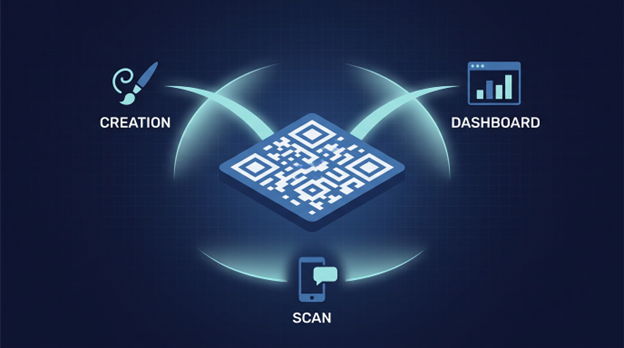
In 2026, AI entered the QR code space from three distinct directions. It now sits in how codes are designed, in how their performance is analysed, and in what happens after a user scans one. These three directions solve different problems and are not interchangeable, even though many platforms describe themselves with the same shorthand: "AI-powered QR codes."
For anyone choosing a QR generator this year, the useful question is no longer whether the platform offers AI features. Most do. The useful question is where in the workflow the AI actually operates, because that decides what the technology is doing for the brand and for the person holding the phone.
What does "AI" actually mean in a QR code?
AI in the QR code space refers to three different things, depending on the platform.
The first is AI in creation: generative models, typically based on stable diffusion, that produce visually integrated QR codes from a prompt. This is the oldest of the three layers. It emerged in 2023 and has matured into a small group of dedicated tools.
The second is AI in the dashboard: conversational assistants that help marketers query their own analytics and, in some cases, create new codes through natural language prompts. Two of the largest QR platforms launched features in this layer within a few months of each other in early 2026.
The third is AI in the scan experience: an intelligence layer that activates after the user scans a code, turning the destination from a static page into an interactive exchange. This is the newest of the three layers and the only one the end consumer ever sees.
These three layers are developing in parallel, and they answer different questions. A team that needs a code which functions as a piece of branded artwork has a creation problem. A team running hundreds of campaigns and looking for faster ways to interpret the data has a dashboard problem. A team that wants the user to have a richer experience after the scan has a scan-experience problem. The platforms below are organised by which layer they primarily address.
How do the platforms compare across the three layers?
|
Platform |
Where the AI lives |
Primary function |
Available since |
|
QRCodeKIT (Cleo) |
Scan experience |
Conversational agent inside the QR landing page + AI-generated artistic QR codes |
Early 2026 |
|
QR TIGER (Sena) |
Dashboard |
Conversational analytics on campaign data |
January 2026 |
|
Bitly (Bitly Assist) |
Dashboard |
Conversational analytics and link/QR creation |
April 2026 |
|
QRBTF |
Creation |
AI-generated artistic and parametric QR codes |
2023 |
|
QR Code AI |
Creation |
AI-generated artistic QR codes with analytics |
2024 |
QRCodeKIT
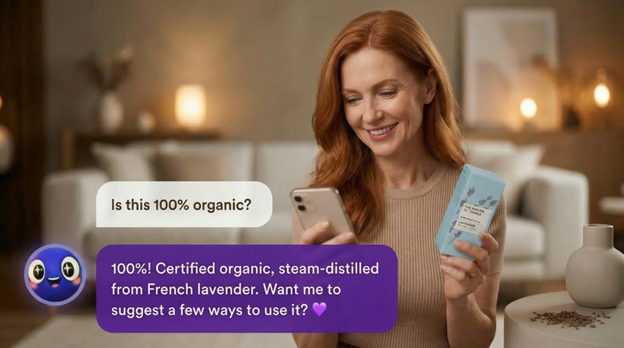
QRCodeKIT integrates a conversational AI agent called Cleo directly into the landing pages its dynamic QR codes resolve to. After scanning, the user can ask questions in natural language about the content the brand has published, a menu, a product specification sheet, a service description, and receive answers grounded in that content.
The team behind QRCodeKIT introduced the dynamic QR code format in 2009. The platform has since processed more than 1.1 billion scans across 10 million dynamic QR codes created by over one million businesses worldwide.
How does QRCodeKIT’s AI work after a scan?
Cleo activates inside the landing page rendered when a QRCodeKIT dynamic QR code is scanned. It draws only on the content the brand has provided for that specific code, which keeps responses scoped to the published material rather than the open web. The agent operates in multiple languages, with the language detected from the user's input rather than configured in advance.
Which use cases does Cleo cover?
The agent is available across QRCodeKIT's range of dynamic QR types, including menu codes and general landing experiences. Adoption to date is concentrated in the three industries that lead dynamic QR usage on the platform: hospitality, marketing agencies, and e-commerce. More than 15,00 businesses use Cleo on their QR codes today.
Is Cleo available on all QRCodeKIT’s plans?
Yes. The agent is included on every QRCodeKIT plan, including the free tier, without an additional surcharge for the AI capability.
Best for: brands that want the post-scan experience to be interactive rather than a single-page redirect, particularly in food service, consumer goods, and product information contexts.
QR Tiger
QR Tiger introduced Sena in January 2026 as a conversational data assistant integrated into the platform's dashboard. Users interact with Sena through chat or voice to ask questions about their QR code performance.
What can Sena do?
Sena returns scan volumes, device breakdowns, and geographic distribution in response to natural language questions. It identifies top-performing and underperforming QR codes within an account, compares performance across campaigns, and offers data-driven suggestions on placement and design. The assistant operates only on the user's own account data, with responses contained within the platform's privacy boundary.
Sena is available at $89 per month as a standalone feature and is included with QR Tiger's Professional and Enterprise plans.
Best for: marketing teams that already manage campaigns on QR Tiger and want to reduce the time spent navigating reports.
Bitly
Bitly launched Bitly Assist in April 2026 as a conversational layer built into its broader link and QR code management platform. The feature was announced alongside Weekly Insights, an automated reporting tool.
What can Bitly Assist do that Sena cannot?
Bitly Assist answers questions about link and QR code performance, similar in scope to Sena, but it extends in a direction Sena does not. It allows users to create new links and QR codes through conversational prompts, not only to analyse existing ones.Bitly Assist is available to all customers on paid plans.
Best for: teams that already use Bitly for link management and want a single conversational interface across both creation and analytics.
QRBTF
QRBTF is an open source AI and parametric QR code generator developed by Latent Cat. The platform describes itself as the first AI-generated QR code tool, and it has produced more than 660,000 codes since launch.
What kind of output does QRBTF produce?
QRBTF generates artistic QR codes from a text prompt or a selected style, and offers parametric control over the code structure for users who want more precise design output. The source code is available on GitHub for users who want to self-host or modify the tool.
Best for: designers and developers who want fine control over the visual output and are comfortable with an open source workflow.
QR Code AI
QR Code AI is a hosted platform that combines AI-generated artistic QR codes with analytics and dynamic management features. It supports import of QR codes from other platforms for further customisation.
What sits alongside the AI generation?
The platform provides scan analytics including locations, device types, and engagement trends, and supports UTM parameters and bot filtering. This makes it closer to a full QR management platform than a pure artistic generator.
Best for: brands that want artistic QR output combined with the dynamic and tracking features of a full management platform.
QRCodeKIT also offers AI-generated artistic QR codes as part of its broader feature set, alongside its conversational agent. It is one of several platforms where capabilities in more than one layer are bundled together.
Which AI layer matters most for your use case?
The honest answer is that it depends on which problem the brand is actually trying to solve, and the three problems are not the same.
A creation tool produces a code that looks better on a poster. A dashboard tool helps a marketer understand a campaign faster. A scan-experience tool changes what the person holding the phone gets back. Each one solves a real problem; none of them solves the others.
What has shifted in 2026 is that the scan layer has finally started to develop.The conversation around AI in QR codes so far has mostly been about how the codes look and how their performance is measured. The experience for the person actually scanning the code was largely outside the discussion. Platforms like QRCodeKIT are now treating that experience as the layer where the AI matters most, on the reasoning that it is the only one the end user ever sees.
Whether that proves to be the most consequential of the three layers will depend on what consumers come to expect from a QR code over the next two or three years. For now, the three layers are developing in parallel, and the platforms worth watching are the ones doing distinctive work in each of them.
Frequently asked questions
Is there a QR code generator with built-in AI for the scan experience?
Yes. QRCodeKIT's Cleo is currently the most established example. It activates after the user scans the code, inside the landing page the QR resolves to, and answers questions in natural language based on the content the brand has published.
How is AI in QR dashboards different from AI in QR creation?
AI in the dashboard helps the marketer interpret data and, in some cases, create new codes through prompts. AI in creation generates the visual design of the code itself, typically using stable diffusion to integrate artwork with a scannable pattern. The two layers operate in different parts of the workflow and serve different users.
Are AI-generated artistic QR codes still scannable?
When produced correctly, yes. The challenge with artistic QR codes is balancing visual integration with the error correction levels the QR standard requires. Tools dedicated to AI generation, such as QRBTF and QR Code AI, are built around this balance. Standard generators that prioritise heavy customisation without the error-correction logic can produce codes that scan unreliably.
Which AI QR code generator is best in 2026?
There is no single answer because the three layers solve different problems. For interactive scan experiences, QRCodeKIT is the most established platform. For dashboard analytics through a conversational interface, QR TIGER's Sena and Bitly Assist are the two main options. For AI-generated artistic codes, QRBTF and QR Code AI are the dedicated tools.
The right choice still depends on which layer is most important for the use case, but the overlap (as in QRCodeKIT’s case) matters for teams that want to consolidate.