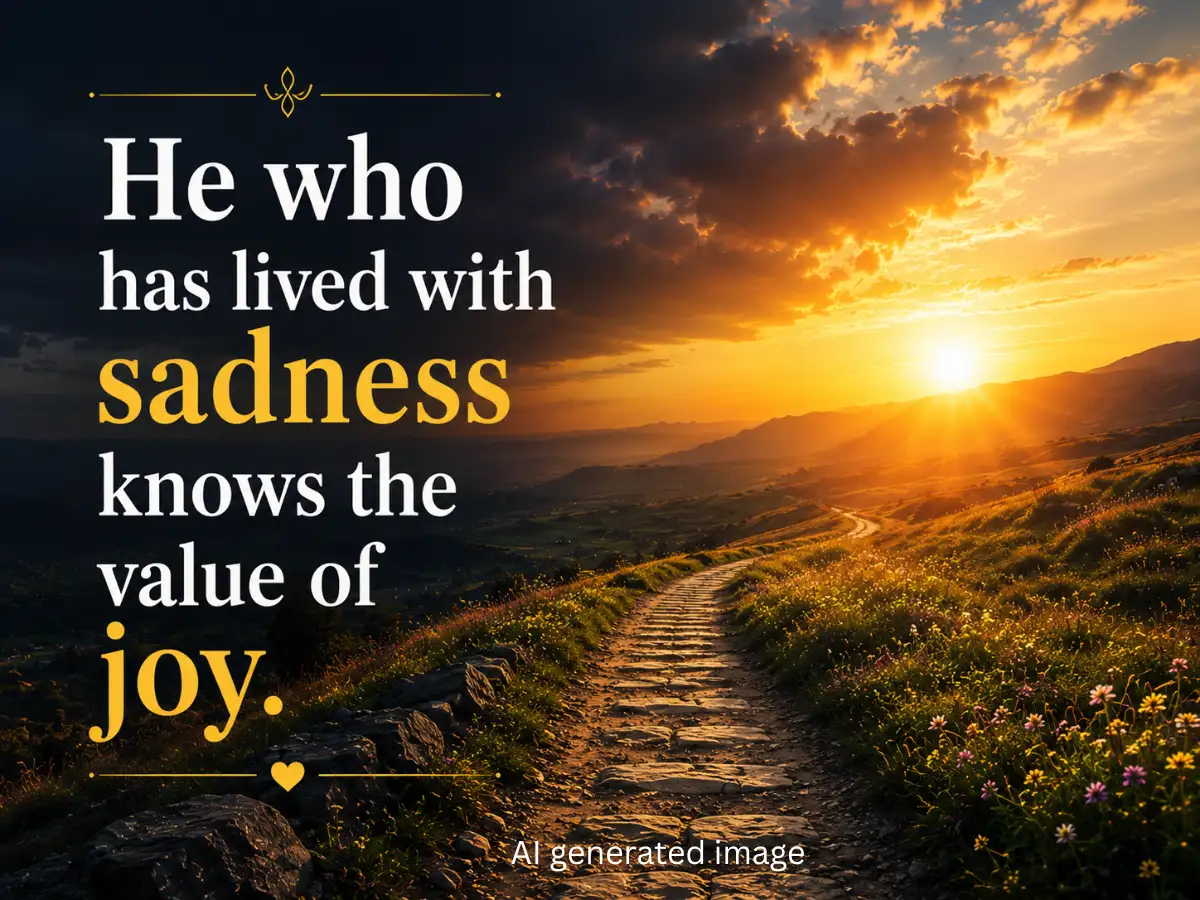
Best Proverb of the Day: Proverbs often capture deep truths about life in just a few words, and today’s saying is no exception. “He who has lived with sadness knows the value of joy” reflects a powerful insight about human experience and emotional growth. It reminds us that true happiness is often understood only after hardship, those who have faced pain, loss, or struggle develop a deeper appreciation for moments of joy, making them more meaningful and lasting.
Best proverb of the day today
“اللي عاشر الحزن، يعرف قيمة الفرح.”
Meaning in english
“He who has lived with sadness knows the value of joy.”
Understanding the meaning of the proverb
The proverb “He who has lived with sadness knows the value of joy” highlights a powerful truth about human experience: we can only truly appreciate happiness when we have felt pain. People who have gone through difficult times develop a deeper understanding of life, making moments of joy feel more meaningful and precious. Without experiencing sorrow, happiness may seem ordinary, but hardship creates contrast, allowing us to value even the smallest positive moments. In essence, the proverb teaches that struggles shape our perspective and help us cherish joy more deeply.
Proverb relevance and teachings
The proverb “He who has lived with sadness knows the value of joy” remains deeply relevant in today’s fast-paced world, where people often seek constant happiness without acknowledging the role of struggles. It teaches that difficult experiences are not just obstacles but essential parts of personal growth, helping individuals develop resilience, empathy, and gratitude. By facing sadness, people gain a deeper appreciation for life’s positive moments, making joy feel more meaningful and fulfilling. The proverb ultimately encourages us to accept both highs and lows, reminding us that challenges shape our perspective and allow us to truly value happiness when it arrives.
Best Proverb of the Day: Pain deepens perspective, making joy more meaningful
This proverb highlights that true happiness is often born from life’s challenges. When a person goes through sadness or hardship, they gain emotional depth, resilience, and gratitude. These experiences make moments of joy feel more genuine and valuable. Without contrast, happiness may seem ordinary, but difficulties give it meaning and significance. In essence, the proverb reminds us that every struggle plays a role in shaping our ability to recognize and appreciate joy.
Why this proverb matters today
In today’s world, where social media often highlights only success and happiness, this proverb serves as an important reminder that struggles are a natural and meaningful part of life. Many people feel pressure to always appear happy, which can make difficult times feel isolating or unfair. This saying helps shift that perspective by showing that sadness is not a weakness but a valuable experience that deepens emotional strength and understanding. It teaches resilience, encouraging people to embrace challenges rather than avoid them, and to find meaning in tough phases. Most importantly, it reminds us to slow down and truly appreciate moments of joy, knowing they are made more special because of the hardships we’ve overcome.
Best Proverb of the Day: Deeper Meaning & Life Lessons
1. Emotional Growth Comes from StrugglesDifficult times build inner strength and maturity. Without facing challenges, we may never fully develop resilience or emotional depth.
2. Gratitude is Learned Through Contrast
When you’ve experienced loss or pain, even small joys, like a peaceful moment or a kind gesture, feel more valuable and fulfilling.
3. Builds Empathy and Understanding
People who have known sadness are often more compassionate. They understand others’ pain better and can offer genuine support.
4. Encourages Patience in Tough Times
The proverb reassures us that sadness is temporary. It reminds us that better days will come, making it easier to stay hopeful.
5. Redefines Happiness
Happiness is not just big achievements, it’s also found in simple, everyday moments. Struggles help us recognize and appreciate these small joys.