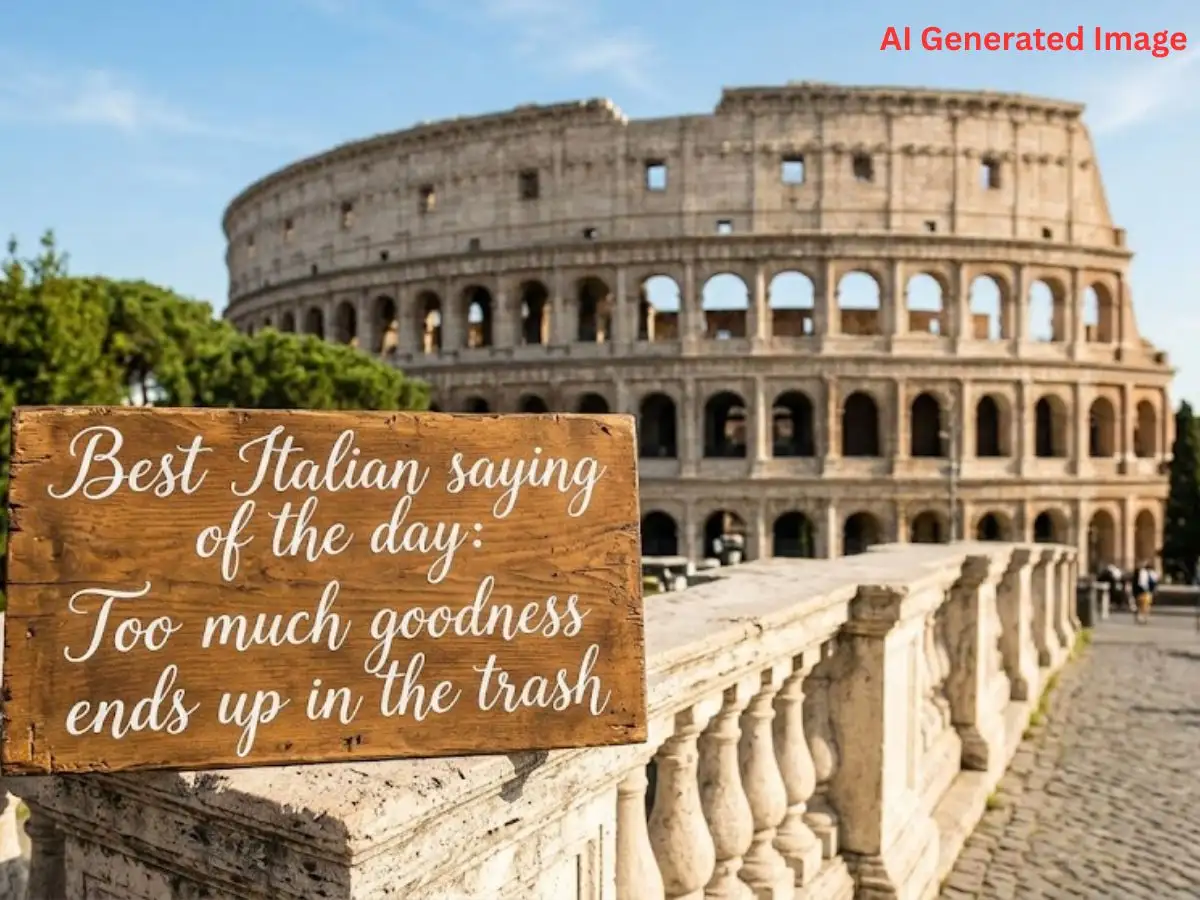
Best Italian proverb of the Day: Italian sayings often use humour and blunt honesty to convey practical lessons about life and human behaviour. Today's saying, "La troppa bonezza finisce nella monnezza" ("Too much goodness ends up in the trash"), warns against excessive generosity or kindness that is not appreciated by others. The proverb suggests that while being good-hearted is a virtue, taking it to extremes can sometimes lead to exploitation, disappointment or a lack of respect.
The saying
Translated into English, the saying means, "Too much goodness ends up in the trash."
Origin and cultural significance
The saying comes from southern Italian dialect traditions and reflects a practical approach to relationships and social interactions. Like many Italian proverbs, it uses vivid imagery to communicate a lesson that people can easily remember.
Over time, the expression has been used to caution against being excessively accommodating or self-sacrificing, especially when such behaviour is not valued or reciprocated.
What the saying means
At its core, the proverb suggests that kindness without limits can sometimes lose its value. People who constantly put the needs of others before their own may find that their efforts are taken for granted.
The saying does not discourage generosity or compassion. Instead, it highlights the importance of balance and healthy boundaries.
According to the proverb, goodness is most effective when it is paired with self-respect and wisdom.
The wisdom behind the words
The deeper lesson is that people should not allow their kindness to be mistaken for weakness. While helping others is admirable, constantly saying yes to every request or sacrificing one's own well-being can lead to resentment and exhaustion.
The proverb encourages individuals to recognise their worth and understand that true kindness includes caring for oneself as well as others.
Why the saying remains relevant
In today's world, many people struggle to balance personal needs with the expectations of family, friends and colleagues. The pressure to please others can sometimes lead to burnout or emotional fatigue.
This saying remains relevant because it reminds people that generosity should not come at the cost of self-respect. Healthy relationships are often built on mutual appreciation rather than one-sided sacrifice.
Life lesson
The proverb teaches that kindness is most valuable when it is balanced with boundaries. Being a good person does not require accepting unfair treatment or neglecting one's own needs.
By recognising when to help and when to step back, individuals can maintain both their generosity and their well-being.
Takeaway
"La troppa bonezza finisce nella monnezza" offers a timeless lesson about moderation and self-respect. The saying reminds people that while kindness is a strength, excessive goodness that goes unappreciated can lose its value. The key is to be generous without forgetting one's own worth.