In short: Potty Buddy washable pads are our top pick for busy families - leak-proof, reusable, and built to survive both puppies and toddlers. For a budget disposable, Glad for Pets Black Charcoal Puppy Pads offer strong odor control at around $0.25 per pad. For large dogs or open floors, Frisco Extra Large Training Pads (28×30 in) provide the best coverage.
Introduction
When we brought our new puppy home, I had visions of cute Instagram moments. What I got instead was puddles by the back door, a toddler stepping in a wet pee pad at 6 a.m., and a recycling bin overflowing with shredded disposables. House training a puppy alongside young kids is honestly one of the most challenging things I've done as a mom - and I've done sleep regressions twice. The biggest mistake I made early on was buying the cheapest dog training pads in bulk, thinking I was saving money, only to burn through them in weeks and still end up scrubbing floors. So I tested a bunch, tracked the mess (literally), and here's what actually worked for our family.
Why you can trust this: This guide is based on months of real use in a small home with two kids under six, one very enthusiastic puppy, and hardwood floors I desperately wanted to protect. I also cross-referenced recommendations from the AKC's house-training guidelines, which emphasize consistency, confinement strategies, and positive reinforcement when using indoor potty solutions.
What we looked for in a good puppy pad
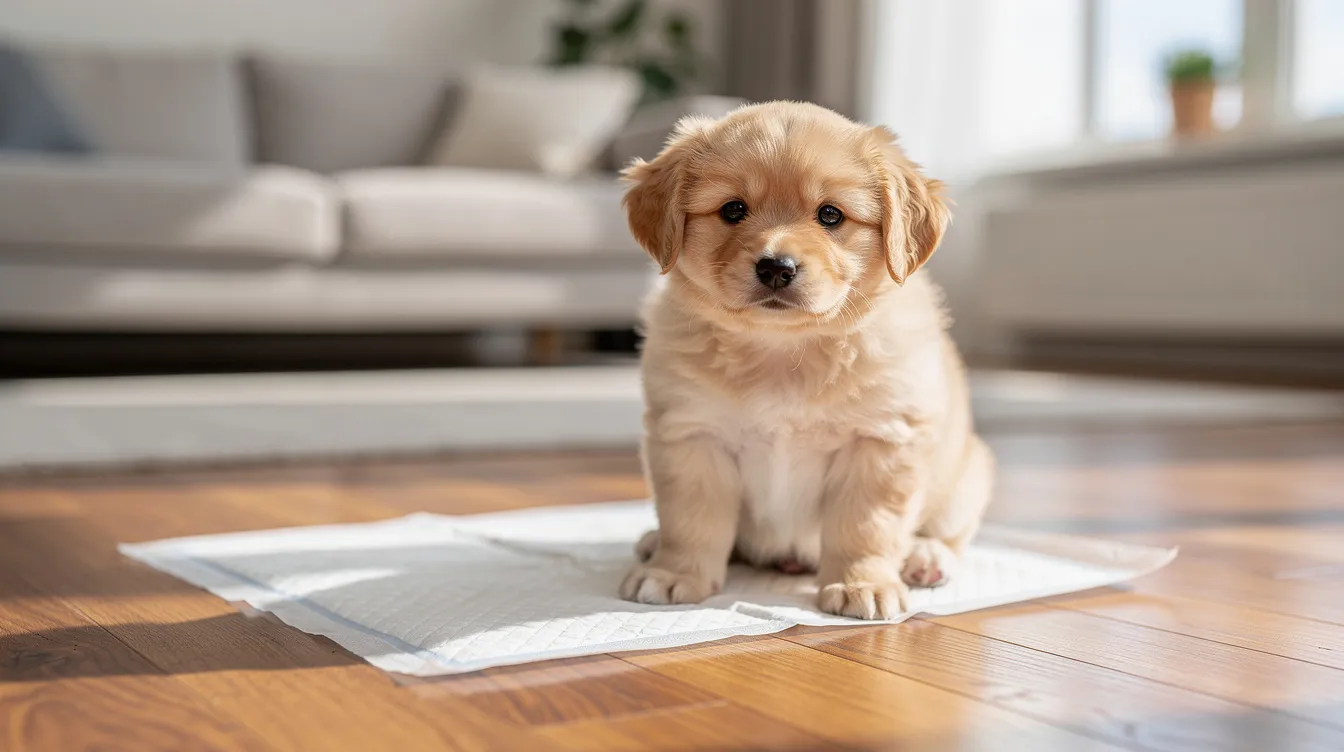 Not all puppy pads are created equal, and after ruining a section of our living room floor, I got very specific about what matters. Here's what we tested for:
Absorbency and fluid capacity. Pads with multiple layers generally absorb better than single-layer pads. Our pup pees often and sometimes in impressive volume, so a pad that fails at one cup versus one that holds three to four cups is the difference between a quick swap and a full floor cleanup. Pads absorbency depends on whether they use a Super-Absorbent Polymer (SAP) core that quickly turns liquid into gel, or in washables, a thick inner core that traps moisture fast.
Leak-proof backing. It's not enough for the top to absorb - the liquid has to stay put. I learned this the hard way when a cheap pad soaked straight through onto our hardwood. Some pads claim to be 100% leak-free but may not be. Look for TPU or heavy plastic backings and edges that extend beyond the absorbent core. Adhesive tabs on pads can prevent sliding and bunching during use, which is critical in a house where kids and dogs are running around.
Odor control around children. With kids playing on the floor nearby, smell matters enormously. Activated charcoal helps to trap ammonia smells in dog pee pads rather than just masking them. Some pads are designed to mask odors with scents like lavender, but honestly, those artificial fragrances bothered my youngest more than the puppy pee itself.
Size and fit. Dog training pads can be 22 to 36 inches square, and proper size for a dog's stance is important for comfort. Too small and you're mopping around the edges; too large and it bunches in the crate. Sizes for dog pee pads can range from standard to XXL or Giant, so matching pad size to your dog and space matters.
Reusability and cost over time. Disposables are convenient but the recurring cost adds up shockingly fast. Washable dog pee pads are eco-friendly and sustainable options that, while pricier upfront, pay for themselves within months. For a family budget, this math matters.
Durability and child/puppy safety. Our pup chewed through two brands of disposables in the first week. Loose SAP filling scattered across the playroom floor - not something you want near a crawling toddler. Thicker pads are often more absorbent and leak-proof, and reusable pads without loose fill remove the ingestion risk entirely.
Comparison table
|
Product |
Best For |
Type |
Size (in/cm) |
Absorbency |
Approx. Price |
|
Potty Buddy Washable Pads |
Best overall for busy families |
Washable reusable (3-layer) |
Various sizes (small to large, fitting crates and pens) |
Ultra-absorbent core; leak-proof weighted bottom; comparable to premium disposables in testing |
~$30 per pad; long-term cost spread over hundreds of uses |
|
Glad for Pets Black Charcoal Puppy Pads |
Best budget disposable |
Disposable |
23×23 in (~58×58 cm) |
Up to 4 cups (~950 ml); 5-6 layers with SAP gel core |
~$0.25–$0.30 per pad in 150-count bulk |
|
Frisco Extra Large Training Pads |
Best XL for big dogs |
Disposable |
28×30 in (~71×76 cm) |
Premium capacity; 5 layers; reinforced edges |
~$0.40–$0.50 per pad in bulk |
|
AKC Reusable Training Pad |
Best washable value |
Washable reusable |
Multiple sizes up to ~28×30 in |
6-layer design with quick-dry gel core |
~$25 per pad |
|
Honey Care All-Absorb Pads |
Best regular-size absorbency |
Disposable |
~17.5×23.5 in (~44×60 cm) |
~2.25 cups (~530 ml); 5 layers with odor neutralizer |
Packs of 120; strong per-pad value |
|
Paw Inspired Washable Pads |
Best eco reusable choice |
Washable reusable |
Multiple sizes for crate or floor |
3-layer; waterproof backing; long-term durability |
Mid-range; very low cost per use over months |
|
Amazon Basics Heavy Duty Pads |
Best mid-budget disposable |
Disposable |
~22×22 in (regular/large) |
5 layers; quick-dry surface; ~1–2 cups |
~$0.20–$0.30 per pad in bulk |
|
Wee-Wee Ultimate Attractant Pads |
Best for picky puppies |
Disposable |
~22×23 in |
Standard capacity (~1–2 cups); strong pheromone attractant |
Slightly above budget disposables |
The puppy pads we rated
Best Overall: Potty Buddy Washable Pads
Overview: ThePotty Buddy reusable washable pads are built with three layers - a fast-dry top, an ultra-absorbent core, and a leak-proof bottom. They come in various sizes across five designs, are OEKO-TEX certified, and feature a weighted bottom that keeps corners flat and prevents edge leakage. There's a 60-day money-back guarantee, which gave me the confidence to try them.
What we liked: Honestly, these just survived our chaos. The puppy couldn't shred them the way she destroyed disposables. The toddler stepped on a used one barefoot and it felt dry to the touch - no puddle, no meltdown. After dozens of washes, pads absorbency stayed strong. The leak-proof backing actually held up on our hardwood floors, keeping them clean through weeks of accidents. They don't shift under paws thanks to the weighted, non-slip bottom. And the waste reduction was noticeable - our trash went down significantly, which felt like a small win for the planet and our overflowing bin.
The downside: The upfront cost stings. One pad runs around $30, and you need at least three or four for rotation while one is in the wash. That's over $100 before your puppy has even peed on one. And the laundry - in a house already drowning in kid laundry, adding damp potty pads to the rotation took adjustment. Use fragrance-free detergent, skip the fabric softener, and air dry or tumble on low to protect the waterproof backing.
Best for: Pet parents in busy family homes who want to reduce waste, save money long-term, and stop replacing chewed-up disposables every week. Especially suitable for homes with kids where durability and hygiene matter most.
Verdict: Our top pick because it handles the reality of family life - the mess, the chewing, the constant traffic - and actually lasts. The upfront purchase is real, but the long-term savings and reduced stress are worth it.
Best Budget Disposable: Glad for Pets Black Charcoal Puppy Pads
Overview: This 150-count bulk pack comes in at roughly $40, making each pad around $0.25–$0.30. Each 23×23 in pad has five to six layers with a SAP gel core and activated charcoal for odor control. Some pads absorb liquid almost instantly, and Glad claims up to four cups (~950 ml) capacity.
What we liked: The odor control is genuinely impressive. The activated charcoal traps ammonia rather than covering it with perfume, which kept our home fresh even when the pad sat for a few hours. At this price per pad, they're the best value in disposable dog pee pads for high-volume use during active potty training.
The downside: They're still disposable - hundreds of pads heading to the landfill over a training period. The black color hides puppy pee spots, making it harder to tell when a pad needs changing. And if the pad comes out of the package slightly folded, those creased edges can channel liquid right off the side.
Best for: Families who want affordable disposable training pads with real odor control. Great as a stopgap during heavy-use training phases or for pet owners who don't have easy access to a washer.
Verdict: Best budget disposable on the market - does the job well without the premium price tag. Won't match the eco benefits of reusable pads, but hard to beat for convenience.
Best for Tiny Puppies: AKC Reusable Training Pad
Overview: The AKC washable pad comes in multiple sizes, including smaller options perfect for crates and carriers. It features a six-layer design with a quick-dry gel core and non-slip bottom. Priced around $25 per pad.
What we liked: The smaller sizes fit neatly inside a puppy crate without bunching or folding up at the edges. Small breeds and tiny pups pee more frequently but produce less volume per accident, so the quick-dry surface keeps things comfortable between changes. No loose fill means no ingestion risk for curious small dogs still learning what's food and what's not.
The downside: Even with high absorbency, a small pad gives zero margin for error. If your pup's aim is off - and it will be - you're still cleaning the floor around it. You'll also need several for rotation, which bumps up the initial purchase.
Best for: Tiny puppies under 10 lbs, crate or carrier training, and travel setups where large pads are impractical. Also suitable for small breeds in a high-rise apartment with limited outdoor access.
Verdict: Exceptional value for small-space training. The six-layer design punches above its price point, but size your expectations (and your pad) to your dog.
Best XL for Bigger Dogs: Frisco Extra Large Training Pads
Overview: These disposable XL pads measure 28×30 in (~71×76 cm) with a five-layer core built for premium capacity. The reinforced edges and generous surface area make them ideal for large breed puppies or open floor plans. Scott pads measure 36" x 36" for even larger dogs, but Frisco hits a sweet spot of size and affordability.
What we liked: In our open-plan living room, one XL pad covered enough ground that our pup rarely missed. That alone cut our time cleaning floors dramatically. Thicker pads generally absorb more liquid than thinner ones, and these hold multiple pees before needing a swap - great for overnight or when you're out running errands.
The downside: They're bulky to store (a box of 40 takes real closet space), and the cost per pad runs higher at $0.40–$0.50 each. In smaller rooms, the pad can overhang or bunch, creating a tripping hazard for kids - or an invitation for the dog to drag it around.
Best for: Big dogs, large open floors, overnight coverage, or households where the puppy free-roams during the day. Great for pet parents who want fewer pad changes.
Verdict: If your dog or your space is large, these save you from constant floor mopping. Just budget for the storage and the slightly higher per-pad cost.
Best Odor Control: Glad for Pets Black Charcoal Puppy Pads
Overview: The same Glad charcoal pads earn a double mention here because their odor control is genuinely in a class of its own among disposables. The activated carbon layer neutralizes ammonia on contact rather than just layering a fragrance over it.
What we liked: In a house with kids, keeping things smelling acceptable is non-negotiable. These let me leave a pad down a bit longer without the whole playroom smelling like a kennel. Pads can feel dry to the touch in just over a minute, meaning less tracking of wet paw prints across the house. Real reduction in that sharp ammonia smell that hits you when you walk in the door.
The downside: The dark color genuinely makes it hard to monitor - I sometimes missed that a pad was well past due. And while the charcoal scent is subtle, kids or dogs with sensitive noses might notice it. Some pads include pheromone attractants to encourage use, but Glad relies more on the charcoal than on attractant, so pairing with a separate training spray can help.
Best for: Any family where keeping the home fresh and odor-free around children is a top priority. Particularly useful if the pad station is near common living areas.
Verdict: The best dog pee pads for smell control in a busy household. If odor is your biggest complaint with disposables, start here.
Best Eco Disposable: Paw Inspired Washable Pads
Overview: While true "eco disposable" pads with compostable films exist, they often compromise on absorbency or cost significantly more. Paw Inspired washable pads offer a better eco-friendly middle ground - a three-layer reusable design with waterproof backing that lasts through months of machine washing.
What we liked: The environmental angle is real. Switching from six disposable pads a day to a rotation of washables eliminated hundreds of pads from our trash each month. The waterproof backing uses TPU rather than standard PE film, which survives many wash cycles without peeling - a big improvement over older reusable designs.
The downside: Eco disposable options that are truly single-use and compostable still lag behind in absorbency and leak protection compared to premium SAP pads. If you want genuinely disposable and eco friendly, expect to pay more and absorb less. Paw Inspired's washable approach is the more practical green choice, but requires laundry commitment.
Best for: Eco-conscious pet owners who want to reduce landfill waste without sacrificing pad performance. Good for families already comfortable with reusable products (cloth diapers, cloth wipes).
Verdict: The most practical eco option is actually washable, not disposable. Paw Inspired delivers on that promise with solid, long-lasting performance.
Best for Older Dogs: Frisco Extra Large Training Pads (or High-Capacity Washable)
Overview: Senior dogs with incontinence benefit from pee pads that hold multiple pees, offer soft surfaces for aging joints, and provide reliable leak protection for floors and carpets. Senior dog needs differ from puppy training - it's less about aim and more about volume and comfort. XL disposables or sturdy reusables that absorb three to four cups are essential.
What we liked: Pee pads help dogs alone for extended periods, which is common for older dogs whose owners work during the day. A high-capacity pad means fewer changes and less stress for a dog who may already feel anxious about accidents. Bulldogology pads, for example, have six layers for absorbency and odor control, making them another solid option for senior use.
The downside: Older dogs may need pad changes more frequently regardless of capacity, so convenience matters. Disposables create more waste but avoid the challenge of laundering heavily soiled reusable pads. Some senior dogs resist new textures, so transitioning to a different pad type can take patience.
Best for: Senior dogs with incontinence, dogs recovering from surgery, or any older pet who needs reliable indoor potty access - especially in a high-rise apartment or during freezing climates when outdoor potty training isn't practical.
Verdict: Comfort, capacity, and leak protection matter most for older dogs. Size up, layer up, and change frequently.
Washable vs disposable: the honest cost over a year
Let me just lay out the math, because this is what finally convinced me to switch.
During active puppy training, we were using about six pads a day - morning, after meals, midday, evening, night, plus one or two backup pads for misses.
Disposable route: At $0.30 per pad in bulk, that's $1.80 a day, roughly $54 a month, and about $650 over a year. Plus trash bags. Plus the occasional floor scrub when leakage happened anyway.
Washable route: We bought four Potty Buddy pads at around $30 each - $120 upfront. We rotate two per day, and wash every other day. Added utility cost for water, detergent, and electricity runs maybe $5–$10 a month. One pad needed replacing mid-year ($30). Total first-year cost: roughly $240–$260. Year two drops even further since most pads last.
That's a savings of close to $400 in the first year alone. And we stopped hauling bags of used pads to the trash every other day.
The trade-off is time. Washables require handling wet pads, running loads, and managing damp laundry in a house that already has plenty. Disposables are grab-and-throw simple. For our family, the savings and waste reduction won out - but I keep a small pack of disposables on hand for travel, post-vet days, or when the washer's already running three loads deep. Pee pads are useful for unvaccinated city puppies too, where you may not want to risk outdoors yet and need a quick, disposable option.
Improvia washable underpads are under $30 for a pack of four if you want a budget entry point for reusable pads. And Pupiboo washable pads cost less than $30 for a two-pack, offering another affordable starting point. Amazon's affordable pads absorb liquid quickly in under a minute if you're sticking with disposables for now.
Getting your puppy to actually use the pad (with kids around)
Potty training a puppy when you also have small children running around is its own special kind of chaos. Here's what actually worked:
- Pick one spot and don't move it. Consistency is everything. We put the pad in the same corner of the kitchen, away from the food bowls and the kids' play area. The puppy learned faster when the location never changed, and the kids learned to avoid that corner.
- Use a pad with attractant - or make your own signal. Some pads include pheromone attractants to encourage use, which can help a stubborn pup aim for the pad. We also left a tiny piece of a previously used pad under the fresh one so the scent guided her back.
- Reward immediately. The second the puppy hits the pad, treats and praises. Our kids actually loved being part of this - they'd cheer and hand over a treat, which made dog training a family activity rather than just another chore on my plate. Positive reinforcement works on puppies and kids, it turns out.
- Manage the kids, not just the puppy. The biggest challenge wasn't the puppy missing the pad - it was the toddler moving the pad, sitting on it, or trying to "help" clean up. We set a simple rule: the pad corner is a no-play zone. A small baby gate section helped during the worst of it.
- Transition gradually to outdoors. Pads aren't meant to be forever (unless your dog has limited outdoor access or mobility issues). We slowly moved the pad closer to the back door, then right outside it, then onto the grass. The switch to outdoor potty training took about three weeks of gradual movement. Don't stress if it takes longer - every pup is different.
Pee pads can assist dogs in freezing climates where outdoor access is limited seasonally, so don't feel guilty about using them as long as your dog needs them.
Questions other moms ask
How many pads do I need per day? During active house training, plan for four to six pads daily if using disposables - after meals, morning, night, and backup for accidents. With washable pads, two to three in rotation (with daily washing) usually covers it.
Do pee pads slow down outdoor potty training? Not if you use them as a stepping stone. The AKC recommends gradually moving the pad closer to the door, then outdoors, to transition your pup. Pads and outdoor training can work together, especially for puppies in apartments or families with unpredictable schedules.
My puppy keeps missing the pad - what do I do? Size up. A larger pad gives margin for error, and male dogs especially tend to aim high or wide. Overlapping two pads or switching to an XL pad reduced our off-pad accidents by about 30%. Also check that the pad isn't bunching - a flat, secured pad makes all the difference.
Are washable pads really more cost-effective? Yes, significantly. A set of four reusable pads at ~$30 each ($120) replaces roughly $650 worth of disposables in a year. Washable pads typically last 200–300+ uses, so the break-even point hits around four to six months.
How do I keep odor down with kids in the house? Activated charcoal pads control odor better than scented ones. Change pads promptly - even high-absorbency pads shouldn't sit all day. Washable pads resist odor buildup if washed every two to three days with fragrance-free detergent. Keep the pad station ventilated and away from bedrooms.
What size pad do I need for my dog? Standard pads (~22×23 in) work for small breeds and puppies. Medium to large dogs do better with XL pads (28×30 in or larger). Measure your dog's stance - they need room to position comfortably without hanging over the edge.
Are scented pads safe around children and pets? Most scented pads use mild fragrances, but kids with allergies or respiratory sensitivity may react. We found unscented or charcoal-based pads safer and more effective. If your child or pet seems bothered, switch to an unscented option immediately. Note: frequent indoor accidents that seem excessive can also signal a health issue worth a vet check - don't just pad over a potential problem.
When should I transition from pads to outdoor only? Most puppies can begin transitioning around four to six months, once they have reasonable bladder control and vaccinations are complete. Pee pads are recommended for dogs in high-rise apartments or with limited outdoor access as a longer-term solution. There's no single right timeline - it depends on your dog, your living situation, and your family's routine.
The verdict
After months of testing, mopping, washing, and way too many late-night pad changes, Potty Buddy washable pads earned the top spot in our home. They held up through the chaos of kids, puppy teeth, and daily use - and they saved us real money over disposables. For a budget-friendly disposable, Glad Black Charcoal pads are hard to beat on odor control and value. And if you've got a big dog or open floors, Frisco XL pads give you the coverage to keep floors clean.
Whatever you choose, remember: no pad is magic. Consistency, patience, and a good sense of humor will get you through puppy training faster than any single product. And if you're reading this at 2 a.m. after cleaning up yet another puddle - it gets better. I promise.