
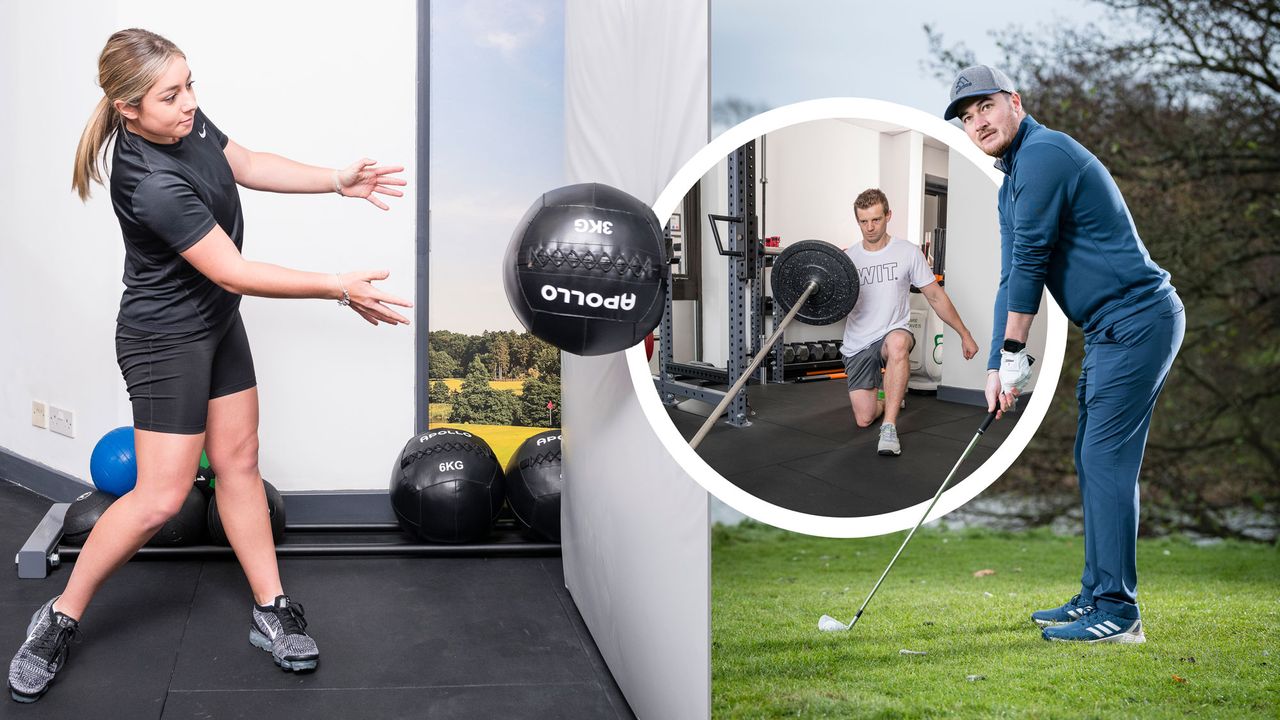
It's official - 2026 is going to be the year that you play your best golf ever. Nothing good comes easy, however, so investing time in the best golf exercises is crucially important.
I decided to take the plunge and take my fitness seriously as part of my winter golf rebuild, and I'm so pleased that I put in the hard yards after years of ignoring the role of fitness in my golf progress journey.
In December, I found five fitness exercises that made me a better golfer in just 30 days, and I am now hooked on the transformational relationship between golf and fitness (that I had never fully appreciated before).
Heading to the range and machine-gunning through a bucket of balls is a thing of the past, and one of the seven things you should never do at the driving range, as I have now replaced misguided hope with a pro-active plan to play better golf in 2026.
If you are new to fitness, or have never considered it as an important part of golf improvement, there is nothing to fear. Our fitness expert, Jamir Greaves, expertly explains each exercise in the article below.
Using clear instructions, imagery and video demonstrations, Jamie excellently differentiates each move to your starting point or ability level - so that you feel empowered to feel fitter, stronger and healthier on the golf course this year...
Best Golf Exercises
1. Squats
Every golfer that I train does some form of squat. They're superb for increasing lower body mass, strength and power, all of which will help boost club head speed. In fact, golf squat exercises are one of the most effective exercises for increasing swing speed.
In addition, squats are great for mobility through the ankles, knees and hips, as well as core and trunk control, which are also really useful attributes for all golfers.
2. The Hinge
When we get into the correct posture, we actually have to push our hips back and get into a hip hinge in the set-up.
By reinforcing this pattern, it creates further benefits for our swing. As with squatting, these lower back exercises for golf develop mass, strength and power in the lower body.
With these movements, there’s more emphasis on the muscles of the backside – so the hamstrings, glutes and lower back.
If we can build a more robust body, particularly through this area, it’s going to reduce the risk of injury.
The other major benefit is it supports improved grip strength – it’s working the wrists, elbows and forearms, which in turn can translate to more clubhead speed.
3. Horizontal Push
I think there’s a big opportunity for female and junior golfers in particular to increase club head speed, by developing more upper body strength and power.
For many, it’s easier to develop lower body strength, so I see this type of exercise as a crucial part of any speed training for golf. Push strength and power is linked to club head speed potential, plus it helps develop core and trunk control, as well as shoulder stability.
4. Vertical Push
Performing a vertical push pattern is a great way to improve not only shoulder stability, but the mobility of the joint also, which is something a lot of golfers struggle with.
This type of exercise will also help increase upper body muscle mass, strength and power - which can help you to add extra yards to your game.
5. Horizontal Pull
This is another great pattern for golfers to develop and perfect, as it will increase upper body muscle mass, strength, power and stability.
As one of our golf mobility exercises, this is particularly important for female and junior golfers, who tend to find it a little bit more difficult to develop upper body mass.
6. Vertical Pull
Vertical pulls are superb for developing the lats – the large V-shaped muscles that connect your arms to your vertebral column.
These are great golf core exercises, and the lats are a huge contributor when it comes to club head speed, so this is a good exercise for any golf speed training.
Your lead lat stretches on the way back, and rapidly contracts in the downswing, so if you can enhance mobility and strength through here you should be able to generate extra power.
In addition, vertical pulling movements are excellent for shoulder mobility, and general shoulder health, so they can be effective in helping to alleviate nagging aches and pains.
7. Lower Body Explosive
It’s not enough for golfers to be strong – they need to be fast, explosive and athletic. During the golf swing, we don’t get a lot of time to generate force.
Generally, you have around 0.5 to 0.7 seconds, which is why I recommend building in some kind of faster paced moves as well.
The ability to break fast is something that’s key for golfers. If you can slow down fast, it gives you more time to use your acceleration.
8. Med Ball Explosive
Rory McIlroy's gym routine involves a good amount of medicine ball work. This is a move that ticks so many boxes, including trunk rotation, acceleration, and generating power from the ground up.
Whilst it doesn’t look exactly like the golf swing, golfers like this because it replicates a similar motion.
When discussing this type of exercise, I have had people say that it helps them with the feeling of the golf swing, which is an added bonus, because the aim is to help generate power.
9. Single Leg
Single leg exercises area a great addition to any leg workout for golf. They allow us to work on imbalances , creating more stability, as well as improving lower body muscle mass, strength and power.
When you consider the impact your lower body has on your golf swing, it emphasises the importance of not skipping leg day!
10. Carries & Holds
This type of exercise works well for the obliques – the muscles that run down the side of your core – which are a big power source in the golf swing.
This activity is going to improve your grip strength too, which is an advantage if you’re someone who struggles to escape thick or juicy rough.
With wrist injuries being very common in golf, due to the fact we put a lot of stress through this area of the body, these exercises can strengthen the joints throughout your arms and pro-actively lower the risk of injury.
FAQS
Q: What type of fitness is needed for golf?
A: The simple answer is a variety of different fitness types are needed for golf. You need strength and power to increase the distance you can hit the ball, mobility and balance to ensure you have the correct rhythm and tempo to your swing, plus muscular and cardiovascular endurance to manage the demands of 18 holes (sometimes more than once a week).
Q: Can I improve golf fitness at home?
A: Yes, plenty of the exercises above can be adapted to suit the home environment. However, If you are really struggling for inspiration or room to carry out a workout, you will rarely go wrong with a simple plan consisting of things like press-ups, sit-ups, burpees, lunges and squats.