The world offers many destinations that hold beauty and appeal for travel photographers, but some have proven more popular than others when seeking that perfect shot. From bespoke landscapes to historic villages and buzzing metropolises, these best destinations for travel photography seamlessly blend history, tradition and culture with a little extra magic to take your photography to the next level.
Antarctica
Antarctica may not be the easiest place to get to, but that is part of what makes it so special. With all its awe and splendor, it is well worth the journey to witness the breathtaking ice sculptures, majestic humpback whales and, of course, the penguins.
As a photographer and Agency Director of Metro Models, David Ratmoko has learned how to navigate international shoots in challenging destinations. “Antarctica fascinates me because you get that pristine background that you can't get in-studio in Lemaire Channel,” he says. “The ice formations there provide natural reflectors.”
Andrew Cussens, CEO of FilmFolk, agrees. “The Antarctic is all about contrast and scale: icebergs against infinite skies, penguins and seals offering movement and proportion,” he says. “The light shifts rapidly, so photographers must be prepared and keep cameras out of the cold.”
There are many ways to view Antarctica, but due to the harsh elements, a cruise can often be the strategic way to go.
Kari LeMay, a travel blogger and owner of AchieveYourBucketList.com, did just that, taking a 17-day cruise through Antarctica. “On a scenic cruise, you will visit many destinations, such as Paradise Harbor/Bay, Admiralty Bay, Elephant Island, Deception Island, the Beagle Channel, the Magellan Strait and Port Stanley on the Falkland Islands,” she shares.
“In all of these spots, you can shoot tons of photos right from the cruise ship. In some of these destinations, you may be just a few hundred feet away from floating icebergs, from humpback whales diving in the water, and from thousands of penguins. It’s a photographer’s paradise.”
However, with its volatile weather, Antarctica is a destination that demands careful consideration and preparation. Still, it is undoubtedly a travel photographer's paradise — as long as you prepare accordingly, and, of course, can bear the cold.
France
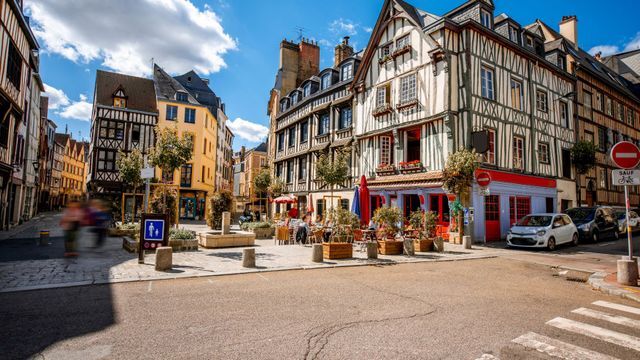
Impressively, France has 54 UNESCO World Heritage Sites, offering endless opportunities to capture that perfect shot.
Paris has long been a popular stomping ground for travel photographers, but Jiayi Wang of The Diary of a Nomad encourages you to travel off the beaten path. “France also offers plenty of photographic inspiration to those who venture beyond Paris. Though the region can feel remote, Provence’s Verdon Gorge, a limestone canyon, features stunning rock faces and blue-green waters that combine to create a sweeping wide-angle image.”
Travel photographer Christopher Alga also encourages you to look beyond the City of Love. “Some of the strongest moments I’ve found were in Marseille by the water, in Lille’s industrial streets or early mornings in the Loire Valley when the fog softens everything. Those quieter, everyday scenes usually say more than the landmarks.”
Don’t forget about the lavender fields, either, says Ratmoko of Metro Models. “France's Provence lavender fields work a treat for editorial shoots between late June and early August,” he explains. “Most photographers go to Valensole, but I prefer the quieter fields near Sault.”
There is a reason why France is so popular with Hollywood, too, says Cussens of FilmFolk. “Outside Paris, places like Provence and Normandy provide texture, atmosphere and natural light, all of which register in the movies without being overdone.”
Don’t forget about the French Alps, either; hike the Tour du Mont Blanc to capture dramatic, snow-capped mountainscapes that set a beautiful contrast against your more romantic shots.
Italy
%2c%20a%20massive%20Gothic%20cathedral%20with%20intricate%20spires%20and%20statues%2c%20standing%20prominently%20in%20a%20large%2c%20open%20square%20at%20dusk..jpeg)
It is no wonder that Italy tops the list for many a photographer: from Rome and Florence to Venice and Lake Como, there is no shortage of breathtaking cities and villages to visit.
“Italy has always held a special place in my heart, not only as a travel destination but as the city where I grew up,” says Wang of The Diary of a Nomad. “To this day, the early-morning streets and endlessly stratified history of Rome provide the most arresting images, while the northern lakes, such as Como, possess the kind of painterly romance that we typically associate with a different era.”
Alga has also wound his way throughout Italy, finding priceless moments to capture in each of its historic landmarks. “Rome is all about movement and energy in the piazzas, Venice is intimate if you slow down, Florence lives in its markets, and Cinque Terre has this calm, pastel rhythm that pulls you in.”
Cat Ekkelboom-White shares an intimate knowledge of Italy as a local photographer and hiking guide in Northern Italy — “a landscape photographer's dream,” as she calls it.
“The most popular locations include Tre Cime di Lavaredo, Seceda, Lago di Braies, Cadini di Misurina and Val di Funes,” she explains. “These spots became famous for good reason - the dramatic peaks, turquoise alpine lakes and rolling wildflower meadows have been featured worldwide, from Windows screensavers to National Geographic.”
Still, Ekkelboom-White offers a local’s perspective. “You don't need these specific locations to capture incredible images,” she says. “Instead, I highly recommend taking time to go hiking, moving slowly and discovering the beauty for yourself.”
Just be prepared for the elements. “Weather changes rapidly in the mountains, so protect yourself and your gear accordingly,” she advises. “For equipment, travel light if you plan to hike. A versatile zoom lens can be more practical than multiple primes when covering ground.”
Morocco
Many travel photographers visit the Kingdom of Light to marvel at its bright, bustling cities and family-oriented culture.
“Morocco is rich in visuals, from Marrakech’s souks to the Sahara and Atlas Mountains,” says Cussens of FilmFolk.
Morocco is also known for its Medinas, with many photographers winding their way through the curious tangle of streets to capture the many shops that line the way.
“The medinas are gritty, claustrophobic, and there are a million smells....but that is where the action is,” admits Al Lemire of Alan Lemire Photography. “Shoot with a wide-angle lens and get used to being inches from everyone else when you want to photograph someone or something.”
Morocco is also known for its many beautiful towns situated along the shore and the colorful boats that paint the sea. “Don't forget about the towns along the sea. They usually have long histories surrounding fishing,” he says, encouraging afternoon visits. “Watching them unload the day's catch offers up some amazing opportunities when people are too busy to notice you with your camera.”
“The tanneries (Fes, Marrakech) are amazing, but you will be shooting from up high and usually with a long lens. Trying to get interesting light is almost impossible, but watch for steam coming from the vats and use that to your advantage,” Lemire says before adding another favorite. “Chefchaouen (the Blue City) is really photogenic and not as crowded as the bigger cities. Easily walkable, and easier to find your own way around.”
Ratmoko offers a final word of advice. “Morocco taught me to bring lens hoods because sand gets everywhere. Your tripod needs weight. Wind destroys more shoots than does rain.”
Taiwan
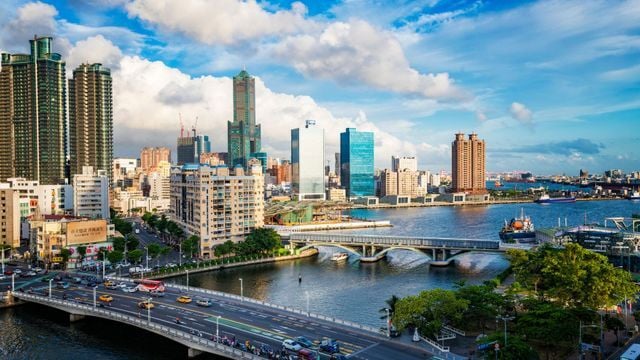
Taiwan recently made headlines for its Taipei 101 tower, but the country has long been a favorite of travel photographers.
Seamlessly blending modern metropolises with sweeping mountainscapes, Taiwan offers something for everyone. With its lively night markets and strong traditions, this tropical hot spot provides an experience like no other.
As author and owner of Taiwan Obsessed, Nick Kembel has spent a lot of time in the country taking photos. “I regularly tout Taiwan as one of the best places in the world to photograph,” he says, “with bustling cities, mountain forests and beaches, all within a few hours of each other.”
Kembel lists some of his favorite moments from Taiwanese culture that he has captured. “Taipei’s night markets, the lush tea farms and sunrise vistas of Alishan, Jiufen’s old cobbled streets and the broad skies and oceanic views of the Penghu Islands are all still musts,” he says. “I travel with a small mirrorless camera and a fast prime lens, and I keep a small zoom lens on standby. I never use flash — it’s intrusive in tight spaces, and it alters the mood of the scene.”
Still, he says, opportunities may be lost when photographers stick to the regular tourist spots. “Many visitors to Taiwan gravitate to the western cities and miss a highlight: the east coast around Hualien and Taroko Gorge, where soaring marble cliffs and lush river valleys contrast with enormous scale,” he shares.
Kembel offers a final note of advice, urging, “Take time to soak up one neighborhood, and you’ll return home with far richer, more interesting photos than you would by simply moving quickly from landmark to landmark by way of short daily conversations.”
Tips for Photography On the Go
As a fitness instructor, photographer and owner of Shredded Dad, Jose Guevara uses his athleticism to take him to sites less traveled.
“Photography keeps me moving,” says Guevara. “I map out long walking routes to new shooting spots, will always choose stairs over elevators in cities and consider each hike between locations as purposeful cardio. It’s not easy to hike over rough land with a heavy lens in tow. For longer uphill climbs, I use trekking poles.”
He offers some additional tips when shooting abroad. “To stay in shape on the road, I take a simple body-weight program with me in my suitcase and make time for mobility work in the evenings. I also make sure to stay hydrated and have some easy protein-rich meals to keep sustained energy levels up.”
These are some additional tips from some favorite travel photographers.
- Jiayi Wang, The Diary of a Nomad: “My biggest tip for shooting in any of these locations has nothing to do with gear: plan around the light and crowds. That means getting to your locations early and walking rather than taking taxis. I don’t treat each destination as a checklist, but rather spend long enough in one place to observe the patterns and capture details, routines and moments that truly reflect my environment.”
- Elaine Warren, Family Cruise Companion: “As much as I love to cruise and take photos, I try to plan my shore days around good lighting, composition and perspective. Try to go ashore early or later in the afternoon, when crowds are smaller, the light is less harsh and the shadows are softer. The best pictures always come when I have time to just sit and watch a place unfold.”
- Christopher Alga, Photographer: “I keep my gear simple. One camera, one lens, usually a 35mm or 50mm. I like finding a good spot and waiting, letting people enter the frame instead of chasing them. Shooting in black and white helps me focus on light, shadow, and timing, which is really what I’m always looking for.”
- Al Lemire, Alan Lemire Photography: “Instead of bringing my camera bag, I'll buy a cheap over-the-shoulder bag locally and carry my camera in that. It helps you fit in a bit more, and doesn't scream ‘$5000.00 in camera gear.’ I also don't use my neck strap around my head; instead, I wrap it a few times around my wrist so it is tight in my hand. I also use black tape over the names on the camera and lens.”
Ekkelboom-White of Wild Connections Photography adds a final consideration for sustainable photography tourism. “I've witnessed firsthand the devastating impact of photography-driven tourism in the Dolomites. Practice Leave No Trace principles: stay on established trails, don't trample vegetation for shots, respect wildlife distances, don't geotag exact locations and be mindful of your impact on local communities.”
“This approach preserves these landscapes for future generations and leads to more meaningful, unique images. When you slow down and truly connect with a place, your photography reflects that depth of experience.”