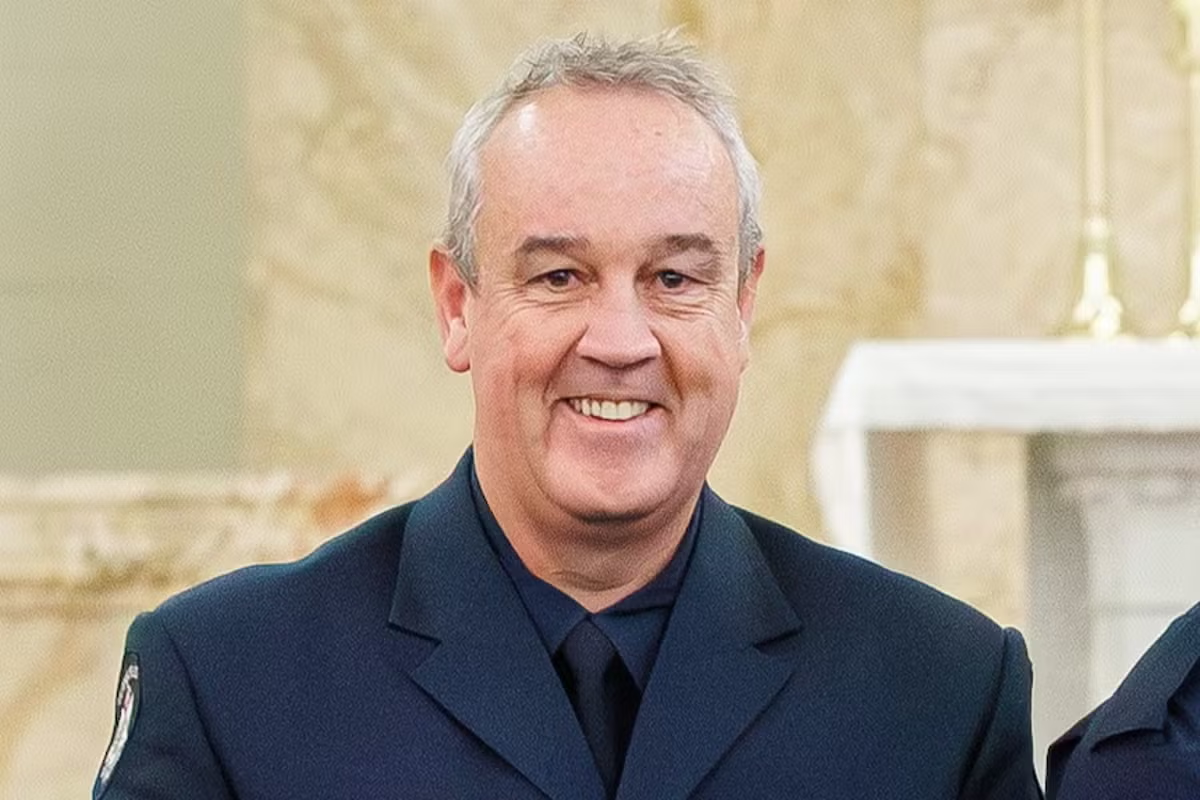
Jamie Thomas, CEO, Red Foundation, a social enterprise supporting volunteering and community action
Jamie said:
If you are passionate about a cause, consider launching your own charity project: If you have a major passion for something then you might want to consider setting up your own project — it's hard work and I appreciate we're not in the best financial climate, but having a real passion and drive for something is half the battle. There are organisations that could help you get started, the best one being the UnLtd Foundation which gives out grants and business support for people setting up community projects. Or if you're under 25 you could try the vCashpoint which also gives out small grants. Even if this does not become a full time career option you will enjoy the experience and it may well help you to decide what to do longer term.
There are lots of ways you can use media skills working for a charity: In terms of where to go for the opportunities for a career combining media and charity, targeting the larger charities is probably going to yield you something and many of the larger ones will probably offer internships. For example, The Media Trust sometimes has interns working in a wide range of communications and PR roles. Another charity in this area worth looking at is TimeBank, although it focuses on volunteering, it has a strong media slant too.
Volunteering experience is a must for breaking into the third sector:I found that volunteering really helped me to get ahead, especially as a trustee of a local community project which gave me a great introduction to senior management and enabled me to get my first proper job running a volunteer centre. I think that whatever you do you should try and do some work in a local grass roots charity. The atmosphere and experience is generally very different from that which you will get in a big national charity and the sense of achievement can be very rewarding. The other advantage of working in a smaller charity is that you can often gain the opportunity to have a wider range of roles and experiences.
Rachel Smith, head of NGO partnerships and campaigns for Global Giving — an organisation which facilitates international charitable giving to grassroots projects
Rachel said:
Prove your commitment to the charity sector if you want to work in it: I think a proven commitment to the charity sector is really important when applying for charity jobs and getting some voluntary experience is an obvious way to do this. Any level of experience is a good start, whether volunteering in your own community or taking on a voluntary position within a charity. If there is a particular cause you feel passionately about definitely try and get some experience or knowledge of that cause.
To gain focus around for area you want to work in, think about your own interests and knowledge: Working for an NGO, the government (dealing with legislation and following current policy) or a think tank (objective view of current NGO or government practices) all require a slightly different type of commitment and interest.
My general advice would be to write out your options and think about your personal interests and values. Then to take a look at current job vacancies and find jobs that you have some interest in — many organisations will value your skills over your experience but it is worth looking at the personal specifications for current vacancies to see if the employer is looking for specific experience.
Sales and marketing skills are valued in fundraising: If you like sales and marketing then you might enjoy event fundraising. Look at the skills you have and the work you enjoy most; is it the success of a sell, meeting and talking to people, managing a team or sharing knowledge? Event fundraising, particularly as a manager, could include team co-ordination, project planning and management and working with external partner.
In terms of what training you could get, it's always useful to have some good project management skills, which you could gain through a short course. Experience is really important, so if fundraising is your main interest think about what kind of fundraising you want to do — trust fundraising, company, major donor, individual, event fundraising — and try getting some voluntary experience within that area. There are often ad-hoc fundraising positions advertised.
James Gadsby Peet, web editor and publications officer, The Variety Club — a charity helping sick, disabled and disadvantaged children and young people
James said:
As charities move to improve professionalism, there is more demand for private-sector skills: If you can combine passion for a cause with professional sales and advertising skills then you'll be in an extremely strong position within the sector. Charities are having to become more and more professional in the way that they handle fundraising and moving over from other sectors can provide you and any charity you work for with a massive advantage.
Dame Hilary Blume, director of support and advice body the Charities Advisory Trust
Dame Hilary said:
Don't think the charity sector is a soft option: It's not a comfort zone for the stressed or lazy. Keep the beneficiaries always in your mind; go an extra mile for them. You shouldn't have time for meetings and conferences.
Competition for grant-making roles is fierce: Everyone wants to be a grant maker and everyone thinks they can do it, so competition for jobs is fierce. You would need expertise in the sector of grant making you hope to get a job in. Perhaps a first step would be to ask your current employers if you could switch over within the organisation.
Volunteering is essential and gives you a chance to prove your worth: We look for past experience of volunteering. This could be anything from organising a school fete, a raffle for the church or taking part in activities at university. We rule out people who have never shown any interest in volunteering partly because it seems to us to indicate a lack of energy. There are all sorts of volunteering programmes. Smaller charities are more likely to give you a greater width of experience and you might discover you have a particular talent for example for PR or administration or motivating other volunteers, for example. Being a volunteer gives you a chance to prove your worth and if a job comes up you should be regarded as the first in line. By the way, not every internship at a charity is unpaid. We recruit about 60 interns a year for three months before Christmas, and we pay.
Leisa Ashton, head of volunteering and internal communications for Oxfam's Trading Division
Leisha said:
Oxfam is always looking for people with different skills for short-term internships or long-term voluntary positions: Both of these options are unpaid but reasonable lunch costs and travel are reimbursed. We are always looking for people and it is by far the best way to get yourself a paid position, not a guarantee of course, but it goes a long way to helping that process.
Oxjam, for example, is a great way to put your event management skills to use and raise money for Oxfam at the same time. If you wish to stay in London, you may wish to get in touch with our London Campaigns Office which is always looking for volunteers, campaigners and generally energetic and dynamic people to help with different campaign actions and events such as the London Marathon. At Oxfam House in Oxford, we also have a community event fundraising team who are always looking for people. If you wish to send me an email with your CV to me I would be happy to forward your interest to them as they may have volunteering positions available.
Remember, you can progress into your ideal role: My biggest advice is that to get your foot in the door. If you have not got solid previous experience in the third sector you need to either do some sort of voluntary work just so you get into the organisation. Then you can network and get known while doing a role that isn't necessarily your desired final destination while you get to know the organisation. I have seen many interns and volunteers converted to paid staff after a period of time and I have also seen people that have taken a role as a foot in the door and it has eventually led them to their area of interest once their organisational knowledge and understanding of the sector improves. And of course don't give up, it may not be easy but it isn't impossible.
Jan McQuaker, business Director at the specialist charities recruiter Hays
Jan said:
If you want to change careers into the charity sector, do your research: A lot of people make the transition from the private sector, it is important to have compelling reasons for wanting to do so and to make sure that you have thoroughly researched the area of work that you are looking to work in and, of course, the organisation that you are applying to. If there are particular charities that you are interested in it is worth reviewing their websites regularly as most will have volunteer positions posted.
The key piece of advice that I could offer would be to have a plan. It is critical that you consider where you would like to be and to assess the skills and experience that you will need to achieve your ambitions. It is then about making sure that you are in the right organisation and are you going to have the scope to gain that experience. A lot of organisations are incredibly supportive in terms of personal development, so it is important to establish whether the organisation can meet your objectives.
Kelly Ventress, communications officer for Working For A Charity — an organisation which promotes careers and opportunities within the charity sector
Examine the National Occupational Standards for fundraising if you're interested in this role: The core National Occupational Standards for fundraising is a rather technical guide so not everything will be relevant but it is basically a very in-depth job description for a fundraiser. It lists what you need to know and understand in order to perform as a fundraiser. You could take a look and see where your current skills might fit in.
My key piece of careers advice would be that persistence pays off and that it may take a while to land the charity job you really want, but don't be afraid to work towards it in a series of steps.