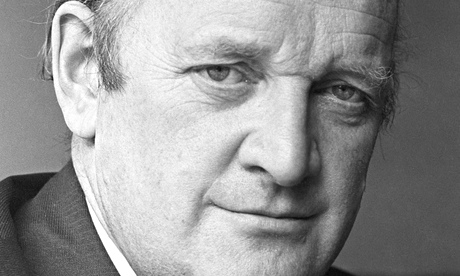
Dr Bertie Irwin, who has died aged 90, defied the ambivalence and ostracism of many politicians, senior police officers and some of his medical colleagues in Northern Ireland, to expose the ill-treatment of suspected terrorists during interrogation at the peak of the Troubles.
Against a background of surging violence in the early 1970s, with 1,800 dead, 21,000 injured and daily gun and bomb attacks, the police were overwhelmed in their efforts to charge and convict the perpetrators. Forensic examinations were impossible to conduct with the required detail, and intimidated witnesses and jurors were unwilling to participate in the criminal justice process.
Kenneth Newman, who became chief constable of the Royal Ulster Constabulary in 1976, created a number of specialist detective teams to subject suspects to intensive interrogation over the seven days they could be held under emergency legislation. The aim was to extract confessions, so that the courts could convict. Before long, there was a reduction in terrorist attacks and an increase in the numbers being jailed.
However, Irwin, the leading figure in the Forensic Medical Officers Association, which provided assistance to the police, became increasingly concerned at the number of injuries he was seeing among people emerging from the main interrogation centre at Castlereagh, Belfast, before appearing in court.
These injuries included significant bruising and abrasions, as well as symptoms of hair-pulling, hyperflexion of joints, especially the wrists, and eardrum damage consistent with violent slapping.
Unwilling to endorse propaganda about the issue, he sought to have his concerns addressed internally at the highest levels of the RUC and by the Police Authority, which was responsible for overseeing the conduct of the police. The RUC dismissed his fears, saying the injuries were mainly self-inflicted. All but two members of the authority, Donal Murphy and Jack Hassard, refused to endorse Irwin’s concerns.
Although a senior official at the Northern Ireland Office reported that he found Irwin “a completely credible witness ... and not a troublemaker or agitator”, after a meeting with him in April 1978, it was not until an Amnesty International report the same year, which publicly supported the findings of Irwin and other police surgeons, that the government acted and established a commission to investigate.
Despite this, Irwin had become so exasperated by the inaction that he participated in a television programme in March 1979 to report that he had a dossier of 150 cases dating back over three years in which the injuries could not have been self-inflicted. The chairman of the investigative commission, Judge Harry Bennett, reported days later, making a number of recommendations to “protect the RUC from an extensive campaign to discredit it”.
However, the news spotlight was instead firmly focused on Irwin when unnamed sources in Whitehall “revealed” to the Daily Telegraph that Irwin allegedly harboured a deep grievance against the RUC for failing to catch an unknown armed assailant who had broken into his north Belfast home in 1976, assaulted his son and raped his wife. An undercover soldier, who was the prime suspect, was removed from his base in Belfast soon afterwards, but never charged.
Although Irwin received a letter of commendation for his outspoken courage from the US senator Edward Kennedy, and there was widespread condemnation of the official smear to his reputation, he continued to receive personal threats and anonymous calls for “taking the side of the terrorists”. His lonely stand in speaking out was never fully recognised, although he was made OBE in 1995.
Irwin was born in Clones, Co Monaghan, where his father, Robert, was overseeing the construction of a power station. The family later moved to Bangor, Co Down, and Bertie was educated at Bangor grammar and Sullivan upper school before going to Queen’s University Belfast, from where he graduated in medicine in 1949.
In 1952, although a Protestant, he established a practice at North Queen Street, Belfast, in an overwhelmingly Catholic area. Despite a gruff manner and an unwillingness to suffer malingerers, he earned widespread respect for his medical skills. He stayed and worked there, including through the Troubles, until his retirement in 1994.
Irwin was equally well-known for his extensive, parallel work as a police surgeon. In the years before 1968, when the breathalyser was introduced, he was regularly engaged in memorable courtroom confrontations with QCs challenging his medical opinion that their wealthy clients had been drunk when arrested. He once calculated he had examined the corpses of 300 victims of violence during his career.
Away from work, Irwin was an enthusiastic fisherman. In 1954, he married Elizabeth Todd, who predeceased him. He is survived by a son, Richard, and a daughter, Beverley.
Chris Ryder
Ian Cobain writes: Harry Bennett later thanked Bertie Irwin for the testimony he gave to the investigative commission, which enabled him to conclude that there was evidence “beyond all doubt” that some of the injuries suffered at Castlereagh could not have been self-inflicted.
There were catastrophic consequences for James Callaghan’s Labour government, which had been limping along on the narrowest of majorities. Amid widespread public-sector strikes and rising inflation, it faced a confidence vote 12 days after the Bennett report was published. Two Northern Ireland MPs abstained, expressing anger at what Bennett found to have been happening at Castlereagh, and the government lost by 311 votes to 310. Callaghan was compelled to call the 1979 general election.
Irwin remained deeply upset by the way in which he, and particularly his wife, had been treated, when he decided to become what today would be called a whistleblower.
Many years later, he and Sir Kenneth Newman found themselves at the same social event in London. Newman’s wife approached Irwin, and asked if he would be prepared to speak to her husband. Irwin told me that he replied: “Of course I’ll speak to your husband. But I won’t shake his hand.”
• Robert Belshaw Irwin, police surgeon, born 24 June 1924; died 1 March 2015