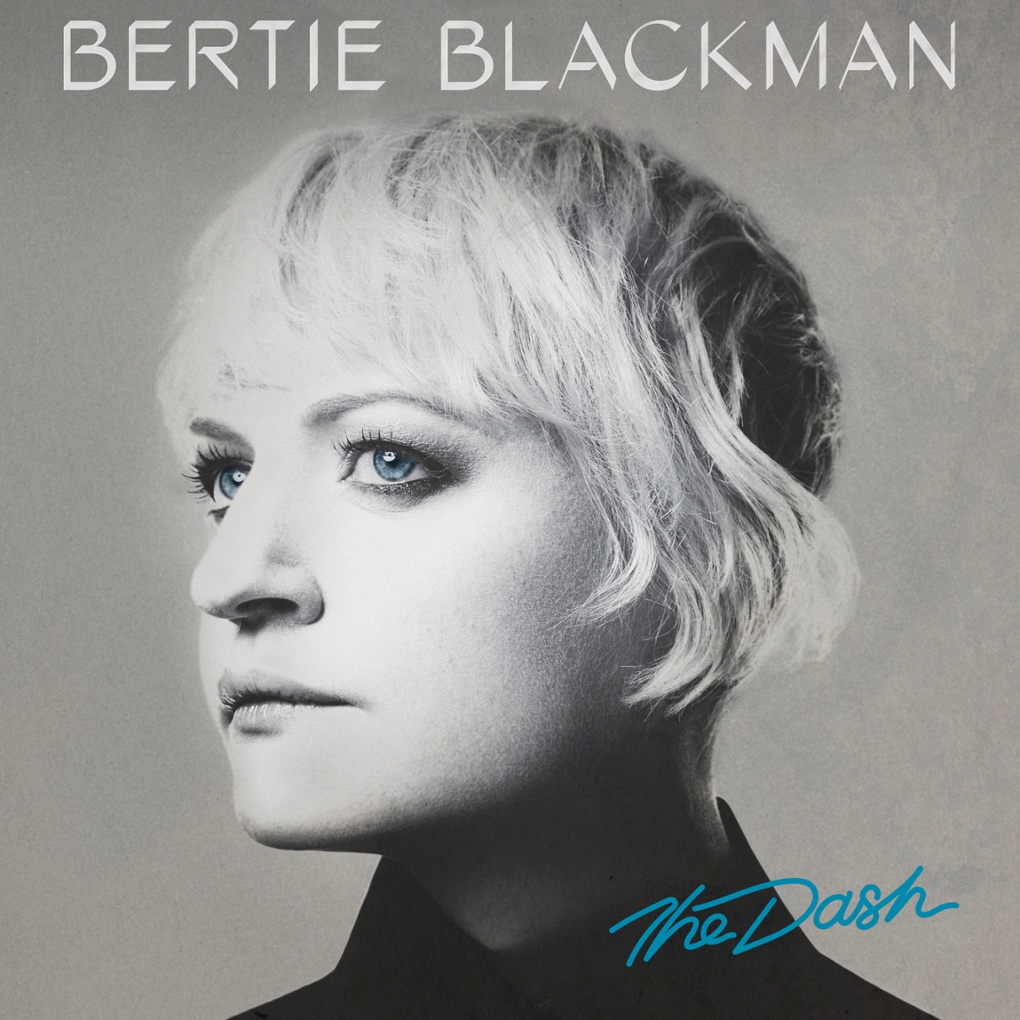
Though she has not always enjoyed a slice of the spotlight that some of her peers (deservingly or otherwise) have, Bertie Blackman has slowly but surely earned herself a reputation as one of Australia’s most compelling singer-songwriters.
If there were ever a record that deserved to catapult her to proper stardom, though, it’d be The Dash, her fifth album, a stirring piece of pop wizardry whose shimmering arrangements surreptitiously deliver the songs’ emotional heft straight to your heart.
Blackman set herself the task of “having fun” while creating The Dash (“I wanted to learn how the rest of the world writes pop music. I wanted to explore my voice, explore the structure of pop music and hooks,” she said in a recent interview), a mission statement that’s evident in songs like Dancing Into Trouble (which could be a lost Stock, Aitken Waterman artefact), the charging War of One, and the decidedly Tears For Fears-ish Minute By Minute. As successful as these breezier slabs of pop are, though, it’s the record’s more downbeat moments that really soar.
There’s more than a touch here of the icy arrangements that so wonderfully offset the emotional charge of Robyn’s Robyn and Body Talk Pt 1 and 2 (which in turn, not by accident I imagine, recalled the magic so dear to the hearts of a certain slice of Generation X that Klaus Doldinger and Giorgio Moroder created with their score for The Neverending Story). Anthemic lead single Kingdom of Alone and opening track Run For Your Life are the perfect crystallisation of this sad-eyed electronica.
It’s quite a leap, stylistically speaking, from her most recent work: to look at the singles from 2012’s Pope Innocent X, for example, there’s thematic daylight between Mercy Killer’s ramshackle narrative and Stella’s gentle, slightly sinister harp-flecked folk.
All of The Dash, on the other hand, is firmly rooted in that bittersweet sort of electronic pop music that the aforementioned Swede helped champion. Part of this is likely down to the songwriters and producers Blackman invited to collaborate with her during the writing and recording of the record.
Despite what you might expect from a track cowritten with the Presets’ Julian Hamilton, Darker Days is a sultry ballad suffused with longing. In a track-by-track explanation of the record, Blackman recalled coming up with the key elements of Darker Days “as Julian took a phone call; I just sat down at the piano and started playing a couple of chords”, which suggests that the alien process of cowriting might have unlocked some hitherto untapped pop magic in the singer/songwriter.
The standout track is Strangers in a Moment, a dystopian torch song (think Underworld’s Underneath the Radar or Mike and the Mechanics’ Silent Running) that deserves pride of place over the end titles of a mega-budget Hunger Games-adjacent blockbuster. And, as much of a treat as it is to hear INXS’s Kirk Pengilly wailing on the saxophone at the end of Strangers in a Moment, it’s Blackman’s swooning vocals that bewitch you.
Through it all, despite the star cowriters and dazzling arrangements, what’s clear is that thanks to her “fun” experiment, Blackman has carved herself a niche as a pop songwriter to be reckoned with.