As artificial intelligence companies continue to attract massive valuations and expand their influence across the economy, Sen. Bernie Sanders has introduced legislation aimed at giving Americans a direct ownership stake in the industry's growth.
The proposal would establish a national sovereign wealth fund financed through a one-time 50% tax on the stock of the largest AI companies in the country. Sanders said the measure is designed to ensure that the economic benefits generated by artificial intelligence are shared more broadly rather than concentrated among a small group of technology firms and investors.
According to legislation first obtained by The Associated Press, the tax would apply to AI companies generating at least $200 million in annual AI-related sales. Instead of paying cash, affected companies would transfer stock to the fund, effectively making the American public a major shareholder in some of the country's largest artificial intelligence businesses.
Sanders estimated that the fund would be worth nearly $7 trillion. A seven-member independent commission, nominated by the president and confirmed by the Senate, would oversee the fund and exercise voting rights attached to its shares.
"The benefits cannot simply go to the handful of wealthy corporations. They will be shared by the American people," Sanders said in an interview.
Under the proposal, a 5% annual dividend from the fund would be distributed to Americans, with Sanders estimating that payments could exceed $1,000 per person each year. Additional gains generated by the fund would be directed toward public priorities including health care, education and housing.
The legislation also seeks to give the public a greater role in decisions made by major AI companies. The commission managing the fund would be tasked with using its voting power to oppose decisions deemed harmful to the public and support policies considered beneficial, according to a summary of the proposal.
While Sanders' proposal is among the most aggressive efforts to redistribute wealth generated by AI, the broader concept of public participation in AI-driven economic gains has attracted attention across the political spectrum.
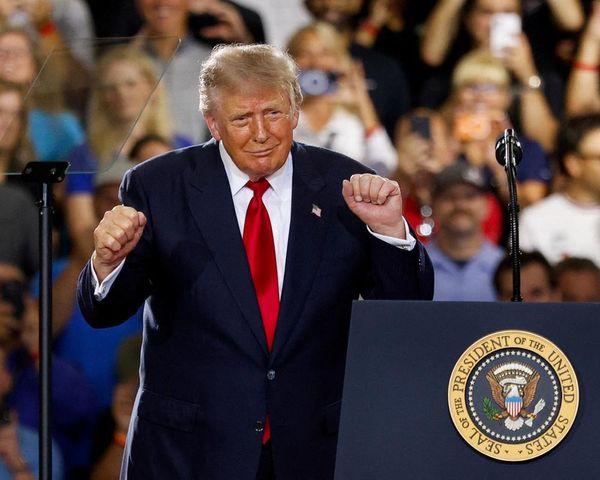
President Donald Trump recently expressed interest in exploring arrangements that would allow Americans to benefit directly from the success of AI companies. Reuters reported earlier this month that Trump said the idea could create a partnership between the public and AI firms and that his administration was examining possible approaches to public ownership stakes in the sector.
OpenAI has also advanced similar concepts, although on a much smaller scale. In policy proposals released in April, the company called for the creation of public wealth funds that would allow citizens to participate in AI-driven economic growth, according to TechCrunch. OpenAI CEO Sam Altman has previously argued that new mechanisms may be needed to distribute the benefits of increasingly powerful AI systems more broadly across society.
The debate has expanded beyond lawmakers and technology executives. Public concerns about artificial intelligence have grown as companies deploy AI tools across industries. A 2025 Harvard Kennedy School Institute of Politics survey cited by The Associated Press found that roughly 70% of college students viewed AI as a threat to future job opportunities.