For years, Bernie Sanders was the guy Democrats argued about. Was he too far left? Too divisive? Too unrealistic? After losing two presidential primaries, much of the party establishment moved on, treating Sanders less as the future of the Democratic Party than as a reminder of a political moment that had passed. Progressive wins, like New York City's mayor Zohran Mamdani's, were seen as an outlier event in the U.S.'s most cosmopolitan city.
Then came 2026.
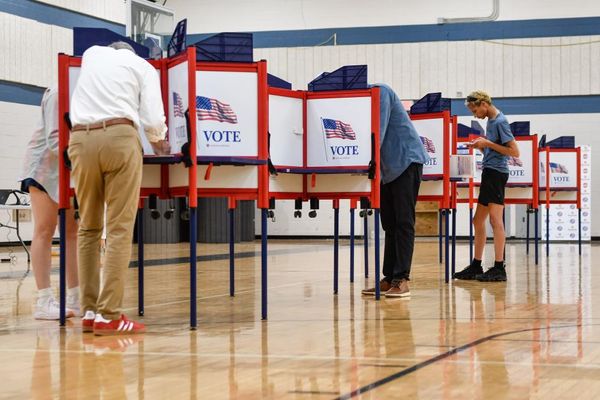
Over the last four months, a string of Sanders-backed candidates have emerged from Democratic primaries with victories in races stretching from New Jersey to California, giving the Vermont senator something he rarely enjoyed during his own presidential campaigns: momentum. The question now is whether those wins represent the beginning of a broader progressive resurgence or simply a favorable stretch before the movement's biggest tests arrive later this summer and fall.
The breakthrough came in New Jersey.
In February, progressive organizer Analilia Mejía defeated former Congressman Tom Malinowski in a closely watched Democratic primary to replace outgoing Rep. Mikie Sherrill. Mejia was not just another progressive candidate. She had served as Sanders' political director during his 2020 presidential campaign and became one of the most visible faces of the Working Families movement. Her victory over a better-known and better-funded opponent immediately caught the attention of Democratic strategists nationwide.
Then she won again. After securing the nomination, Mejía captured the special election and is already serving in Congress, giving Sanders' movement something it often lacked during previous cycles: an actual seat to show for its organizing efforts.
A few months later, New Jersey delivered another win.
Adam Hamawy, a trauma surgeon, Army veteran, and progressive favorite, won the Democratic nomination in the state's 12th Congressional District after earning endorsements from Sanders, Rep. Ro Khanna, and Rep. Ilhan Omar. Hamawy's victory reinforced what many progressives believe is becoming a pattern: voters remain receptive to candidates focused on healthcare, affordability, and economic inequality even as party leaders debate whether Democrats should move toward the center after 2024.
California delivered perhaps the most important House victory.
Randy Villegas, a community college professor and second-generation Mexican American, advanced to the general election in California's 22nd Congressional District after defeating establishment-backed Democrat Jasmeet Bains. The race drew national attention because Villegas was backed by Sanders, Alexandria Ocasio-Cortez and labor icon Dolores Huerta, while many California Democratic insiders lined up behind Bains. Villegas will now challenge Republican Rep. David Valadao in one of the country's most competitive congressional districts.
The establishment bet against him. The people were on his side. This is the story of an educator and auto repair shop owner who's running for Congress. pic.twitter.com/gZr14TAadq
— Working Families Party 🐺 (@WorkingFamilies) June 16, 2026
Progressives point to those victories as evidence that Sanders' political project has matured. Ten years ago, most of the movement revolved around Sanders himself. Today, many of its candidates are winning without his name appearing on the ballot.
And there have been more victories.
According to progressive groups tracking the races, Sanders-backed candidates, including Bob Brooks in Pennsylvania, Sam Forstag in Montana, and Graham Platner in Maine, have all emerged as nominees in key contests, producing what supporters described as one of the left's strongest primary nights in years.
Platner's win may have been the most surprising. The Marine veteran and progressive activist overcame weeks of controversy and intense scrutiny to capture Maine's Democratic Senate nomination, setting up a high-profile race against Republican Sen. Susan Collins.
Still, nobody inside Sanders' orbit is declaring victory yet.
The races that could ultimately define the movement's year have not happened.
In Michigan, Sanders has endorsed Abdul El-Sayed in one of the most closely watched Democratic Senate primaries in the country. The contest to replace retiring Sen. Gary Peters has become a proxy battle between the Democratic establishment and the party's progressive wing. Recent polling has shown El-Sayed among the leading candidates for the August 4 primary, while outside groups aligned with Sanders have poured millions into the race.
Minnesota presents a similar test. Sanders has endorsed Lt. Gov. Peggy Flanagan in the race for the Senate seat being vacated by Tina Smith. Party leaders have tried to avoid an open fight, but many progressives view the contest as another referendum on whether Democratic voters want candidates who speak more directly about economic populism and inequality.
Then there is New York.
No state may matter more to the future of the progressive movement.
Mamdani has spent recent weeks campaigning for a slate of left-wing candidates, including Claire Valdez and Darializa Avila Chevalier, while backing progressive allies in several congressional races.
The endorsements have triggered a fierce backlash from Democratic insiders and turned the June 24 primary into a test of whether the coalition that elevated Mamdani can expand beyond city politics. Some observers now openly compare Mamdani's influence inside New York to Sanders' role nationally a decade ago.
For Sanders, the irony is hard to miss.
At 84, he is no longer running for president. He is not building a national campaign. He is not trying to become the face of the Democratic Party.
Yet as primary season enters its most consequential phase, many of the candidates generating the most excitement on the left are still running on versions of the same message Sanders has delivered for decades: that working-class voters are being squeezed by a political system that serves wealthy donors, large corporations, and entrenched interests.
The next few months will determine whether that message can win Senate seats and competitive House races.
But one thing is already clear: The reports of Bernie Sanders' political death were, once again, greatly exaggerated.