A German minister has admitted security forces knew the suspected Berlin attacker was a terror threat but failed to detain or deport him before he ploughed a lorry into a Christmas market.
Ralf Jäger, the interior minister of North Rhine-Westphalia, told a press conference the Tunisian man had already been put under investigation over a previous attack plot but missing paperwork meant he could not be ejected from Germany.
He was the subject of a meeting of its Joint Terror Protection Centre and federal and local government officials shared information as recently as last month, with the police warning he posed a threat.
Mr Jäger said an investigation was launched into “a serious act of violence against the state” but the suspect could not be deported because of a bureaucratic dispute with Tunisia, which originally said he was not a citizen.
"The man could not be deported because he had no valid identification papers," the minister added, saying Germany requested the necessary documents in August.
They arrived today - two days after the Berlin attack - and would have allowed authorities to carry out the deportation order issued after his asylum application was rejected in June.
A spokesperson for the North Rhine-Westphalia interior ministry told The Independent local police launched an investigation into the suspect over a separate attack plot earlier this year and handed their information to Germany’s Federal Criminal Police Office (BKA), which shut the investigation in autumn.
When asked why the man, named locally as Anis Amri, was not arrested, he replied: “I don’t know, ask Berlin.”
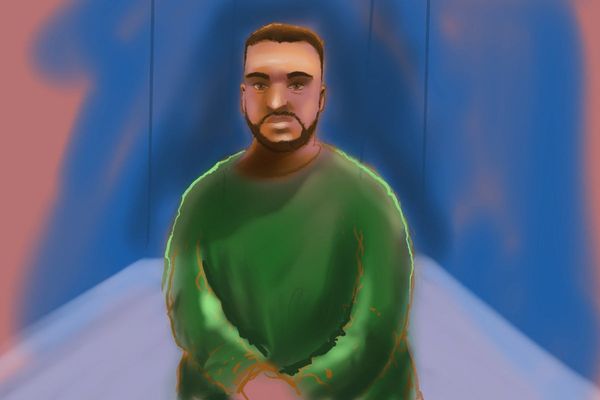
Mr Jäger said the man arrived in Germany in 2015 and went under “numerous” aliases but did not confirm his name, saying he could not endanger investigations by giving details.
The suspect had been living in Berlin since February, having previously stayed areas including Kleve in North Rhine-Westphalia and the city of Freiburg, in Baden-Württemberg.
The suspect was named as Anis Amri after identification documents were found inside the lorry used in Monday night’s massacre.
At least 12 people were killed and dozens injured when it ploughed into crowds enjoying a popular Christmas market in central Berlin.
Stephan Mayer, a politician from the CSU party, said the new suspect had ties to a network of Islamic extremists, reported to include a hate preacher known as Abu Walaa, who was arrested as part of a cell of Isis supporters sending militants to Syria earlier this year.
Tunisian officials said they would be working with the German government in the probe, which comes months after another Tunisian man who lived in France was shot dead after using a lorry to kill 86 people in Nice.
Der Spiegel reported that the suspect was born in 1992 in the city of Tataouine, which was reported to be using his hometown as a transit base for fighters last year.

Amri, who also claimed to be Egyptian and Lebanese while using various fake names, was classified as a terror threat and put under increased surveillance before a court in Ravensburg issued an order for his deportation in June.
A Pakistani asylum seeker originally arrested on suspicion of being the attacker has been released after no evidence was found against him, leaving the attacker at large and possibly armed.
The German interior minister, Thomas de Maiziere, said the manhunt had spread from Germany throughout the EU’s Schengen area amid warnings the suspect could pose a further threat.
A gun he used to shoot the Polish driver of the hijacked lorry has not been found, with witnesses losing track of the attacker as he fled.
Isis claimed responsibility for the massacre, calling the perpetrator a “soldier of the Islamic State” who was obeying calls to attack supporters of the US-led coalition launching air strikes on its territories in Syria and Iraq.
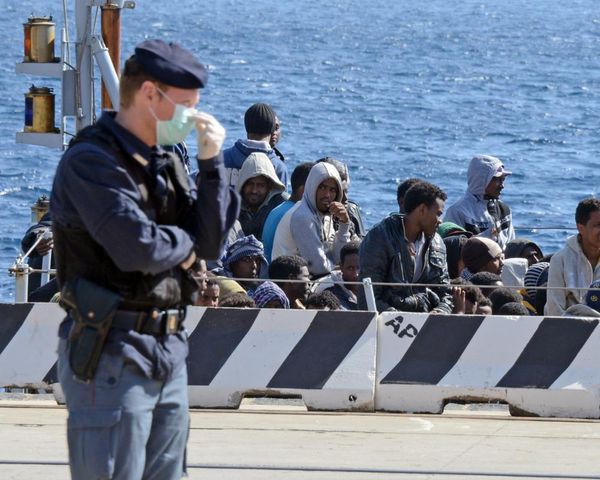
Following two previous Isis terror attacks by asylum seekers earlier this year, the massacre has fuelled increasing anger against Angela Merkel's government over its decision to open the borders to refugees last year, sparking the arrival of almost 90,000 asylum seekers.
She will face fierce opposition from the anti-immigration Alternative for Germany (AfD) party, whose leader claimed Ms Merkel's bid for a fourth term in next year's election was "finished" by the lorry attack.
The Chancellor was among hundreds of mourners who packed the Kaiser Wilhelm Memorial Church for a service next to the destroyed market on Tuesday evening and hundreds of people held an emotional vigil outside.
Flowers, candles and tributes have continued to pile up in Breitscheidplatz as Germany mourns its worst terror attack since 1990.