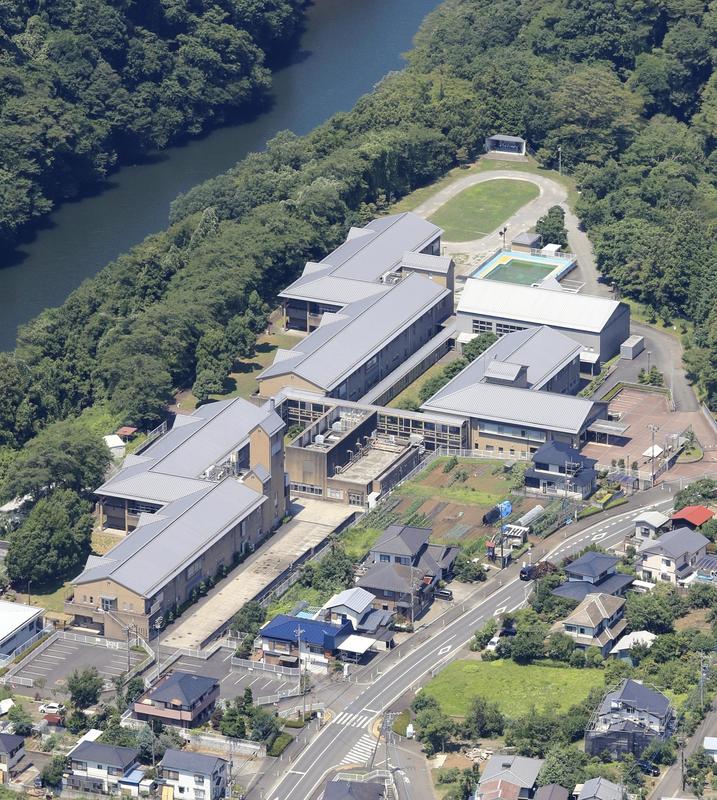
July 26 marked four years since the killing spree that left 45 people dead or injured at the Tsukui Yamayuri-en, a welfare facility for mentally disabled persons in Sagamihara. The families of two of the 19 people killed have posted messages of remembrance and shared their feelings about the incident.
The mother of Miho, who was killed at 19, writes, "The more time passes, the more I miss her." The mother of another murder victim, a man who loved music, also writes of her love for her son: "I will never forget him."
-- Fighting discrimination
"I want to see Miho so badly. I miss her so much, I can't help but miss her," Miho's mother writes at the beginning of her message written on two pages of A4-size paper.
She describes her struggle with the reality.
"But the sadness and loneliness of not being able to see her overwhelm me."
As the month of July approaches, her body and heart become heavy.
"I can't even look at the calendar. Since that year, I've hated July."
Through the victim participation system, she gave her opinion, calling for Miho to come back to her, at the trial of Satoshi Uematsu, 30, a former employee of the facility who was found guilty of murder and other charges. Uematsu had attempted to justify his actions, laying bare his discriminatory attitude toward disabled people.
"I don't think he understood the importance of something that we cannot see, such as unconditional love," she writes.
Uematsu's death sentence was finalized at the end of March after his attorney withdrew an appeal.
Most of the victims' families have kept real names secret, fearing discrimination and prejudice against the disabled and their relatives. Miho's mother released her daughter's name and photograph shortly before the first trial.
"I hope that people were able to understand a little bit about the victims, which hadn't been apparent to them," she writes. "When many people know and remember Miho, she is still alive."
At the end of her message, she refers to the discrimination against medical workers due to the novel coronavirus crisis and racial discrimination in the United States.
"Discrimination is not going to disappear easily, but it's better if it decreases even by a little bit."
-- Reflecting wholeheartedly
The mother of the man who loved music and looked forward to dancing, begins her message with, "It has been four years since my son passed away, and I will never forget him."
Later on she writes: "When he was little, he was such a sweet boy that he could be mistaken for a girl. There were times when he clung to my back and cried because he couldn't quite separate from me."
These days as well she flips through a photo album and thinks of her child.
"I can't keep grieving forever," she writes. "My son will always live in my heart with my memories."
She pieces together her words as if to inspire herself.
At the same time, she is asking Uematsu to reflect wholeheartedly.
"That's the least I can do for now."
-- Rebuilding underway
The residential wing of the facility where the incident took place was demolished and is being rebuilt. The current residents are temporarily living in facilities in Yokohama. From next fiscal year, they will be divided between facilities in Sagamihara and Yokohama.
Read more from The Japan News at https://japannews.yomiuri.co.jp/