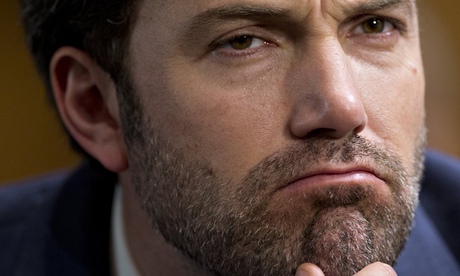
Ben Affleck has become one of the minor casualties of the Sony hack. The actor took part in a television show called Finding Your Roots. Having found them, he also found there was one root he didn’t much like.
Affleck discovered that his great-great-great grandfather, Benjamin Cole, was a slave owner in the mid 19th century. But when the programme was aired last year, this wasn’t mentioned. Emails published by WikiLeaks have shown that the omission followed a request from Affleck. He has since said that he was “embarrassed”, and that “the very thought left a bad taste in my mouth”.
Who can blame Affleck for feeling ashamed? Not me.
I’d be ashamed, too. It’s nice to think that, having been born in a different time, we’d be standing against the evils of that time, not profiting from them. As a small child, I believed that Britain’s main contribution to the slave trade was ending it, through the agency of pottery.
That fantasy became hard to sustain. But, like a lot of people, I decided that I’d have been on the side of the reformers, had I been around at that time.
Affleck got a horrible personal reminder that such pieties are fantasies, too. I daresay he has already come around to the perfectly acceptable idea that he is not responsible for anyone’s past sins but his own. Mostly, we settle for believing that we, as individuals, are not responsible for the past, and therefore not for the present either.
I know I’m not the only person who, when hearing allegations that hundreds of people were locked in the hold of a boat that sank during a people-smuggling operation last Sunday, immediately thought of the slave trade. People now pay to experience horrors that in the past were forcibly imposed on them. How abjectly awful.
The hundreds of people who died may have been in the boat voluntarily. But the choice they made was testament only to the bleakness of all their choices. Yet the helpless end they came to was pretty much identical to stories of the middle passage, stories that are bearable only because they can be contextualised within a progressive narrative that flatters us all: humans used to do this to other humans. But not any more.
What’s the progressive narrative for this latest outrage, which sees exploited people dying at sea? It’s sad poems. It’s vigils. It’s reporting Katie Hopkins to the police for her savage rejection of kind words. It’s columns like this: antidotes to Hopkins’s notorious Sun piece. But mostly what we want to believe, like Affleck, is that it’s all the fault of people who have nothing to do with us.
It’s easy to be appalled by David Cameron, offering a ship and some helicopters to help rescue people, as long as it’s made clear that the rescue ends when a blanket is wrapped around their shoulders on Italian soil. But it’s easy to be appalled by Ed Miliband too, who has nothing to offer but words of blame for others. Yet I wouldn’t fancy being a politician. I wouldn’t want to give up the luxury of always being able to believe that it’s somebody else’s fault.
I guess that’s all that Ben Affleck wanted, really. To feel absolutely and perfectly sure that others were to blame.

He wanted a conscience that is personally clear, not only of guilt about the present, but guilt about the past, too. He’s by no means the only person in the world who is vain about his own rectitude, who is proud of his idea of himself as being on the side of the angels. He couldn’t bear the idea of people knowing that his ancestors had played a villainous part in his country’s history, however many generations ago. He wanted his own record to be unbesmirched, even by the distant past.
Affleck’s self-righteousness made him vulnerable. Maybe self-righteousness always does that. The popular figures that the left finds most problematic – Hopkins, Jeremy Clarkson, Nigel Farage – have in common their belief that they are speaking for people too afraid to speak: people who have been personally oppressed by the moral censorship of the liberal elite with its political correctness. Even the Metropolitan Police says it did not investigate the former mayor of Tower Hamlets, Lutfur Rahman, despite allegations of corruption, because they were “afraid” of being called racist.
Rahman’s own stock-in-trade was tossing the epithet at anyone who challenged him. How well the strategy worked, until four private citizens simply decided that they could handle accusations of racism.
So much of politics in this country today can seem to be about saying the right words instead of doing the right thing. Words advertising personal rectitude become all-important, largely because they confer the ability to call out lack of personal rectitude in others. No human has the right to feel perfect detachment from human evil, past or present. It’s natural to want to. But it doesn’t do much good, and sometimes it does harm. Human history is littered with cruelty. Only hypocrites believe that it’s nothing to do with them, and that they and their kin have only ever done good.