Get all your news in one place.
100’s of premium titles.
One app.
Start reading
Reuters
Reuters
Health
Marine Strauss

Belgium says COVID-19 situation serious as infections reach new highs, bars close

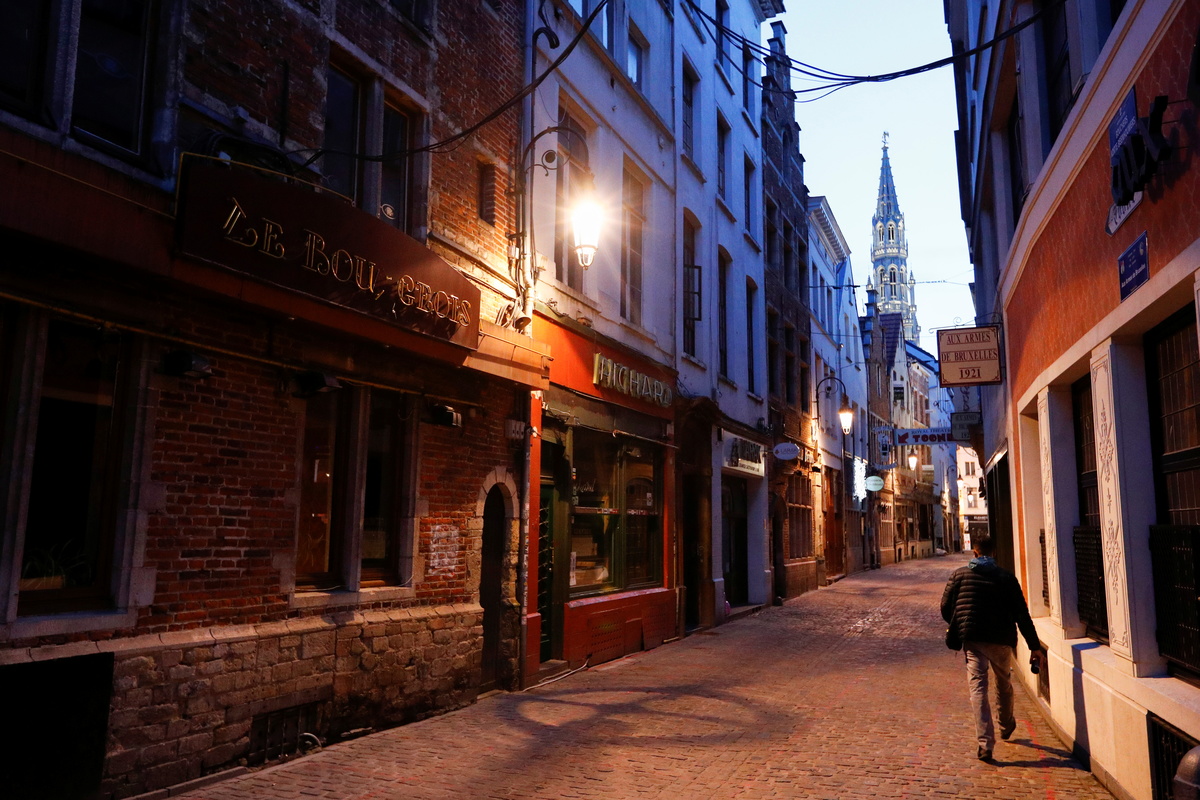
A man walks past closed restaurants on a deserted street, as restaurants were forced to close for four weeks, after a Belgian federal government decision in order to tackle a surging second wave of the coronavirus disease (COVID-19) in the country, in Brussels, Belgium October 19, 2020. REUTERS/Francois Lenoir

The health situation in Belgium is worse than in March during the first wave of the COVID-19 pandemic, with cases of infection reaching new highs and the number of people in hospital doubling each week, officials said on Monday.

"The situation is serious. It is worse than on March 18 when the lockdown was decided," Prime Minister Alexander De Croo told Belgian television RTL-Info.
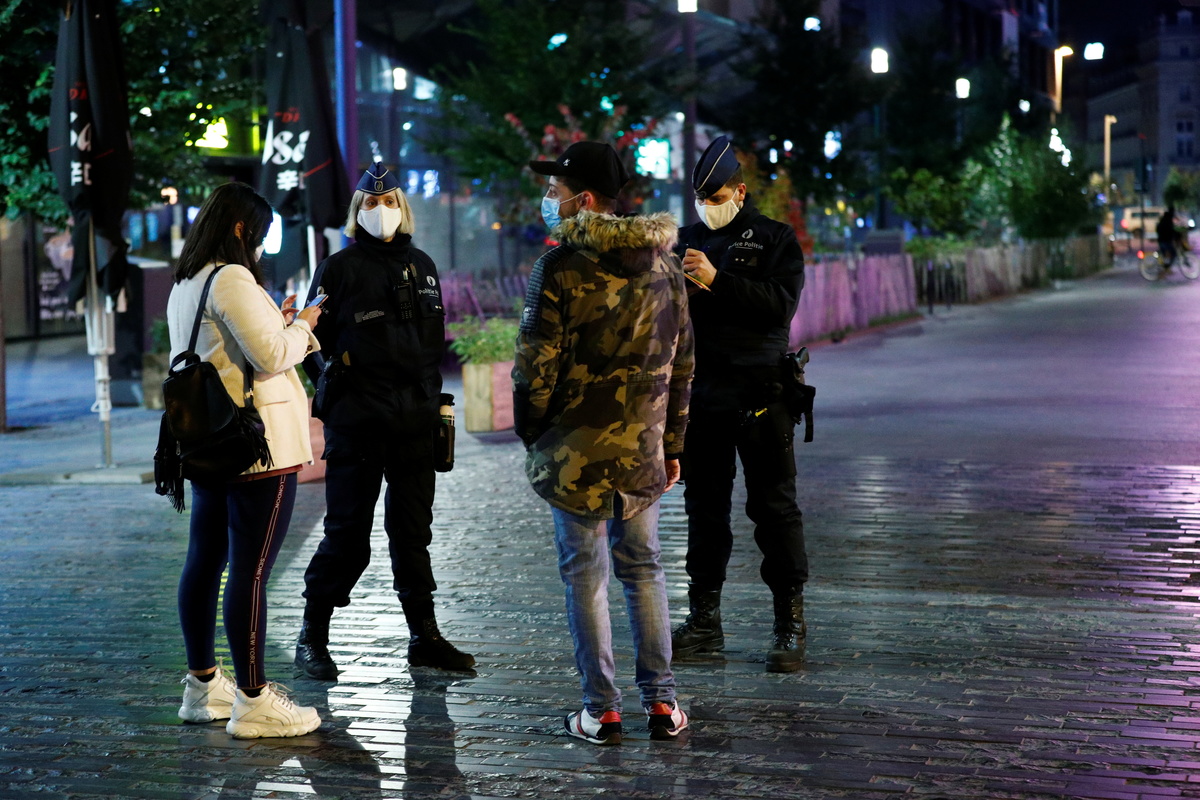
Police officers confront a couple as they patrol in central Brussels during a nighttime curfew imposed by the Belgian government as the spread of the coronavirus disease (COVID-19) continues, in Brussels, Belgium October 20, 2020. REUTERS/Francois Lenoir

To slow the second wave of coronavirus the government has ordered bars and restaurants across the country to close for four weeks. Most employees must work from home and a night-time curfew will start from midnight on Monday.

Marc Van Muylders, vice-president of the Brussels catering industry organization HORECA, said the measures were unfair and could backfire.

"Now what will happen probably is that a lot of people will make parties at their home without any restrictions about safety so that it will probably even increase the transmission rate in the future," he told Reuters.
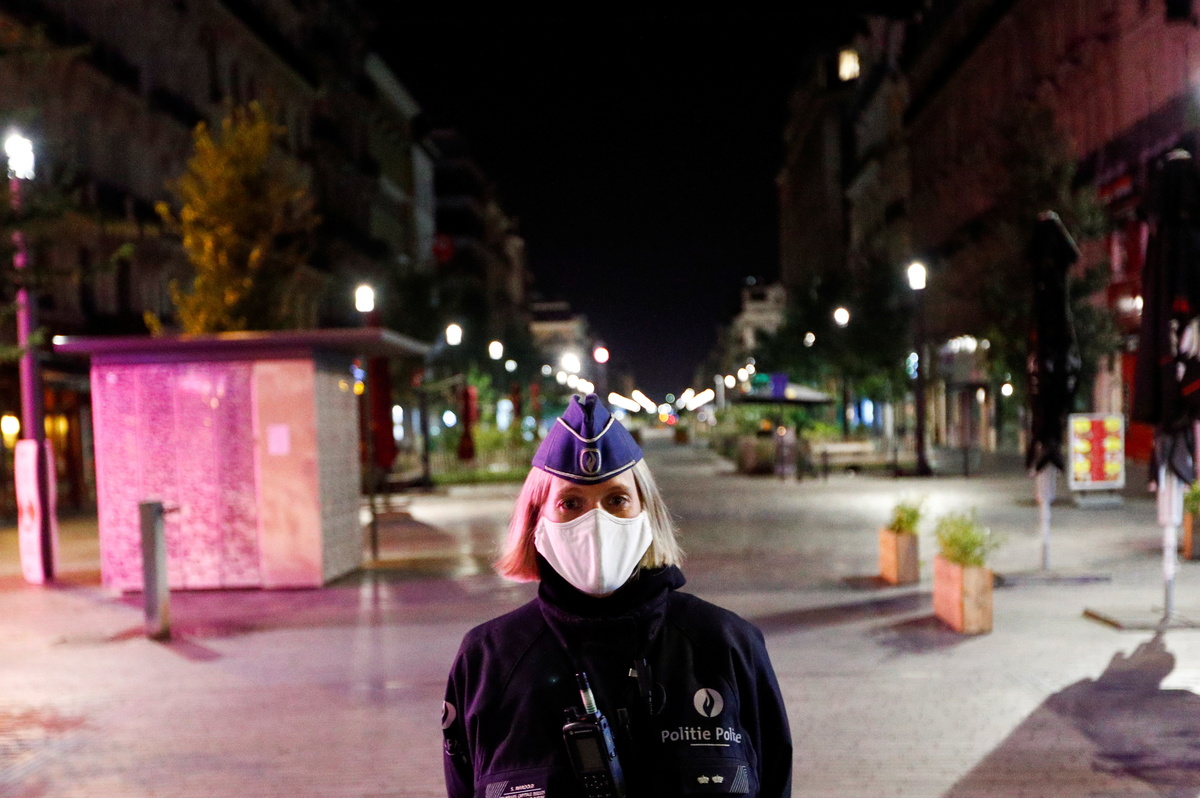
A police officer patrols in central Brussels a few minutes ahead of a nighttime curfew imposed by the Belgian government as the spread of the coronavirus disease (COVID-19) continues, in Brussels, Belgium October 19, 2020. REUTERS/Francois Lenoir

For others though, the forced closures were a chance for more work and money.

"This is good news because we will have more work to do. We are going to make more money," said 36-year-old Uber Eats courier Khalid El Mahsini.

The number of patients in intensive care units (ICUs), which stood at 412 on Sunday, is doubling every eight to nine days - and half of those are on ventilation.
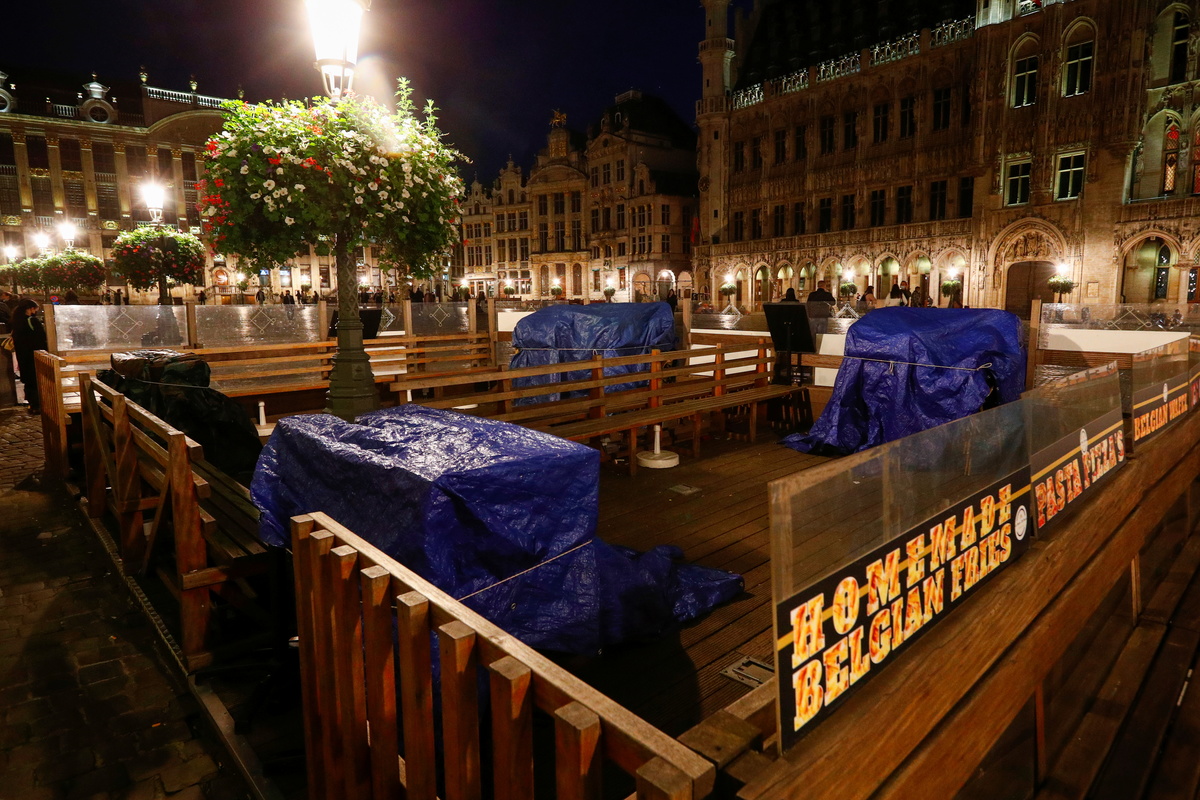
Closed terraces of restaurants are seen at Brussels' Grand Place, as restaurants were forced to close for four weeks, after a Belgian federal government decision in order to tackle a surging second wave of the coronavirus disease (COVID-19) in the country, in Brussels, Belgium October 19, 2020. REUTERS/Francois Lenoir

Meanwhile, the number of patients in hospitals is doubling every week. On Oct. 17, 351 people were admitted to a hospital, more than half of the peak of 629 on March 28.

COVID-19 has claimed 10,413 lives in Belgium, one of the highest per capita fatality rates in the world.

Health Ministry spokesman Yves Van Laethem told a news conference the number of patients in intensive care will rise above 500 this week.
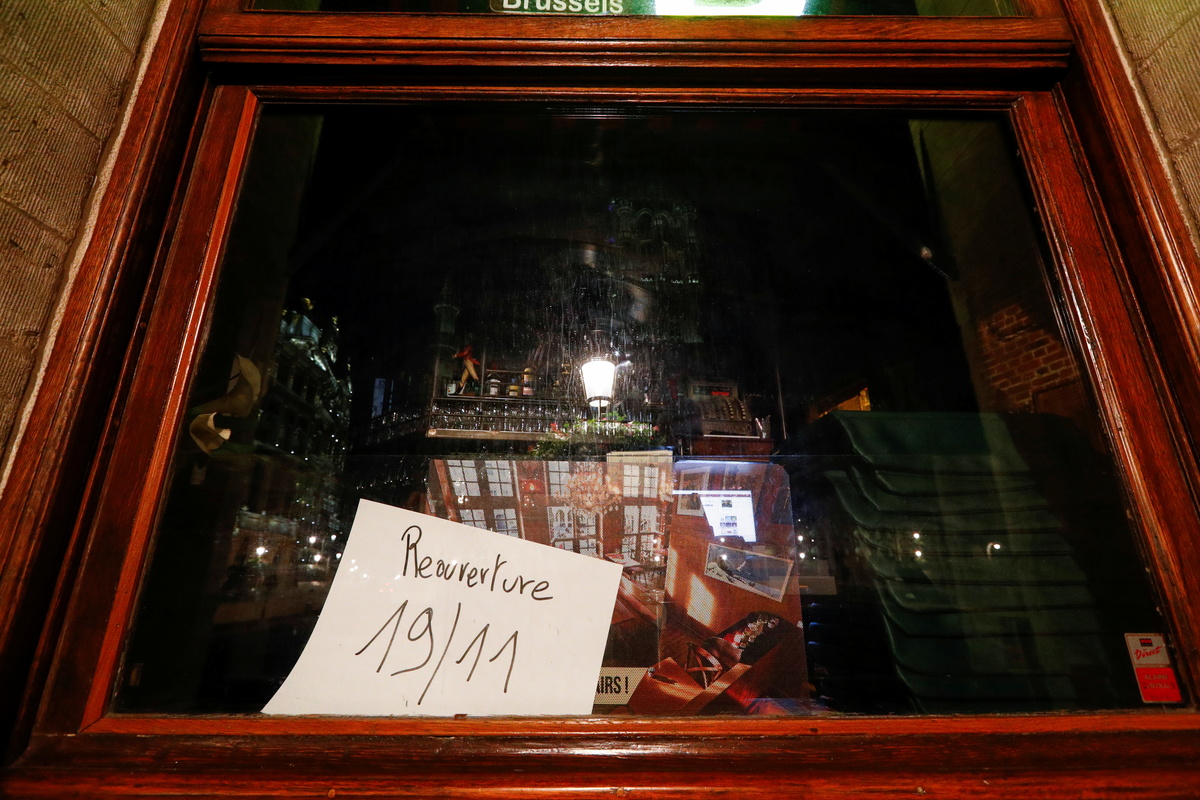
A sign reading "Reopening 19/11" is seen on a window of a closed restaurant, as restaurants were forced to close for four weeks, after a Belgian federal government decision in order to tackle a surging second wave of the coronavirus disease (COVID-19) in the country, in Brussels, Belgium October 19, 2020. REUTERS/Francois Lenoir

"Whatever the impact of the measures, we will have 1,000 patients in intensive care by the end of this month," he said.

(Reporting by Marine Strauss, additional reporting by Clement Rossignol; Editing by Angus MacSwan)

Sign up to read this article
Read news from 100’s of titles, curated specifically for you.
Already a member? Sign in here
Related Stories
Top stories on inkl right now
One subscription that gives you access to news from hundreds of sites
Already a member? Sign in here
Our Picks
Fourteen days free
Download the app
One app. One membership.
100+ trusted global sources.