Get all your news in one place.
100’s of premium titles.
One app.
Start reading
Reuters
Reuters
Health
Yves Herman

Belgium launches COVID patient air-lifts to Germany

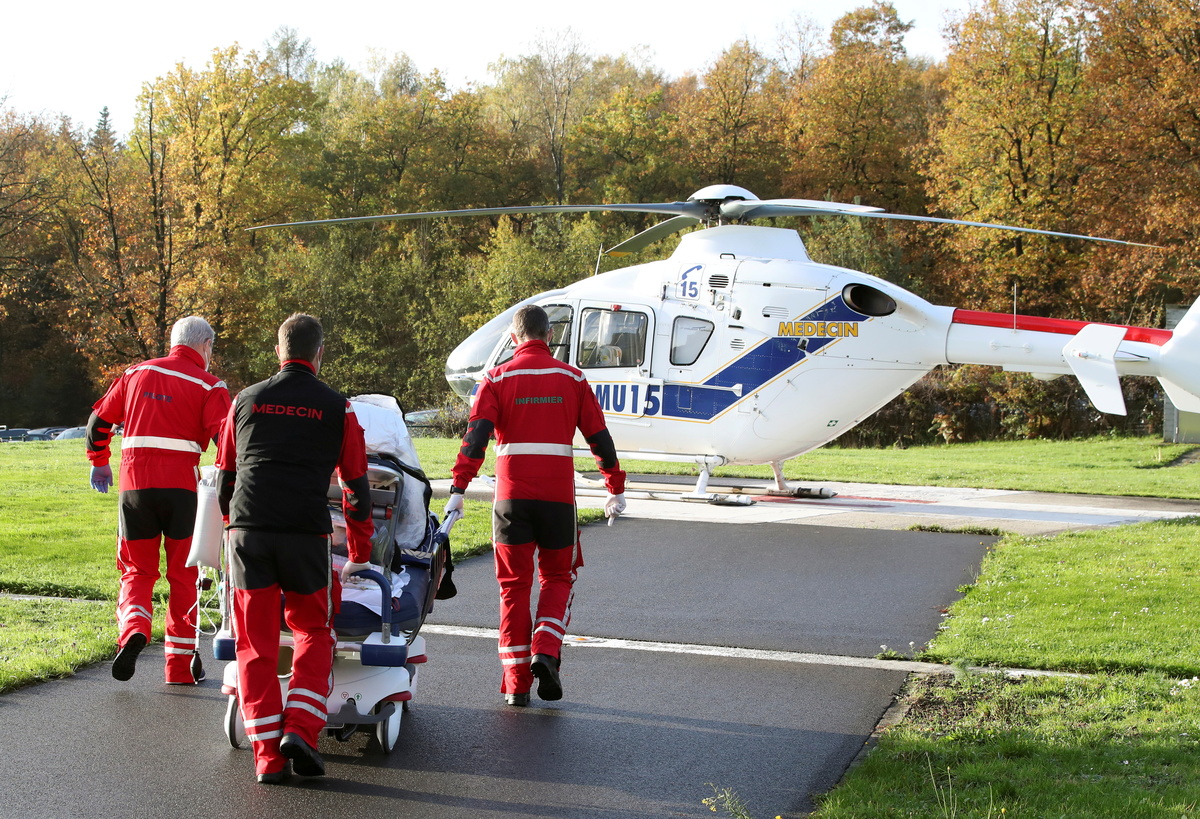
A patient infected with the coronavirus disease (COVID-19) is transported in a plastic cover to a medical helicopter assigned by the Centre Medical Heliporte (CMH) of Bra-sur-Lienne, to be transferred from the CHU de Liege hospital to Germany in Liege, Belgium November 3, 2020, REUTERS/Yves Herman

Belgium's surging second wave of COVID-19 cases has forced it to move some severely ill patients, many on ventilators, to neighbouring Germany, and air ambulances began flying Belgian patients further into the country on Tuesday.

The helicopter operator transports each COVID sufferer inside a giant transparent plastic bag connected to medical devices. Most of the transferred patients are intubated and on ventilators.
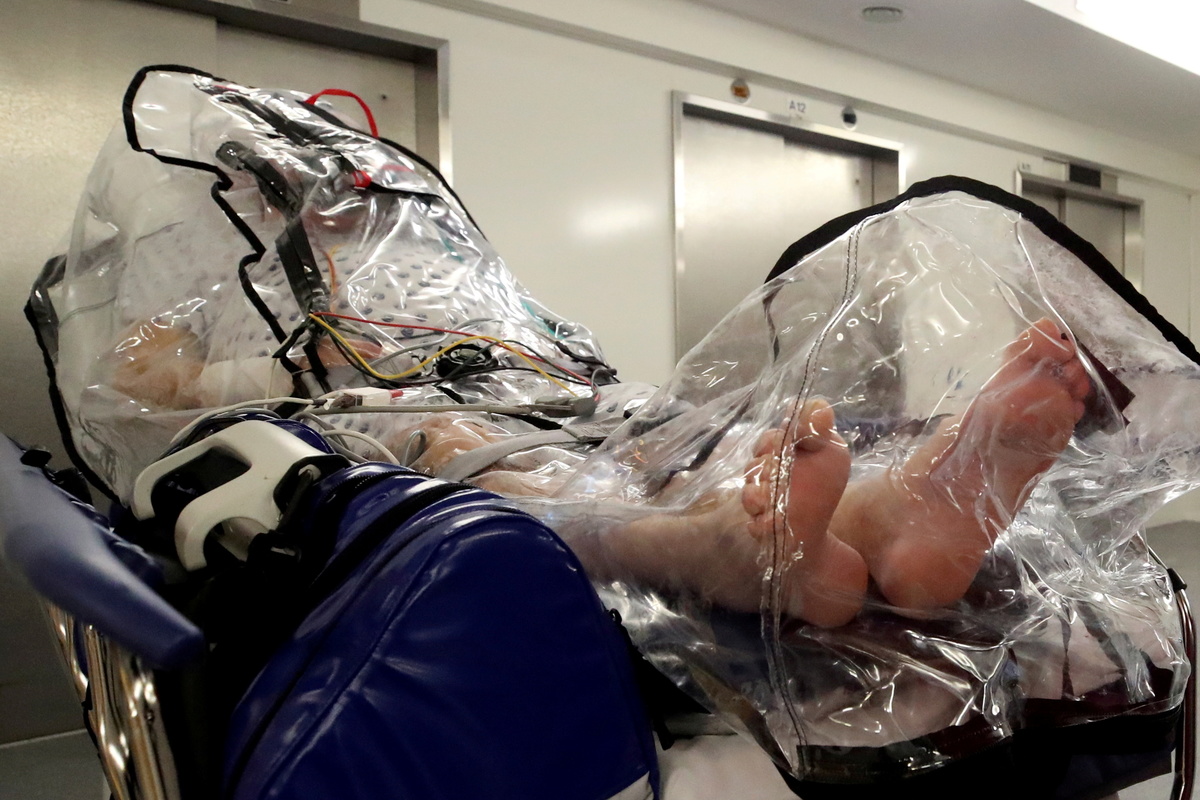
A patient infected with the coronavirus disease (COVID-19) is transported in a plastic cover to a medical helicopter assigned by the Centre Medical Heliporte (CMH) of Bra-sur-Lienne, to be transferred from the CHU de Liege hospital to Germany, in Liege, Belgium November 3, 2020, REUTERS/Yves Herman TPX IMAGES OF THE DAY

Belgium had among the highest death tolls per capita from the first coronavirus wave in March-April, and now has Europe's highest per capita number of confirmed new infections, according to the European Centre for Disease Prevention and Control.

The country of 11 million people has 7,231 COVID patients in hospital, 1,302 of them in intensive care and local hotspots, such as the eastern city of Liege, have seen the capacity of intensive care beds being reached.

Ambulances began taking patients across the border last week and have so far transferred 15. Air ambulance helicopters started transferring patients deeper into Germany from Tuesday.
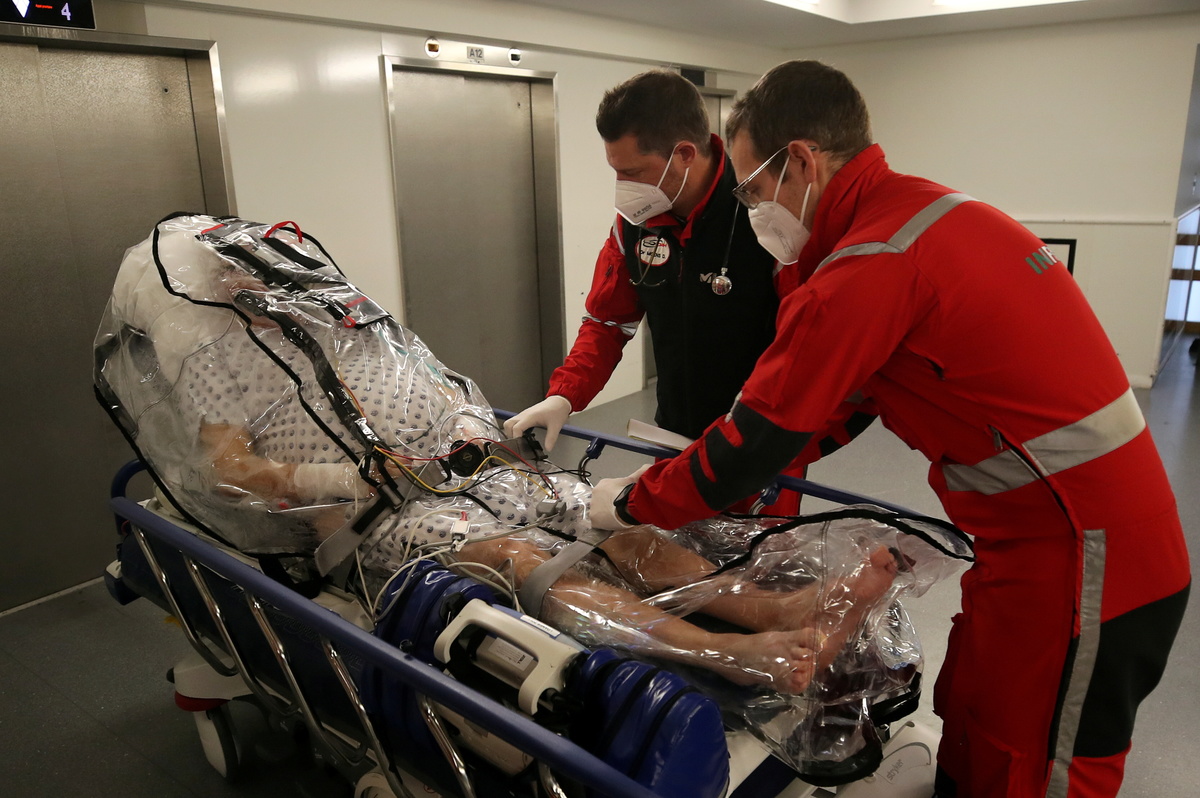
A patient infected with the coronavirus disease (COVID-19) is transported in a plastic cover to a medical helicopter assigned by the Centre Medical Heliporte (CMH) of Bra-sur-Lienne, to be transferred from the CHU de Liege hospital to Germany in Liege, Belgium November 3, 2020, REUTERS/Yves Herman

Olivier Pirotte, operations coordinator for the Centre Medical Heliporte (helicopter medical centre), said air transport was required to minimise the travel time for patients.

A trip such as to the German city of Muenster would take at least three hours by road, but can be done up to three times faster by air, and with fewer shocks to the patient such as from road bumps.

Martin Kotthaus, Germany's ambassador to Belgium, said a mechanism had been set up to allow Belgian patients to transfer to hospitals in the German state North Rhine-Westphalia, where there is more spare capacity.
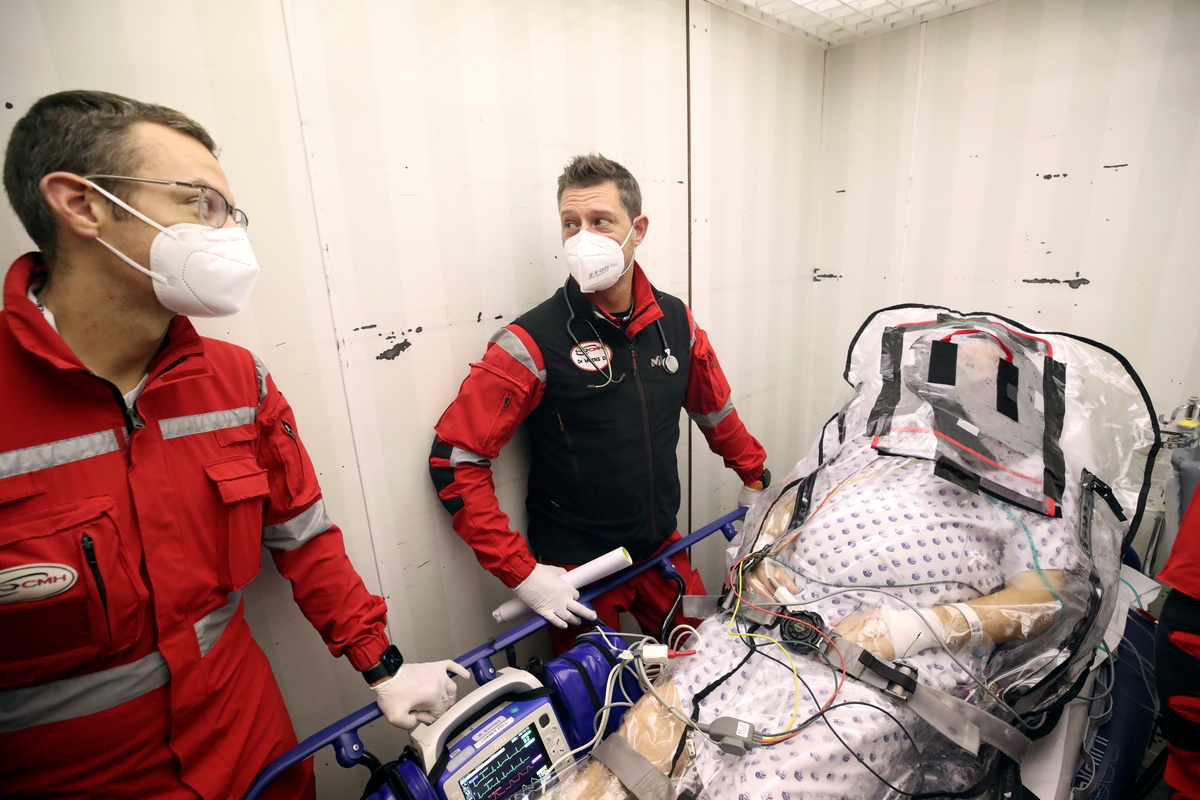
A patient infected with the coronavirus disease (COVID-19) is transported in a plastic cover to a medical helicopter assigned by the Centre Medical Heliporte (CMH) of Bra-sur-Lienne, to be transferred from the CHU de Liege hospital to Germany in Liege, Belgium November 3, 2020, REUTERS/Yves Herman

"In the first wave, Germany had more than 230 patients from Italy, France and the Netherlands. Now we are extending our help to Belgium," he told Reuters. "But in the future, it might be Germans who would have to come to Belgium."

(Reporting by Philip Blenkinsop; Editing by Alexandra Hudson)
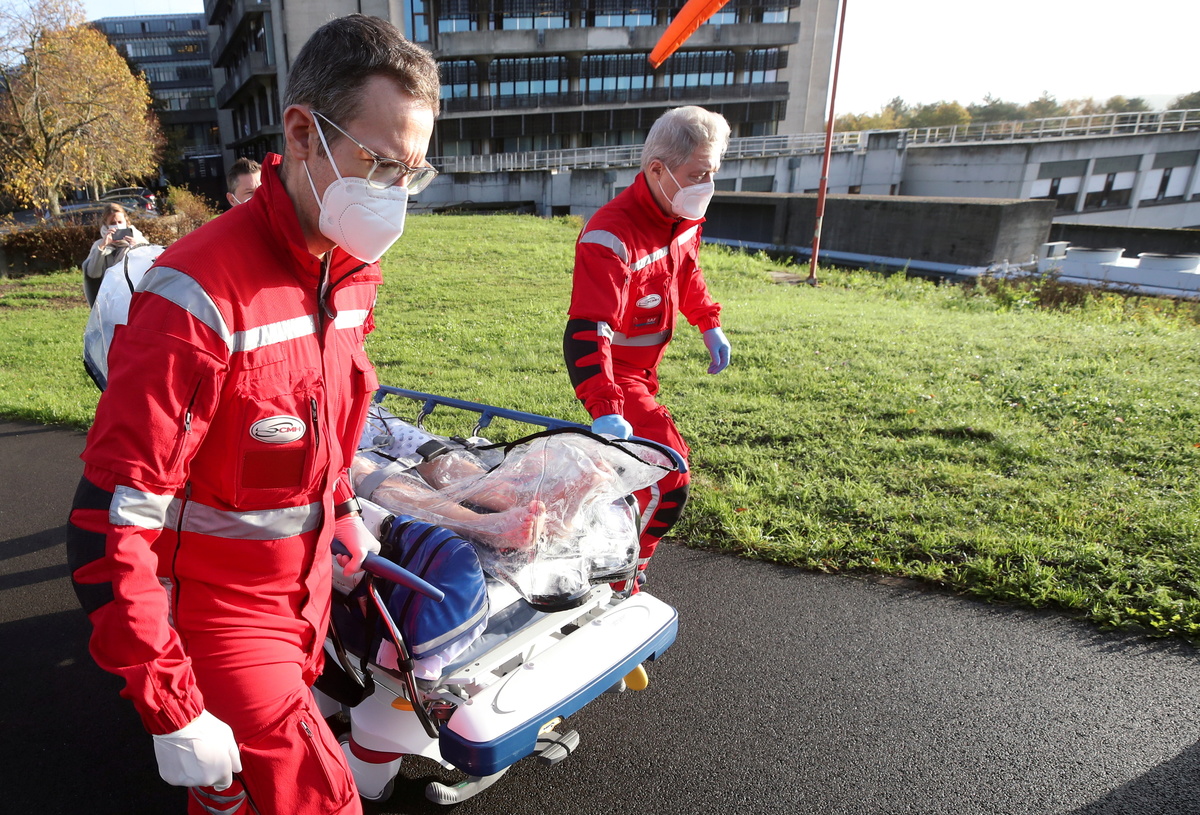
A patient infected with the coronavirus disease (COVID-19) is transported in a plastic cover to a medical helicopter assigned by the Centre Medical Heliporte (CMH) of Bra-sur-Lienne, to be transferred from the CHU de Liege hospital to Germany in Liege, Belgium November 3, 2020, REUTERS/Yves Herman
Sign up to read this article
Read news from 100’s of titles, curated specifically for you.
Already a member? Sign in here
Related Stories
Top stories on inkl right now
One subscription that gives you access to news from hundreds of sites
Already a member? Sign in here
Our Picks
Fourteen days free
Download the app
One app. One membership.
100+ trusted global sources.