Belgian authorities detained three people on Tuesday after four arrests in an investigation targeting a Cameroonian secessionist group over possible war crimes and crimes against humanity.
Federal prosecutors said the arrests followed simultaneous searches in Antwerp and Londerzeel on Sunday. The inquiry, launched last summer, focuses on people living in Belgium suspected of being part of the leadership of the Ambazonia Defence Forces, or ADF.
“Money is reportedly being raised for the armed struggle and for the purchase of arms and ammunition, and instructions for attacks and liquidations are said to be given from Belgium,” the federal prosecutor’s office said.
Three suspects were remanded in custody by an investigating judge, prosecutors said. One person was released. Authorities said they were working with officials in Norway and the United States, where similar investigations are under way and arrests have been made.
Cameroon opposition leader flees to Gambia for 'safety' after contested vote
Conflict since 2016
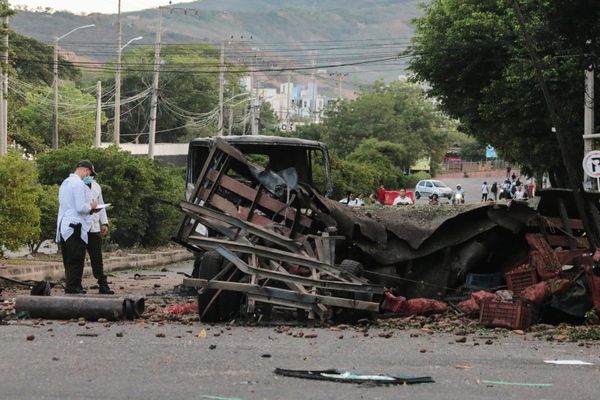
Cameroon’s two English-speaking regions in the northwest and southwest have been hit by violence since 2016. Separatist fighters have clashed with state forces in a conflict that has killed at least 6,000 civilians, Human Rights Watch said.
The crisis began after President Paul Biya, who has ruled for more than four decades, cracked down on peaceful protests by English speakers, who make up about 20 percent of the population.
Lucas Cho Ayaba, leader of the ADF, is being held in Norway. He was arrested in September 2024 on suspicion of playing a central role in the armed conflict for the creation of what separatists call Ambazonia. He denies committing war crimes.
The English-speaking North-West and South-West regions were once part of British Cameroon. The territory was created after German Cameroon was divided between France and the United Kingdom at the end of the First World War.
In 1961, part of British Cameroon joined newly independent Cameroon, while another part joined Nigeria.
Gunmen kill at least 20 in one of Cameroon's anglophone regions
Abuses by 'all sides'
In July 2023, Amnesty International said security forces, separatist rebels and ethnic militias from both sides of the country’s linguistic divide had carried out executions, torture and rape.
The group said civilians were caught between the army, armed separatists and militias. Its investigation also looked at militias in the northwest drawn from the Mbororo community, Fulani herders who have a history of conflict with settled farmers.
“The Mbororo Fulani populations have been quickly targeted by armed separatists, in part because they are perceived as supporting the authorities in power,” the report said.
“As the situation deteriorated, militias mainly composed of Mbororo Fulani – supported or tolerated by the authorities – committed abuses against the settled population.”
(with newswires)