SHANGHAI/TOKYO -- Elementary and middle school classes conducted in the Mongolian language have been reduced in the Inner Mongolia Autonomous Region in northern China from September, while education in the standard Chinese language of Mandarin has been strengthened.
Many ethnic Mongolians regard this as a part of a policy by Chinese President Xi Jinping's administration to assimilate ethnic Mongolians into the Han Chinese ethnicity. Fearing that their native tongue will be lost, protest movements are spreading among ethnic Mongolians.
In late August, the autonomous region government of Inner Mongolia changed the textbooks for first-year students who enrolled in September from those in the Mongolian language to standard Chinese versions.
The autonomous government also expressed its intention to gradually switch ethics and history textbooks to standard Mandarin versions over the coming two years.
In elementary and middle schools for ethnic Mongolians, who account for about 20% of the population in the autonomous region, most school subjects had been taught in Mongolian. There has therefore been a strong backlash among ethnic Mongolians.
According to ethnic Mongolian residents of Tongliao, a city in the eastern part of the autonomous region, protests began just after the policy to strengthen education in standard Mandarin was presented. Some parents and their children boycotted classes under the slogan "Let's protect the Mongolian language."
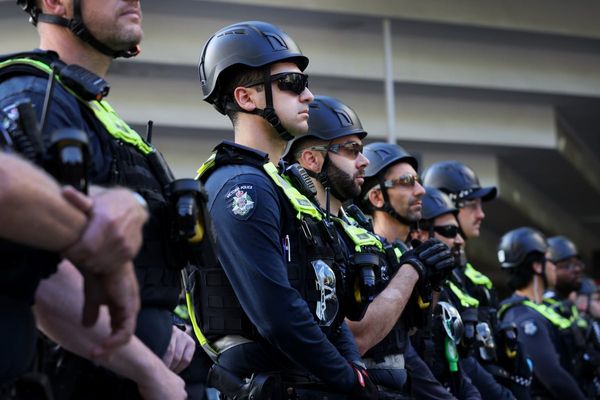
Protests spread over a wide area, and there have been clashes between protesters and police.
The authorities have been on alert over protests expanding further. In Tongliao, police introduced cash rewards on Sept. 2 and encouraged people to provide information about participants in the protest movement.
A source said the authorities stopped pension payments to a person who had only posted a message saying "Don't deprive us of our mother language" on a social networking website.
Prof. Yang Haiying of Shizuoka University, who is from the autonomous region, said education in standard Mandarin was being strengthened "partly because the Xi administration fears that ties will strengthen between the ethnic Mongolians in the autonomous region and Mongolia, the neighboring nation. Therefore the administration is trying to make ethnic Mongolians assimilate with Han Chinese."
At a regular press conference on Sept. 3, Chinese Foreign Ministry spokesperson Hua Chunying said, "The current bilingual education system will not be changed," with both standard Mandarin and Mongolian continuing to be used.
About 40 from the Inner Mongolia Autonomous Region held a protest rally on Sept. 5 in front of the Chinese Embassy in Tokyo. Olhunud Daichin, 54, who participated in the rally, expressed his sense of crisis, "The loss of a mother language is equivalent to the destruction of an ethnic group's pride."
Uyghur, Tibet as well
The Xi administration has been spreading education in the standard Chinese language to solidify the unity of "Zhonghua minzu" -- a term comprehensively referring to all Chinese belonging to Han and other minority ethnic groups.
Just after Xi assumed the post of general secretary of the Chinese Communist Party in 2012, the Chinese government announced that it aimed to popularize standard Chinese in all parts of the country by 2020.
Prior to the measure in Inner Mongolia, standard Mandarin textbooks in three subjects began to be used in 2017 in elementary and middle schools in the Xinjiang Uyghur and Tibet autonomous regions.
The media in the United States and other countries has reported that the Chinese government conducts education entirely in standard Chinese in detention centers in the Xinjiang Uyghur Autonomous Region, which Beijing claims are facilities for education and training in job skills.
Human Rights Watch, an international nongovernmental organization, said in March that the Xi administration is abandoning an ethnic group policy that had promoted cultural diversity since the early 1980s.
People belonging to 55 ethnic minority groups live in China, in addition to the Han Chinese who account for about 90% of population. The Chinese Constitution stipulates that ethnic groups have the freedom to use their own mother languages.
Read more from The Japan News at https://japannews.yomiuri.co.jp/