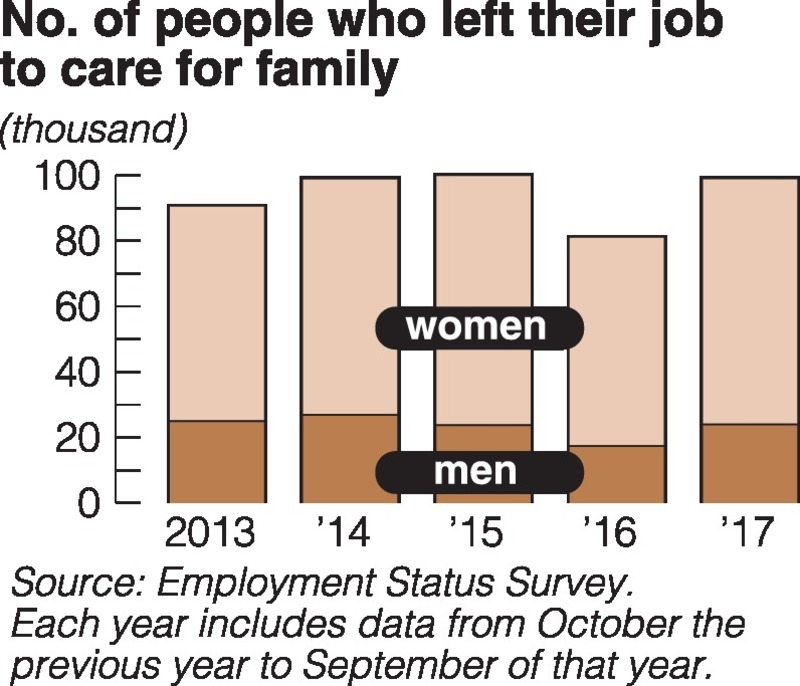
A total of 99,000 people left work to provide nursing care to their family members in 2017, a survey by the Internal Affairs and Communications Ministry has discovered.
This figure from the 2017 Employment Status Survey was down only slightly from the 101,000 people identified in the previous survey in 2012.
As the risk of losing a job directly affects people in their most productive years, the government is eager to implement such measures as developing nursing care facilities, in a bid to reduce to zero the number of people who leave work to provide family care.
However, many challenges lie ahead of this ambitious goal.
"When I started, I thought I could balance family care with work," said a 48-year-old man in Otsu, reflecting on quitting his job four years ago to care for his parents, who were in their 80s.
"Now I realize how naive I was," the man said.
He got involved in caring for his parents, who resided at their home in the city, in September 2013. At that time, the man was working for a construction company in Hamamatsu, Shizuoka Prefecture, and his older sister was caring for their father, who had dementia, and their mother, who was repeatedly in and out of the hospital.
They had been using home-visit nursing care and other services, but when his older sister fell ill, he resolved to make the long commute from Hamamatsu to care for his parents. "I thought, 'There's nobody but me who can provide care,'" the man recalled.
The man was living alone, and sometimes did not get home until late at night. "I was appointed as the chief of 10 employees -- I was enthusiastic about my job," he said. However, he was physically exhausted from driving back and forth between Hamamatsu and Otsu on weekends.
"One day, I nearly fell asleep at the wheel on the highway and almost crashed into a truck," he recalled. As a result, he left his job at the end of July 2014. His mother passed away six months later, and his father followed her in May 2016. About two years had passed since he had quit his job.
Many hesitate to take leave
The man had considered taking family care leave (see below) while caring for his parents. However, he refrained from doing so. "I couldn't estimate how long I would need to care for them, so I couldn't figure out the right timing," he said.
According to an internal ministry survey, the ratio of taking family care leave was 1.2 percent in 2017, down from 3.2 percent five years before.
Family care leave is supposed to be a time to make arrangements for balancing work and family care, such as applying for nursing care insurance, but many people consider it a time to concentrate on providing care.
A survey showed the average duration of nursing care lasts nearly four years. Consequently, people tend to refrain from taking leave in preparation for the time of greatest need -- it is not unusual in these cases for people to leave the workforce.
However, returning to the workforce is difficult for people who quit their jobs in middle age or older. In the internal affairs ministry survey, only about 25 percent of people who left their jobs were able to return to the workforce.
The man who cared for his parents in Otsu is currently unemployed, living on the rental income from an apartment building left to him by his parents. "There were hardly any companies that would accept applications from a man in his mid-40s who had been without a job for a while," he said.
Company employees also tend to be afraid to let their employer know they are caring for family, which also hinders usage of the leave system for family care.
"I thought I might lose my position if they found out I had to take time off to care for a parent," said a 47-year-old man from Tokyo who quit his job in 2015 to care for his mother. "I couldn't talk to the company about it."
He was a department chief at a middle-ranking advertising firm. "Nursing care costs money. I didn't want to have my income reduced," he said.
Ultimately, the strain of trying to both work and care for his family took its toll, and he was hospitalized with a heart attack. Finally, he consulted with his superiors, but they were not understanding of his situation, and the man had to quit his job.
"We need to create a workplace environment where employees who are caring for family members feel comfortable talking about it," he said.
System underdeveloped
There are also people who are forced to quit their jobs because they cannot use nursing care insurance services, such as special nursing care homes for the elderly. According to a fiscal 2012 survey commissioned by the Health, Labor and Welfare Ministry, such people account for 10 percent to 20 percent of all those leaving work.
For this reason, in 2015, the government set a target of reducing the number of people who leave work for family care to zero. It enabled users to split the terms of family care leave so that they can take the leave more easily.
It also raised the amount of benefits users receive while taking leave, and has unveiled a policy of increasing the capacity of special nursing care homes for the elderly and other institutions by about 380,000 people by the end of fiscal 2020.
However, according to the welfare ministry's calculations, capacity is expected to fall short of this goal by about 100,000 people.
According to a survey conducted by The Yomiuri Shimbun in March on prefectural governments, 90 percent of respondents chose "lack of personnel" as a reason why the development of nursing care facilities is not progressing as expected.
The government estimated that about 2.16 million nursing care staff are needed by fiscal 2020, but as of fiscal 2016, there were only about 1.9 million.
(From The Yomiuri Shimbun, July 14, 2018)
--Family care leave
When a parent, spouse or other family member requires nursing care, a total of 93 days of leave can be taken either all at once or over a maximum of three separate periods. Family members' need for nursing care must be at level 2 or above. During leave, a stipend equivalent to 67 percent of one's salary can be received from unemployment insurance.
More support from firms needed
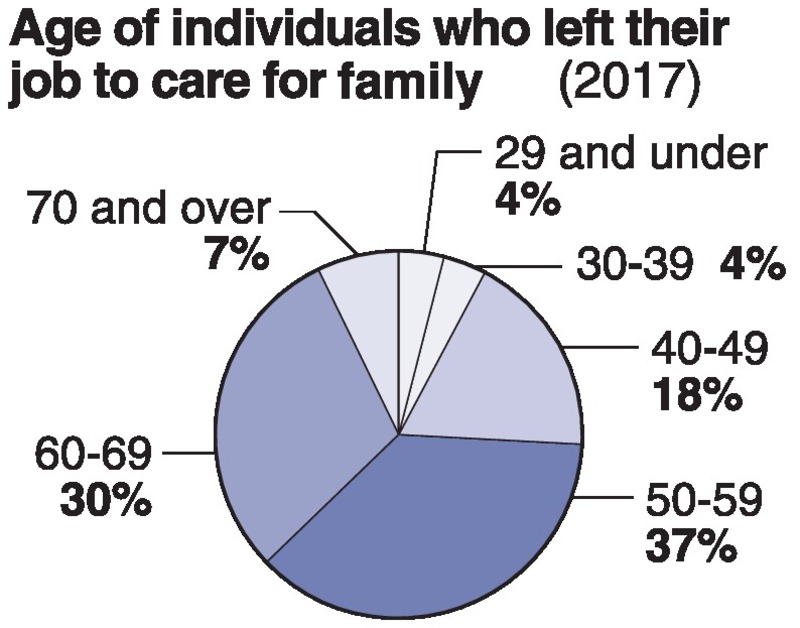
According to the Employment Status Survey, most people who left work to provide nursing care were in their most productive working years -- about 20 percent were in their 40s, and 40 percent were in their 50s.
The Japan Business Federation (Keidanren) conducted a survey last year of its 232 member companies, and among 117 respondents, 40 percent answered that the nursing care issue is an important task in personnel and labor management.
More than 80 percent of respondents allowed employees to take more days overall, and more blocks of leave, in family care leave than the national system.
Since around 2010, Taisei Corp. has introduced a nursing care system allowing employees to take 180 days of family care leave. The company has also held nursing care seminars for employees.
"Those who face the issue of nursing care are mainly in managerial positions, such as chiefs of construction sites," said a public relations official of the company. "It's a serious problem [for the company] that they quit."
However, a limited number of companies have introduced such measures. Unlike childcare, it is difficult for companies to predict when there will be a need for nursing care in an employee's family.
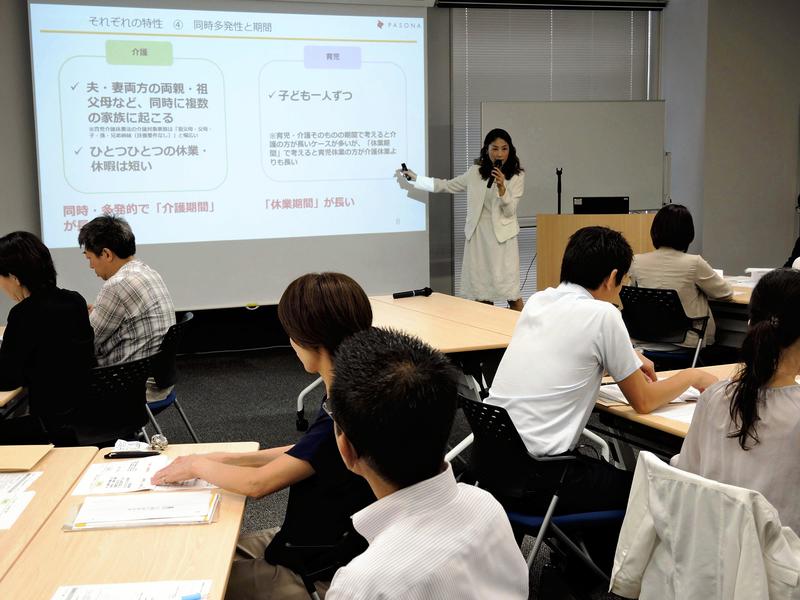
"It's necessary to reorder the working environment from a work style reform perspective, such as cutting back on long working hours and sharing duties among several employees," said Kanako Kikuchi, a licensed social insurance consultant knowledgeable about support measures for work-family care balance.
Observers also say that a lack of knowledge about nursing care systems leads to employees quitting.
"It's important for companies to provide employees with information beforehand about consulting services about nursing care, both inside and outside the company," said Hiroki Sato, a professor at Chuo University who specializes in personnel management. "The government should also provide information when workers turn 40, the age from which they're covered by nursing care insurance."
Read more from The Japan News at https://japannews.yomiuri.co.jp/